


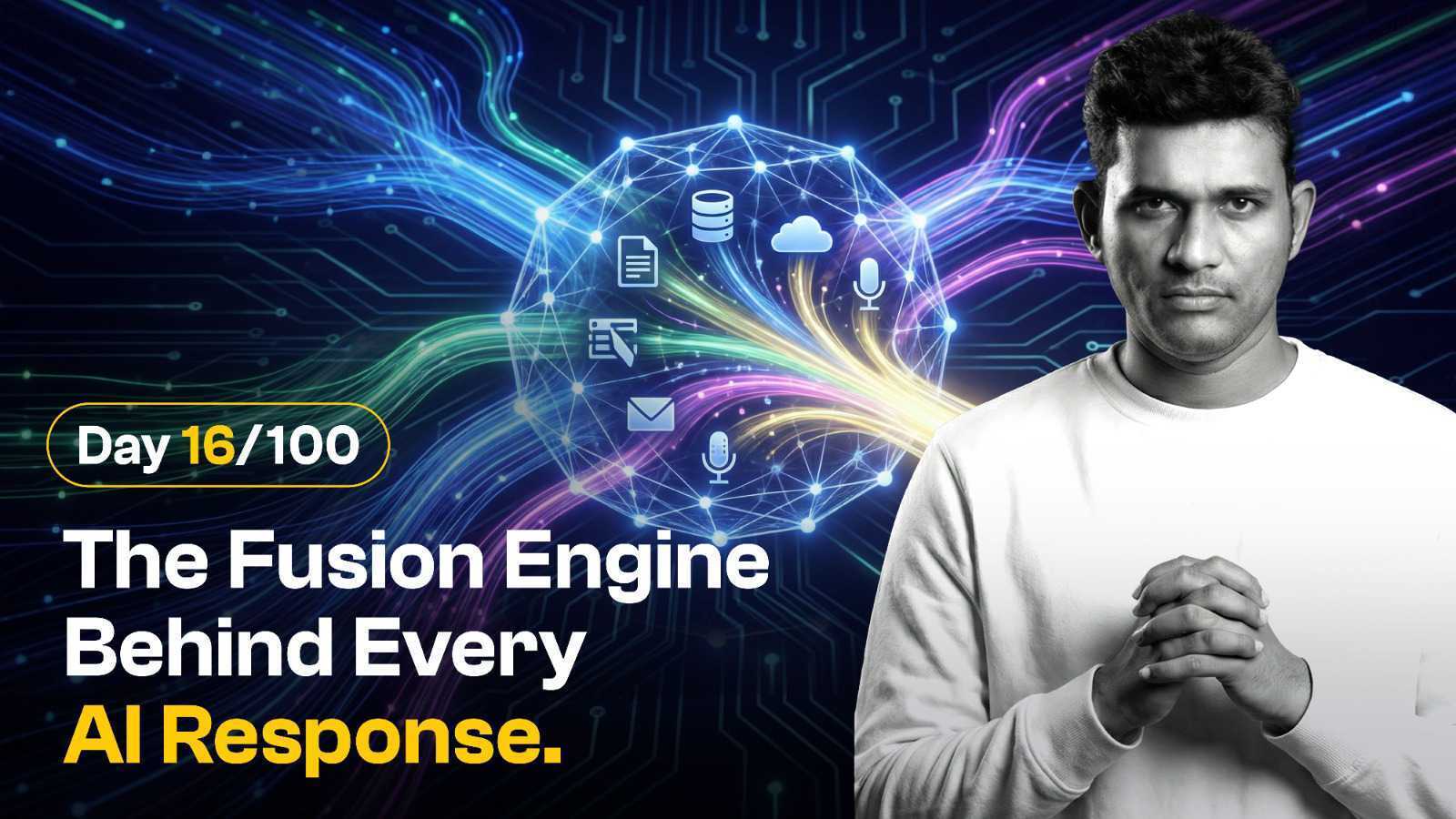
Traditionally, search engines focused on sourcing entire pages. However, modern AI systems focus on retrieving specific chunks or pieces of content. Once these chunks are gathered, the system doesn't simply present them in a list. Instead, it performs fusion, which is just comparing multiple chunks from various sources and building a cohesive answer by combining them. This process begins with a fan-out. Query fan-out is the process by which an AI system decomposes a single query into multiple sub-queries that explore different aspects of the user's intent.
Blog
The End of “Owned Media” in the Search Era
Are Your Buyers Consuming Your Content Without Visiting Your Site?
For the first time in the last two decades, your best prospects, or let’s say your ICP, can predict your thinking without ever touching your website.
Marketers today might invest lacs in a content-rich site, search programs, and marketing automation, only to discover that buyers are getting their answers from Gemini, ChatGPT, Perplexity, or Copilot in a single conversational screen.
Zero-click behaviour is no longer a quirk of Google. It is becoming the default way people interact with information. Research shows that close to 60% of Google searches in the US and EU now end without any click to the open web, with only about a third of clicks going to external sites.
This behaviour is quietly rewriting the foundations of B2B marketing. Traffic that once flowed predictably through search, social and nurtured funnels is now dissolving into conversational interfaces. Instead of discovering your brand through pages, prospects find you through synthesised explanations generated by models that sit between you and your market.
The result is a loss of something marketers spent twenty years building. Owned media once meant control, context and a direct line to your audience. Today, discovery happens in places you do not own, through systems you do not influence yet. The click is disappearing, and with it, the comfort of assuming a buyer will eventually land on your property to understand your story.
In simple terms, the buyer who previously typed “best B2B data platform for manufacturers” into Google is now asking an assistant. The answer they see first is no longer a list of blue links. It is a synthesised narrative drawn from multiple sources. Your site might be one of those sources, or it might not.
This is the vanishing click. And with it, the end of “owned media” as we have known it.
What Is Owned Media in B2B Marketing?
Owned media is the set of channels and assets your brand fully controls. It includes your website, blog, resource hubs, email lists, customer communities, product documentation and any experience that lives on your infrastructure.
The simplest way to think about it: if you can edit it, publish it and shape the entire journey without depending on another platform, it is owned media.
For example, when a prospect searches for a solution and lands on your product page, that interaction happens on a channel you control. You decide the story, the proof points, the design, the navigation and the next step. This direct control is what made owned media the backbone of B2B marketing.
The Old World Of Owned Media In B2B Marketing
Before AI assistants sat between your brand and the buyer, the logic of owned media felt simple.
Owned media meant your website, blog, newsletter, resource hubs, customer community and product experiences. If you were more advanced, it also meant your first-party data, marketing automation, and brand apps.
It worked for three reasons -
- Control
You controlled the experience end-to-end. Design, narrative, CTAs, form strategy. All of it lived on infrastructure you paid for and governed. - Visibility through SEO
If you understood search intent, structured your content well and built authority, Google rewarded you with impressions and clicks. Studies of organic click-through show that the top position can command close to 30% CTR for relevant queries, offering real commercial leverage for brands that win those spots. - Data ownership
Every visit turned into behaviour data you could measure and connect to CRM. Salesforce calls out this bridge between data and experience as a central reason marketers continue to invest in platforms that unify first-party data.
The implicit assumption behind owned media was this: “If I can get you to my property, I own the context, the story and the journey.”
This assumption breaks when discovery no longer happens on your property at all.
What Happens When AI Assistants Become The New Homepage?
Gemini, ChatGPT, Perplexity, Copilot, Meta AI and similar tools are not just new channels. They are discovery ecosystems.
They behave differently from search engines in three crucial ways -
- Answers first, links second
AI assistants summarise and synthesize content into natural language responses. Links, when they appear, sit as supporting evidence, not the main event. Multiple independent studies now show that when AI summaries or overviews appear at the top of search results, click-through to the first organic listing can drop by around a third or more. - Zero-click discovery by design
Generative search amplifies this pattern. SimilarWeb data suggests that categories like news and media have seen double-digit percentage drops in search-driven traffic within a year of AI overviews. - Conversations instead of sessions
Microsoft reports that journeys involving both Copilot and traditional search are growing rapidly, especially on mobile, as users blend conversational queries with occasional clicks when they need depth.
In other words, buyers ask questions, get narrative answers and only sometimes click through for more detail.
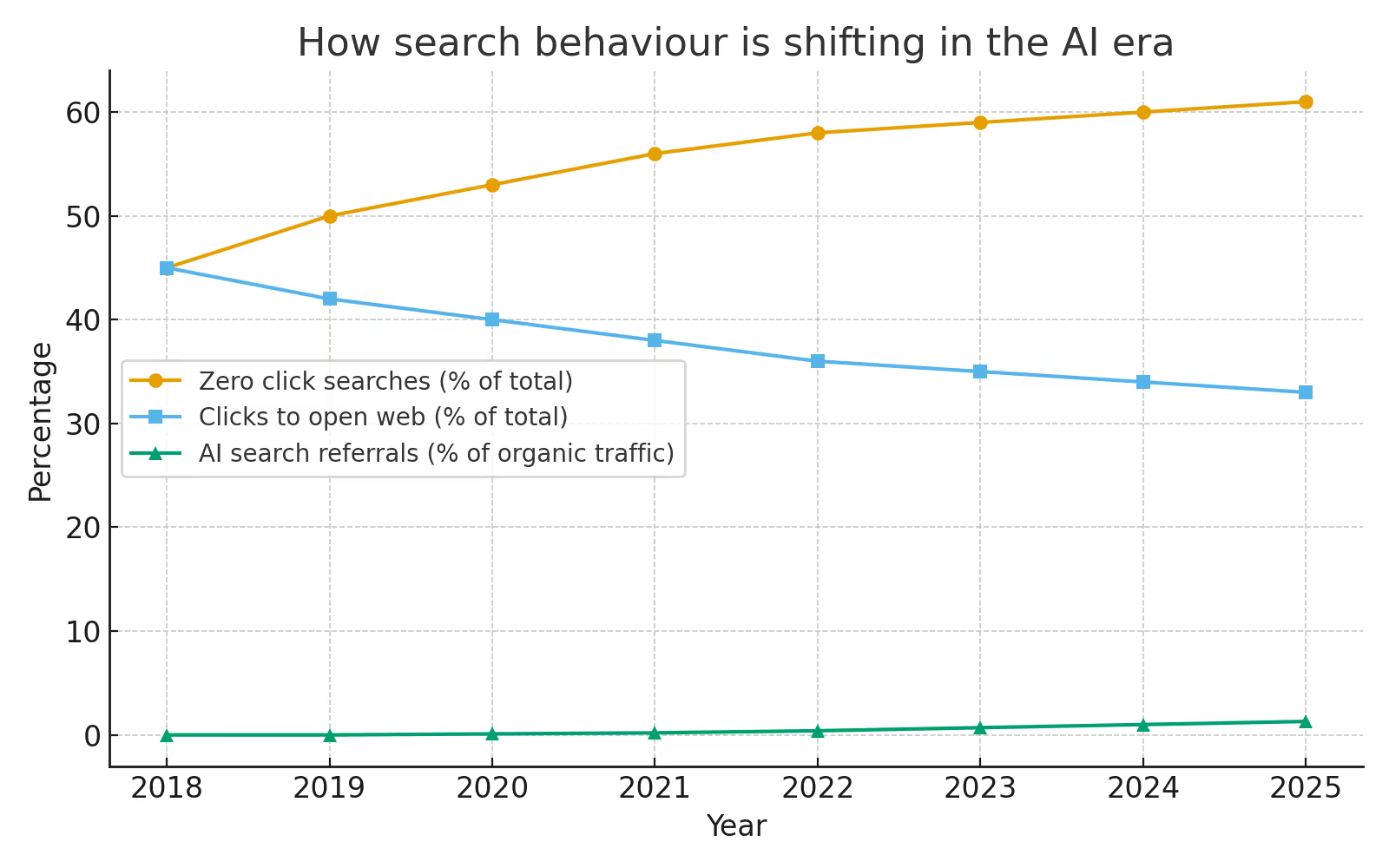
This graph shows how user behaviour is shifting away from clicking on websites, as zero-click searches rise, open web traffic declines, and AI-driven referrals steadily grow.
For a CMO, the message behind the chart is blunt. Your content is being consumed and referenced inside AI interfaces that you do not own.
AI Discovery And The Great Disintermediation Of Audience Ownership
Search once shifted power from publishers to platforms. AI takes that one layer deeper.
In a classic search model, your team could treat Google as a traffic broker. You optimised for keywords, earned rankings and won the click.
In an AI discovery model, the “broker” is no longer just the platform. It is the model itself.
Some of the important dynamics that matter here include -
- Models choose which brand voices to surface
AI engines compose answers by sampling across sources and weighing which ones feel authoritative. Analyses of AI citations show that models heavily favour strong media brands, high-authority reference sites, and a relatively small set of trusted B2B SaaS domains when answering product or strategy questions. - Training data replaces on-page SEO as the primary filter
In an AI-dominated discovery environment, the model’s training signals outweigh the traditional mechanics of keyword targeting or page-level optimisation.- What gets surfaced is no longer determined by how well a page is structured, but by whether the underlying knowledge is distinctive, credible and repeatedly reinforced across trusted digital touchpoints.
- Most online content never becomes part of this high-value training layer, which means only a small fraction of a brand’s output meaningfully influences how AI systems answer category questions.
- Algorithmic mediation becomes the new norm
As AI assistants become the first stop for information, they decide which perspectives are included, how arguments are framed and which brands earn visibility inside a synthesized answer.- The advantage shifts to companies that build AI-ready processes, structured knowledge and consistent expertise signals.
- Teams that operate this way see faster insight loops, stronger performance and greater commercial leverage because their thinking is more frequently interpreted, cited and reused by AI systems across the buyer journey.
The net result is that your “owned” content is now mediated twice, once by platforms that control distribution and once by models that control interpretation.
Your audience is no longer something you own. It is something you influence whenever and wherever AI systems pick up your voice.
Is SEO Really Dead Or Just Moving Inside The Model?
CMOs are coming across the term “SEO is dead” more often than ever today. However, the reality is more nuanced.
Traditional SEO, as a game of keyword targeting and technical hygiene, is losing its monopoly on visibility. But the underlying concept of authority is more important than ever.
Google’s EEAT framework simply means a source is judged on its expertise, real experience, authority and overall trustworthiness.
AI systems rely on similar cues. They look for signals that show the content comes from people who know the subject, can prove their claims, speak from lived insight and maintain a consistent reputation. When these signals are strong, your perspective becomes more likely to appear in AI-generated answers, even if the user never lands on your site.
Instead of asking “How do we rank number one for this keyword?”, the more insightful question is “What would make an AI engine feel confident citing us when it answers this category of questions?”
To make that shift tangible for your leadership team, you can reframe SEO as “AI visibility” and track how often your brand appears in answers across different AI tools. Early measurement platforms and analyst work already show that AI referrals convert at higher rates than many other channels, even if they represent a small share of overall traffic today.
Designing The Next Generation Of Owned Media For AI-First Discovery
So, if you no longer truly “own” the traffic, what does “owned media” mean in practice?
We see three layers that matter for B2B brands -
1. Owned data that is machine-readable
For CMOs, this means:
- Structuring product, pricing, documentation and support content in formats that are easy for both search engines and AI models to parse.
- Investing in schema, APIs and knowledge graphs that describe your offerings, use cases and proof points clearly.
- Treating your CRM and CDP as training surfaces for your own AI agents, not just reporting tools.
An example of How Structured FAQs appear in Search:
Search a query that triggers FAQ or structured snippets like ‘HubSpot CRM pricing’

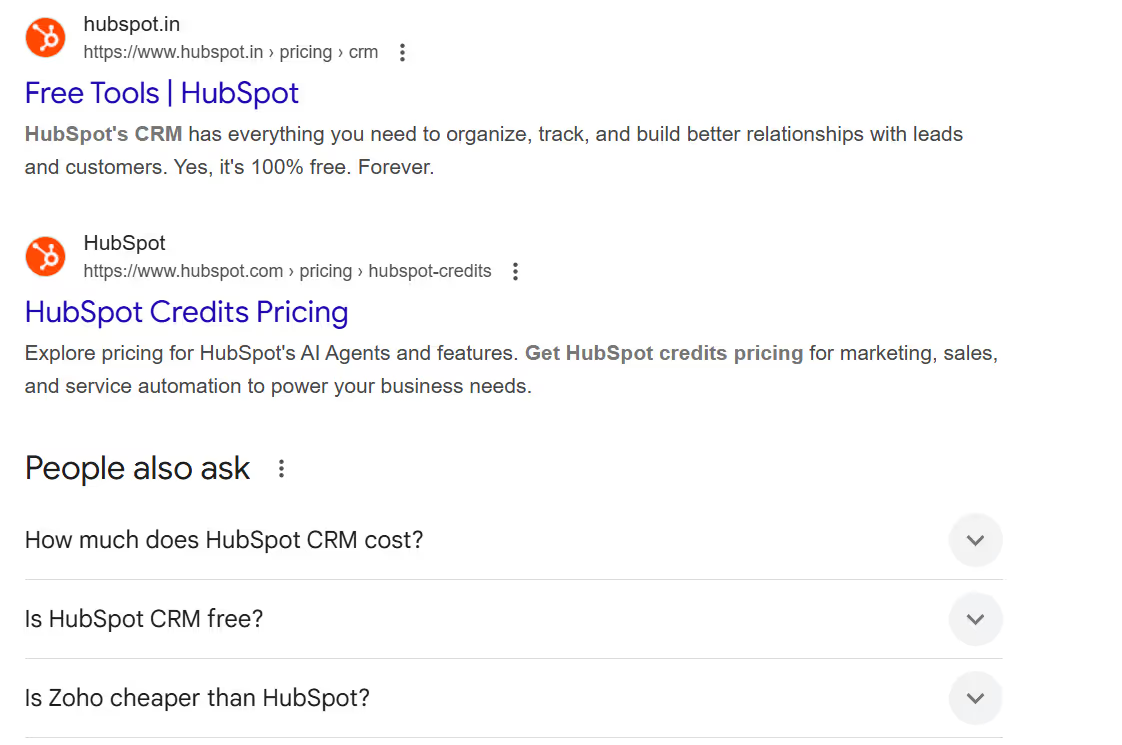
You will find multiple FAQs related to your search query and a vendor listing, followed by a “People also ask” block, which is Google’s structured Q&A layer.
This is a real example of a Google search query that shows how structured FAQ patterns appear in search results and influence how AI systems interpret brand-level information.
2. Owned expertise that is citable
Global agencies and consultancies are converging on one rule. The content that flows through AI systems is informed by real expertise and external validation.
Bain refers to this as a shift from clicks to conversations, in which brands win by providing distinctive insights that AI engines draw on when answering questions.
This means:
- Publishing fewer but deeper flagship assets such as category-defining whitepapers, benchmark studies, implementation playbooks and original research.
- Ensuring those assets are referenced by analysts, partners, professional media, and communities that AI systems treat as high-trust.
- Making authorship explicit and connected to real experts, not anonymous “brand voice” pieces.
3. Owned voice that remains recognizable in AI outputs
The most advanced teams are already shaping their content with the assumption that an AI system will be the first reader. They build narratives that are clear, structured and consistent, so the model can recognise their voice, understand their terminology and carry their perspective forward in its own answers.
This is not about producing more content. It is about producing content that an AI engine can summarise accurately and confidently, which becomes a long term competitive advantage in an AI led discovery environment.
You can do the same at a B2B brand level by:
- Defining non-negotiable narratives that you want associated with your brand in any AI summarized answer.
- Creating content formats that mirror how assistants answer buyers. For example, conversational FAQs, scenario-based walkthroughs and objection handling guides that read like the responses a good AI assistant would give.
- Launching your own bounded assistants, trained on your corpus, as part of your owned media stack. USA Today, for instance, now uses a first-party chatbot to keep audiences inside its ecosystem even as external AI search drains clicks.
Owned media becomes less about the pages you host and more about a structured, opinionated body of knowledge that the wider AI ecosystem can reuse.
What Does An AI Era Owned Media Playbook Look Like For CMOs?
If you are leading marketing in a B2B organisation, here is how to move from theory to action.
1. Audit your “AI surface area”
Do not start with your sitemap. Start with two questions.
- For which problems do we want to be the default answer?
- Do we feature in the AI overview answers today?
Run practical tests across Gemini, ChatGPT, Perplexity, Copilot and Meta AI for the five to ten highest value buyer questions in your category.
Try to look for:
- Whether your brand is named.
- Whether your frameworks or language show up even without attribution.
- Which competitors or media sources are dominating those answers.
This becomes your AI visibility baseline.
2. Rebalance from volume to authority
Ahrefs reminds us that almost all content on the web gets no organic traffic. In an AI-mediated world, low-value content does more harm than good because it dilutes your signals.
Shift budget away from incremental posts and toward:
- One or two original data studies each year, ideally produced in partnership with a respected research brand or consultancy.
- Deep implementation guides that show hard-earned expertise in real B2B environments.
- Clear, non-generic points of view about where your category is heading and how AI changes the operating model for your buyers.
This is also where partnerships with Big Four-style firms, analyst houses and specialist agencies become part of the owned media strategy, because their coverage of your work becomes a signal to AI engines that you matter.
3. Make your content and data AI-compatible by design
Salesforce and Microsoft both emphasise that the gap is no longer data collection but data readiness for AI. Most companies have the inputs. Few have the structure and governance to use them responsibly at scale.
On the owned media side, this means:
- Creating a canonical, structured knowledge base that sits behind your site and feeds both human interfaces and AI agents.
- Using markup, taxonomies and APIs so that external AI search engines can cleanly ingest your product information, case studies and success metrics when they crawl.
- Putting governance in place so that what the model sees is accurate, up to date and aligned with how sales and product teams describe value.
4. Treat AI discovery as a pipeline channel, not a curiosity
Emerging data suggests that traffic from AI interfaces converts significantly better than traffic from many traditional channels because the assistant has already done some qualification based on the user’s intent.
As a CMO, you can do the following:
- Track AI referrals as a distinct source in your analytics.
- Map how those visitors behave compared to organic search and paid traffic.
- Build specific landing experiences that match the way AI answers, position your brand.
Your job is not to fight the assistant. It is assumed the buyer spoke to an assistant before they ever spoke to you, then design the handoff.
Who Owns Your Audience In The AI Era?
No one truly owns the audience anymore. Platforms control distribution, models shape the interpretation and buyers decide their own path.
What you can own is your contribution to the shared pool of digital intelligence that these systems draw from.
If you build a body of knowledge that is structured, citable and distinctive, your ideas will show up in AI-generated answers far beyond the reach of your own site. They will inform how analysts frame your category, how prospects design shortlists and how customers think about renewal and expansion.
The future of owned media is not about control. It is about influence at scale.
Your next audience may never visit your site. However, they can still hear your voice. Every time they ask an assistant a question, your brand is uniquely qualified to answer.
Ready to pressure test your owned media for the AI era
Strategize an AI discoverability roadmap for your B2B marketing engine.
Ready to pressure test your owned media for the AI era
Strategize an AI discoverability roadmap for your B2B marketing engine.
Table of contents
Case Studies
About FTA
Keep Reading


Author Bio
.avif)
A seasoned content professional with strategic oversight in financial content review and management, adept at leading editorial teams to produce high-quality, SEO-optimised content aligned with business objectives in the finance domain. I have worked with brands like PNB, HDFC Sky, Bajaj Finserv and Kotak Securities. I collaborate with cross-functional teams to identify informational gaps in personal finance, investing, banking, and fintech topics. By prioritising content based on audience insights and search trends, I develop editorial calendars that support campaign goals and guide users through critical financial decision-making journeys. Working closely with SEO strategists and finance subject-matter experts, I refine content briefs, align on target keywords, and ensure a consistent, compliant, and trustworthy brand voice, driving higher search visibility, stronger engagement, and enhanced user trust in regulated financial content. Known for strong interpersonal skills, I inspire and lead diverse teams, foster cross-functional collaboration, and effectively communicate editorial direction across stakeholders. I’ve managed and mentored a team of 15+ writers and editors, cultivating a culture of quality and precision that led to significant improvements in content performance and internal audit scores.
Head of Content