


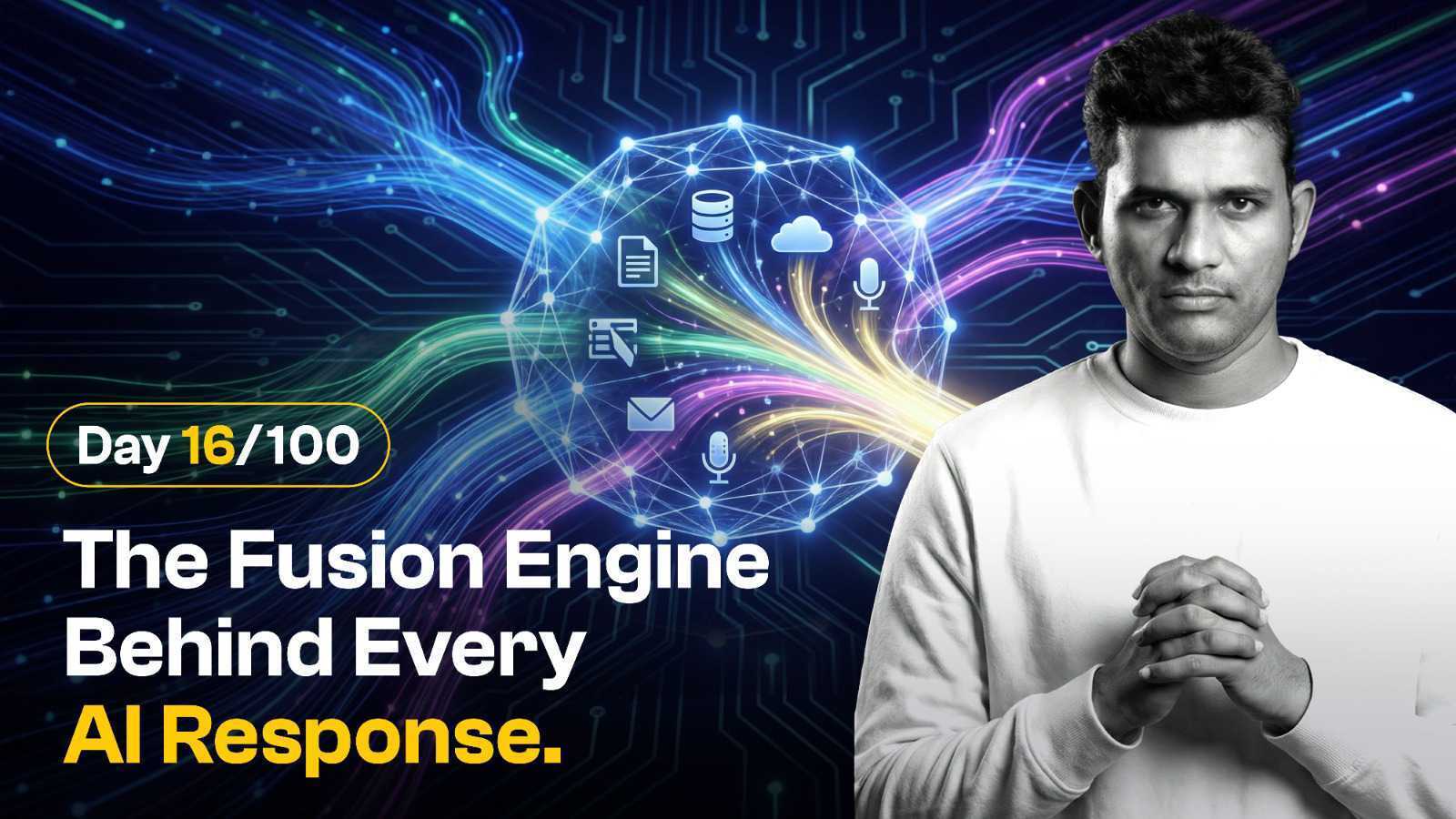
Traditionally, search engines focused on sourcing entire pages. However, modern AI systems focus on retrieving specific chunks or pieces of content. Once these chunks are gathered, the system doesn't simply present them in a list. Instead, it performs fusion, which is just comparing multiple chunks from various sources and building a cohesive answer by combining them. This process begins with a fan-out. Query fan-out is the process by which an AI system decomposes a single query into multiple sub-queries that explore different aspects of the user's intent.
Blog
Why Businesses Are Moving from Freelancers to Managed Gigs in B2B Marketing?
How has the freelance model evolved, and why do businesses seek more stability?
B2B marketing has gone through three distinct phases over the last decade. The first was the era of in-house creators and specialists who owned a channel from end to end. The second was the rise of freelancing, enabled by platforms like Upwork and Fiverr that made it easy to hire talent for specific tasks. The third is what we are living in now.
A phase defined by speed, multichannel complexity, and the need for reliable execution every week. This shift is pushing businesses to rethink how they source and manage marketing talent.
Freelancing grew because it solved an immediate need. Brands could scale output fast without long hiring cycles. They could find designers, writers, video editors, or ad specialists on demand. For many years, this worked well.
The problem surfaced when marketing started operating in a world that demands high consistency and rapid iteration across multiple channels. Leaders began noticing the growing friction. Coordination overhead increased. Quality fluctuated. Timelines slipped quietly. The same brief produced different outcomes depending on who was available that week.
Senior marketers today sit under tighter expectations. Faster content cycles, more experimentation, more reporting, and more accountability. They need partners who behave like extensions of their team, not just individual contributors.
This is where the demand for stability and a managed structure began. Businesses now want predictable execution with talent that is curated, guided, and aligned to their outcomes.
They want reliability without bloated agency overhead. This is the space where managed gigs have emerged as a stronger alternative.
Challenges with Freelancers
- Quality inconsistency
Output quality fluctuates because freelancers work across many clients at once. Their availability, energy, and priorities shift. No internal processes or quality checks exist to maintain steady standards. CMOs often end up reviewing and correcting work more than expected. - Unpredictable timelines
Freelancers can accept a brief with full intent to deliver. Yet personal schedules, overlapping work, or unexpected delays affect turnaround time. In a performance environment where weekly cycles matter, this lack of rhythm becomes expensive. - Limited commitment to brand context
Freelancers usually focus on the task, not the long-term brand. They rarely go deep into the business model, audience psychology, competitive landscape, or pipeline strategy. This creates a gap between what the team needs and what the freelancer can contribute. - Operational overhead for internal teams
A CMO or marketing manager ends up managing four or five people across different channels with different working styles and communication patterns. The team becomes the glue. The organisation absorbs the coordination burden. - Knowledge loss and risk
When a freelancer moves on, a chunk of brand and technical know-how leaves with them. This creates fragmentation that is difficult to repair. Documentation rarely exists. Processes are not standardised. The cost of retraining someone new becomes a recurring expense. - Inconsistent quality, missed deadlines, and limited accountability
- Freelancers remain valuable for specialised tasks. However, when a brand depends on them for ongoing channel ownership or campaign execution, gaps begin to show.
These challenges do not make freelancers ineffective. They simply highlight why businesses that operate at scale or speed are moving toward a model that offers them the predictability they need while maintaining the flexibility they still desire.
What are managed gigs?
Pre-vetted professionals managed through a single platform or team
Managed gigs sit between a traditional agency and the freelance economy. They offer the flexibility of freelancers, with the structure and reliability of a managed team.
A managed gig is a curated group of specialists who are brought together, vetted, trained, and managed under a single operational layer. Instead of hiring four freelancers, a brand works with one unified pod. Instead of guiding every individual, a brand interacts with one lead who ensures execution across the pod.
A managed gig system includes -
• A strategic lead who understands your objectives
• Specialists who are matched to your channels and goals
• A project manager who ensures deadlines, documentation, and coordination
• A quality assurance layer that checks deliverables
• A performance and reporting structure that ties work to measurable outcomes
This model removes the randomness that comes with working with isolated freelancers. It also avoids the high cost structure associated with large agencies. The brand receives a consistent, reliable team that is designed to produce output continuously.
Benefits of managed gigs
Reliability, faster execution, simplified communication, and project tracking
Managed gigs deliver benefits that align well with what B2B CMOs need today -
- Reliable output every week
Since the team is pre-vetted and managed internally, the brand does not have to worry about sudden unavailability or fluctuating quality. There is built-in redundancy. If one specialist steps away, another steps in without halting progress. - Faster execution with repeatable systems
Managed gig teams operate through playbooks, templates, and workflows. This reduces the friction of starting from zero every time. Campaigns launch faster. Content arrives on time. Reporting happens on schedule. Internal teams finally get breathing room. - Simplified communication
Instead of managing a fragmented group of freelancers, the brand has one touchpoint. This person handles briefs, updates, and coordination internally. Meetings become streamlined. Feedback moves quickly. Accountability becomes clear. - Better tracking and visibility
Managed gig platforms and teams use dashboards, trackers, and performance workflows. The brand always knows what is happening, when it will be delivered, and how it impacts overall objectives. - Consistent brand voice and strategy
A unified team learns the brand. They internalise the narrative, tone, differentiation, and value proposition. This allows content and campaigns to compound over time rather than feel disconnected. - Lower risk and better continuity
Knowledge stays within the managed system. Processes are documented. Context is retained. Even when individuals rotate, the system maintains work continuity.
This is where managed gigs outperform freelancers without requiring brands to commit to the overhead of a full agency.
Predictable pricing and reduced overhead vs multiple freelancers
This comparison makes the shift clear. Managed gigs offer the most balanced model for brands that need predictable, scalable marketing output.
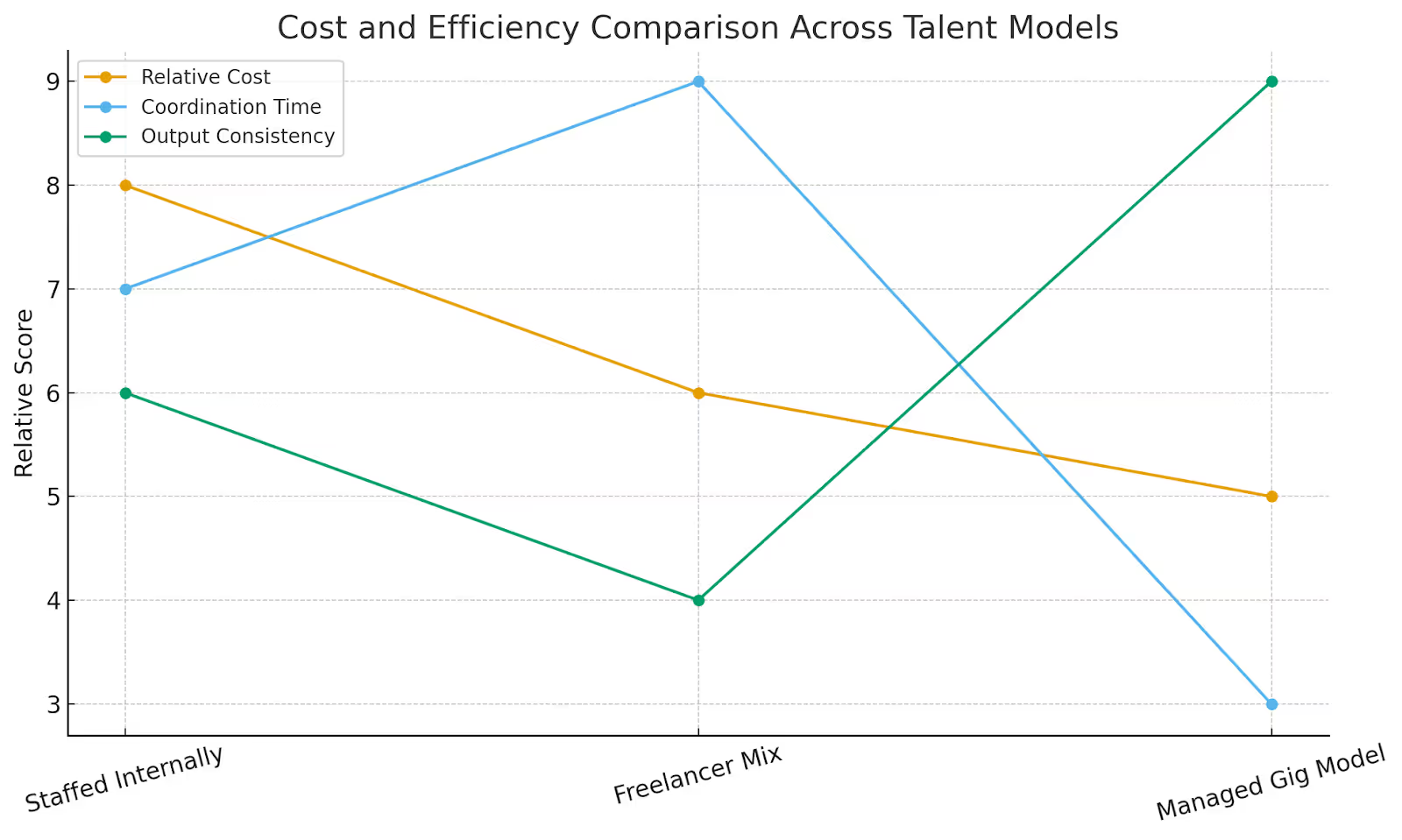
(The graph shows that managed gig models deliver the best balance of low coordination time, predictable cost, and consistently high output compared to internal teams or a freelancer mix.)
Industries Shifting to Managed Gigs
Marketing, tech, design, and content teams leading the trend
Many industries are moving toward managed gigs because their operational demands require accuracy, fast cycles, and reliable execution. These are the major teams that fall under the purview of managed gigs -
- Marketing teams
They handle SEO, content, social media, paid campaigns, automation, sales enablement, and analytics. Relying on freelancers for this mix becomes chaotic. Managed gigs create alignment. - Technology teams
Product updates, documentation, UI/UX enhancements, and feature launches require coordinated specialists. Freelancers struggle with the long-term context. Managed teams deliver continuity. - Design and creative teams
Brand systems, design frameworks, product creative, and campaign visuals need a consistent eye. Managed pods allow creative work to retain a unified identity. - Content-driven companies
Publishers, SaaS companies, and large B2B services rely on steady content output. Managed gig content pods can maintain quality and volume simultaneously. - Growth and revenue teams
They need fast experiment cycles. Freelancers are rarely available on such responsive schedules. Managed teams respond faster because they are structured around repeatable execution.
These shifts indicate that managed gigs are not a trend. They are a natural evolution for brands that operate at scale.
How FTA Gigs offers structured gig management for brands?
FTA Gigs is designed specifically for brands that want the creative agility of freelancers without the chaos. It offers a structured layer of management, talent curation, and operational rigour.
Curated talent pods
FTA Gigs builds pods around the needs of B2B brands. Strategy, content, performance, design, and operations are mapped to the buyer journey. Talent is vetted and continuously upskilled.
One unified lead
Brands interact with a single strategic owner who manages the pod. This person ensures clarity, quality, and alignment with business outcomes.
Integrated workflows
FTA uses predefined playbooks and systems to maintain consistent output. The brand gets visibility into tasks, timelines, and deliverables.
Sprint-based execution
Work is delivered in weekly or biweekly sprints. This keeps momentum high and ensures nothing slips through the gaps.
Performance tracking
Every gig is tied to outcomes. Whether the goal is pipeline, content velocity, or campaign execution, reporting is included.
FTA Gigs gives brands the structure of an agency, the flexibility of freelancers, and the cost clarity of a productised service. For CMOs, this becomes a practical way to scale execution without expanding internal headcount.
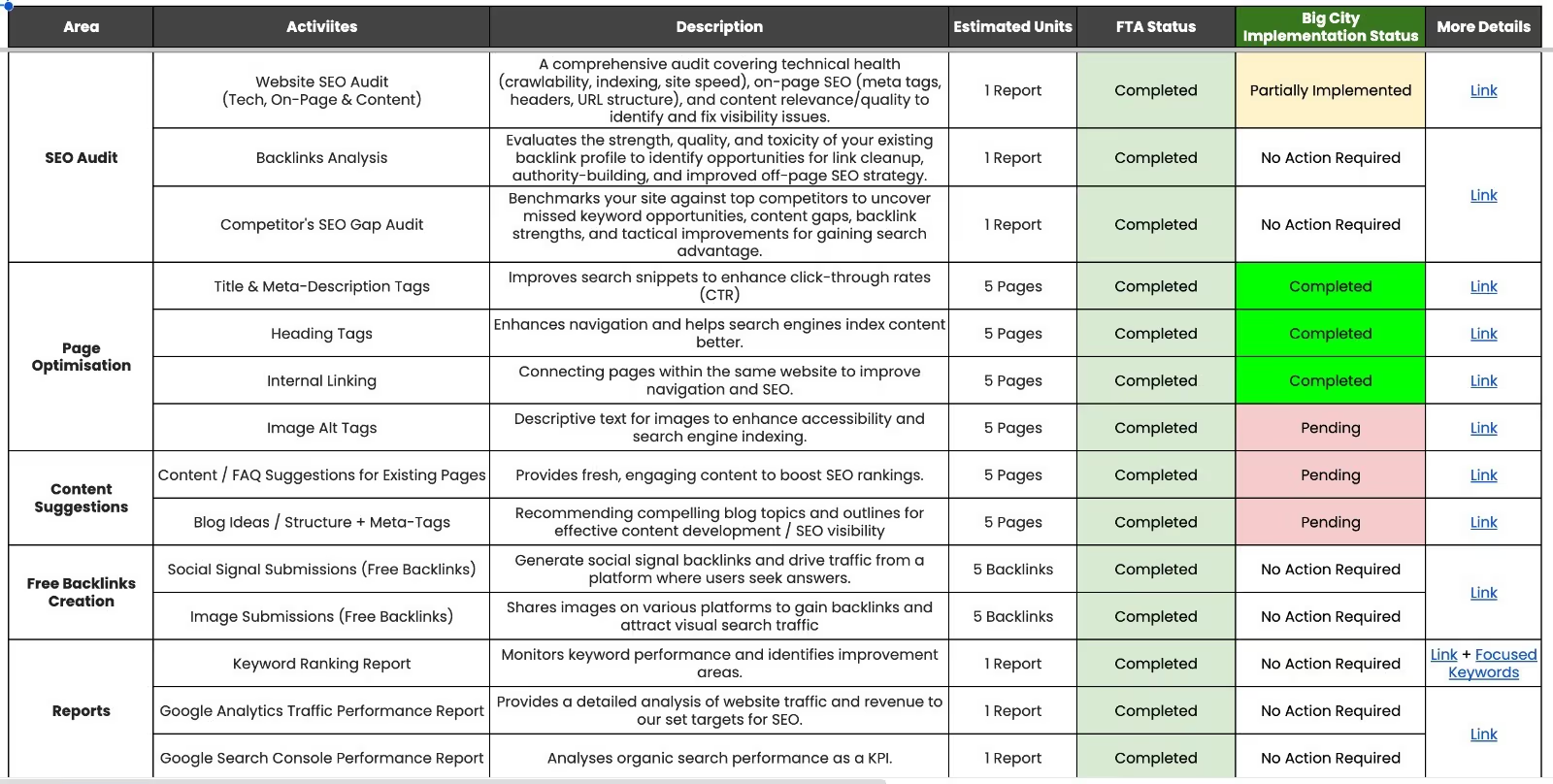
(This dashboard screenshot shows how a structured gig team drives clarity in execution. It highlights every SEO task completed by the FTA Gigs team, the exact implementation status on the client side, and where pending actions are slowing down results.)
Managed gigs are the next evolution in the gig economy
Efficient, scalable, and dependable
Businesses are moving from fragmented freelance setups to managed gig models because modern marketing demands reliability, context, and coordinated execution. Freelancers remain valuable but cannot carry the weight of a full-stack marketing operation on their own. Managed gigs offer stability without sacrificing speed. They give CMOs clarity, quality, and predictability at a cost that makes sense in a competitive environment.
This shift reflects a broader transformation in how work gets done. The future belongs to models that blend flexibility with structure. Managed gigs deliver exactly that. For brands that want to grow without operational chaos, this is the path forward.
Diagnose your freelance spend and design a managed gig pod today.
Share your current mix of in-house, agency, and freelancers and we will map a leaner, more predictable managed gig model
Diagnose your freelance spend and design a managed gig pod today.
Share your current mix of in-house, agency, and freelancers and we will map a leaner, more predictable managed gig model
Table of contents
Case Studies
About FTA
Keep Reading


Author Bio

Empowering Businesses for the Digital Era | Founder & Visionary at Digitopedia Solutions | Driving Growth & Innovation through Strategic Digital Solutions | With a relentless passion for Digital Marketing, I lead a team of experts dedicated to delivering unparalleled results. Let's collaborate to unlock your business's full potential in the digital landscape. Connect with me to explore new avenues of success.
Head of SMB