



Traditionally, search engines focused on sourcing entire pages. However, modern AI systems focus on retrieving specific chunks or pieces of content. Once these chunks are gathered, the system doesn't simply present them in a list. Instead, it performs fusion, which is just comparing multiple chunks from various sources and building a cohesive answer by combining them. This process begins with a fan-out. Query fan-out is the process by which an AI system decomposes a single query into multiple sub-queries that explore different aspects of the user's intent.
Blog
Your Brand is Failing Without This: Why Omnichannel is the ONLY Strategy That Matters
Shoppers Drop Off When Channels Don’t Talk to Each Other
Brands today find it difficult to offer a seamless phygital experience and often miss the mark when it comes to establishing a strong brand connection with their customers.
Imagine a shopper steps into your brand’s store after browsing the website, only to discover that loyalty points can’t be redeemed in person. Sometimes, they fill their cart in your mobile app, then meet a cashier who can’t locate the items.
These offline-online gaps are common, and they point to a deeper problem: global brands are building omnichannel strategies without truly bridging the physical and digital worlds.
AI-led chatbots and autogenerated emails/messages are further adding to the woes of the brands. When channels operate in silos, customers can feel it.
As a global digital marketing agency, we feel it too when investment in digital experiences fails to deliver returns.
The opportunity lies in creating a phygital presence – an immersive world that provides a seamless user experience at par with online and offline channels.
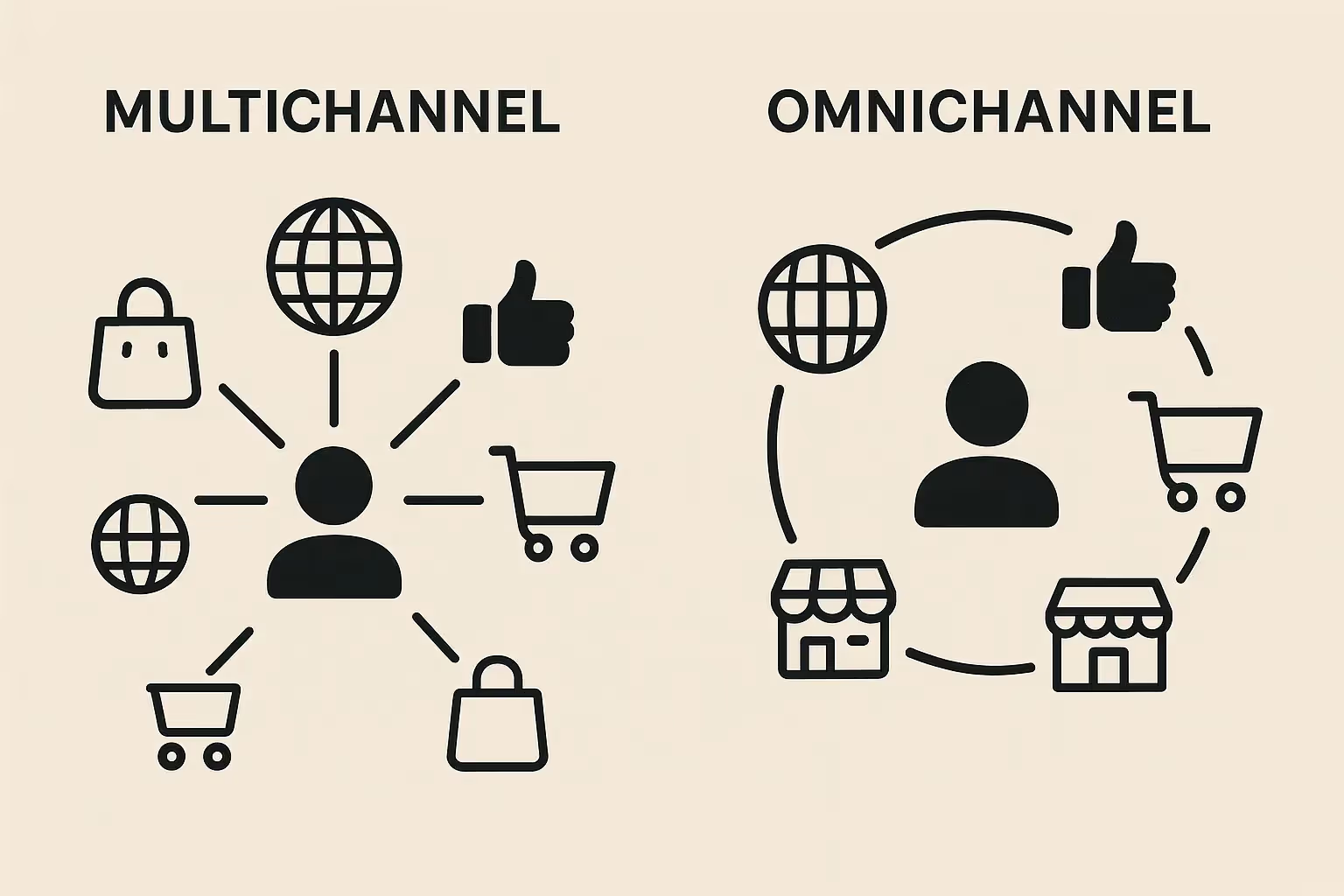
Omnichannel versus Multichannel
Here is a comparison between multichannel and omnichannel brand presence to ensure brand resonance differs with each channel among the customers.
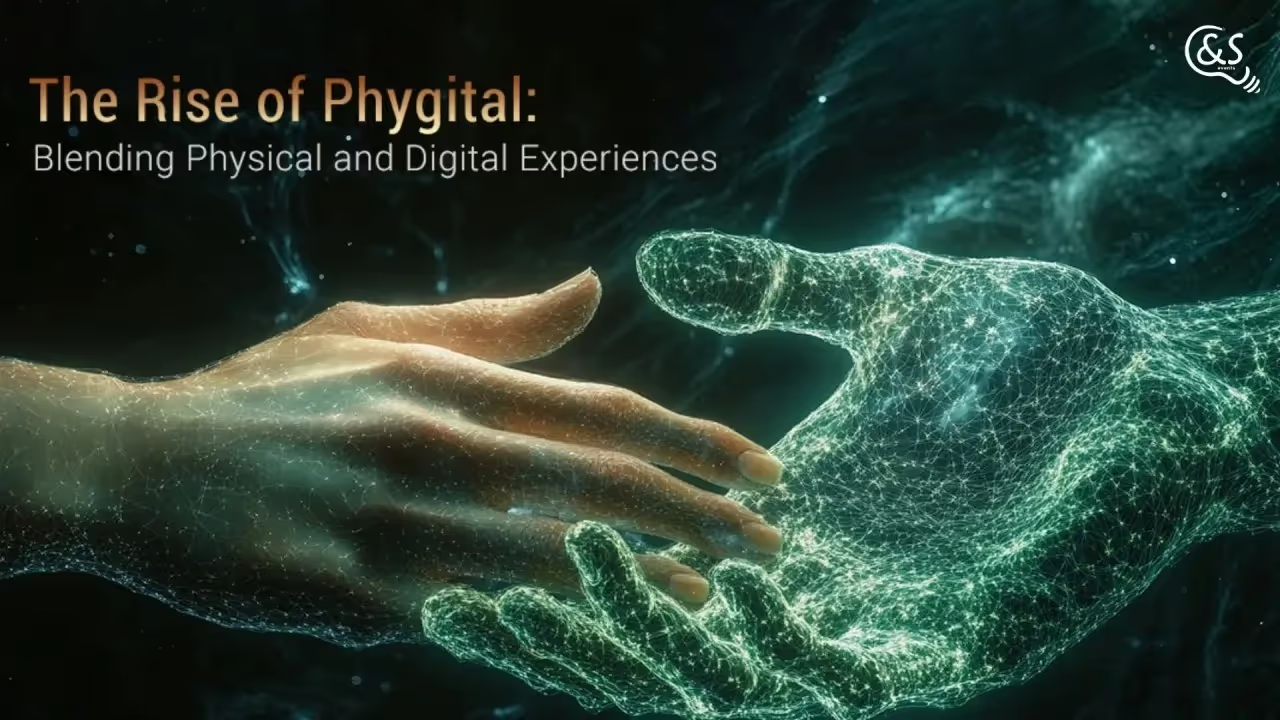
The Rise of the Phygital Consumer
The term phygital combines “physical” and “digital.” It reflects consumers who move seamlessly between online and offline worlds.
Fifteen years ago, shoppers needed only two touch points to make a purchase. Today, there can be more than fifty.
Gen Z shoppers live on their smartphones, with more than half of them feeling more insecure without their phone than their wallet.
Today, even older generations are scanning QR codes in-store to compare prices or access digital coupons.
Without a phygital bridge, those digital interactions remain disconnected from the physical experience.
How Do Omnichannel Experiences Work
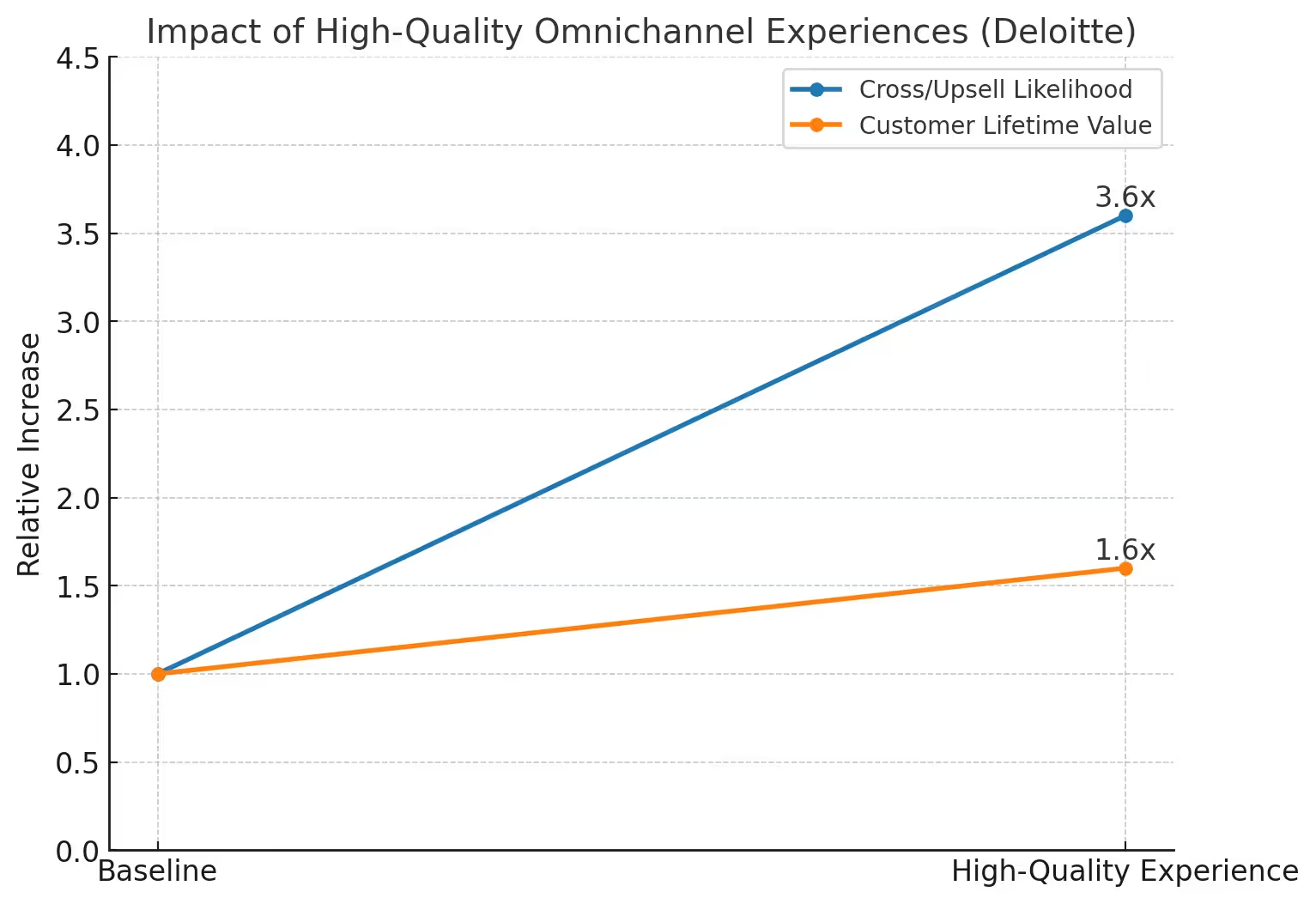
High-quality omnichannel experiences don’t just delight customers but also build revenue for your brand.
Customers who enjoy a superior omnichannel experience are several times more likely to buy additional products and services, and their lifetime value is significantly higher.
In a research study, Customers who enjoy high-quality omnichannel experiences are 3.6× more likely to purchase additional products and services from the same brand.
Customers don’t like to interact with an automated system and expect businesses to meet them on the channel of their choice. These interactions boost satisfaction, loyalty, and profits.
Brands need to keep the following steps in mind for building an omnichannel presence:
- Availability across all social channels
- Consistency of data across all touchpoints
- Seamless movement between channels
- Personalisation of their brand to offer a unique customer experience
- Humanisation of the brand should feel like talking to a person
When we keep these guidelines in check, we deliver the experiences customers crave in this AI-first world.
Why Strategies Fail Without a Phygital Connection
- Disconnected data silos make personalisation impossible.
- Outdated technology can’t support real-time updates.
- Organisational culture blocks cross-functional collaboration.
- Neglecting the human element erodes trust.
- Ignoring physical innovation makes stores irrelevant.
As an example of the failure of building a strong phygital connection, H&M once sat on nearly $4 billion of unsold stock, exposing a critical flaw in its omnichannel push.
The company’s inventory management was disconnected across online and offline channels. Real-time tracking was limited, making it difficult to align stock with fast-changing fashion cycles.
As shoppers moved seamlessly between digital and physical stores, H&M could not match availability to demand.
This gap slowed response times, led to overstocks in some markets and shortages in others, and undermined the customer experience.
Building a Phygital Blueprint
Here’s a blueprint that we have seen work across industries, designed to help brands bridge the physical and digital seamlessly:
1. Start by creating a single customer view by linking CRM, POS, and e-commerce systems into one real-time platform.
2. Ensure that carts, loyalty balances, and preferences keep track of the customer seamlessly as they move from app to store to website.
3. Equip frontline staff with the tools and training they need to access customer profiles and deliver personalised service on the spot.
4. Reimagine physical stores as experience hubs by adding AR try-ons, digital kiosks, and convenient click-and-collect counters.
5. Use AI and analytics to deliver tailored promotions, recommendations, and content that match individual customer behaviours.
6. Provide options like buy online, pick up in store, buy online, return in store, and same-day delivery supported by real-time stock visibility.
7. Continuously track metrics such as order value, return rates, and NPS, then refine journeys to drive stronger results.
8. Pilot immersive formats such as AR showrooms and pop-ups, gather feedback from customers, and scale the innovations that prove most effective.
The Next Wave of Omnichannel Growth
Mobile wallets and contactless payments are becoming the default in-store payment methods. In India, D2C brands are moving into malls, and the market is on track to hit $100 billion by 2025.
Globally, brick-and-mortar still delivers three-quarters of retail revenue, proving physical presence is far from dead.
The message is clear: physical retail isn’t dying; it’s evolving in the digital ecosystem.
Phygital experiences are the next frontier. The pandemic accelerated digital adoption, yet consumers still crave human interaction.
The upcoming brands will combine digital efficiency with physical intimacy.
We’ve seen that investing in a phygital blueprint pays off, not only in sales but in loyalty and brand equity. It demands vision, commitment, and breaking silos.
Are you ready to build a ‘phygital’ experience that your customers love to engage with?
Learn how to build your brand's omnichannel presence to offer a seamless experience to your customers.
Are you ready to build a ‘phygital’ experience that your customers love to engage with?
Learn how to build your brand's omnichannel presence to offer a seamless experience to your customers.
Table of contents
Case Studies
About FTA
Keep Reading


Author Bio

I believe the best marketing shouldn't feel like marketing at all. In a world of digital noise, my work is driven by a simple goal: to create content that strikes the right chord with the people. At the end of the day, it's people (brands) engaging with people (consumers); so I write to invoke those human emotions.
My process is part storytelling, part nuanced writing. I blend the art of copywriting with the framework of campaign strategy and SEO, always starting with the 'who' and 'why' before the 'what'.
The result is a clear, authentic brand voice that builds community and drives growth. I'm also a passionate public speaker and a soft skills trainer, dedicated to bringing these ideas and stories to life for others, both on stage and on camera
Content Producer