




Traditionally, search engines focused on sourcing entire pages. However, modern AI systems focus on retrieving specific chunks or pieces of content. Once these chunks are gathered, the system doesn't simply present them in a list. Instead, it performs fusion, which is just comparing multiple chunks from various sources and building a cohesive answer by combining them. This process begins with a fan-out. Query fan-out is the process by which an AI system decomposes a single query into multiple sub-queries that explore different aspects of the user's intent.
Blog
The Ethics of Performance Marketing: Transparency, Data and Trust in 2026
When performance marketing starts to erode trust
Marketers face this dilemma very often when executing performance campaigns for their clients. On one side, there are revenue targets and rising acquisition costs. On the other hand, buyers who are more privacy-aware, legal teams with real power, and platforms that change the rules every quarter.
Research on business buying shows that more than 8 in 10 buyers end the purchase process feeling dissatisfied with the provider they ultimately choose.
Add the fact that around three-quarters of the global population is now covered by modern privacy regulations, and the risk profile of performance marketing looks very different from even three years ago.
The real cost of ignoring ethics is no longer just a fine. Misuse of data or opaque optimisation erodes trust with whole buying committees, inflates churn risk, and quietly damages brand search and referral.
At the same time, there is growing evidence that organisations that treat ethical data practices as a strategic asset outperform peers on retention, loyalty and differentiation.
Ethics in performance marketing is not a compliance checkbox. It is now a performance lever and a brand moat. The goal is to help you see where your current approach may be quietly depleting trust and what to change in channel strategy, journeys, and the operating model.
Is your performance marketing growth coming at the cost of trust
Most B2B performance setups were built for a world with abundant third-party data and very few buyer questions about how it was used. This scenario has totally changed in the past few years. Though many operating models have not.
These are a few typical risk patterns we see in B2B performance engines -
- Optimisation is centred on quarter return on ad spend and cost per opportunity, with minimal measurement of consent quality, complaint rates or unsubscribe patterns
- Creative and journeys are tuned for micro conversion lifts, not for how a security or procurement stakeholder will perceive the approach.
- Legal review is episodic, usually focused on contract terms rather than on how data is actually collected and used across the funnel.
Here are some subtle dark patterns in B2B funnels that we have come across-
- Cookie notices that push people to accept tracking with vague language and poor options.
- Lead forms that imply content access is conditional on broad data use, without clarity on what will happen next.
- Trials or demos are framed as low friction, then gated behind aggressive qualification and retargeting.
- Retargeting that follows individuals across work and personal devices in ways that feel invasive for senior decision makers
Every one of these patterns can show strong near-term numbers. The issue is what they do to the hidden balance sheet.
The real cost shows up in a balance sheet that most dashboards never reveal. When performance tactics cross the line, buying committee members discuss it quietly in their private communities and peer groups. That shapes your reputation long before a sales conversation starts. If the story you sell in your funnels doesn't match the experience customers get, churn pressure builds, and renewal conversations become harder than they need to be.
At the same time, regulatory scrutiny is rising across major markets, meaning even small lapses in consent, targeting, or data handling can escalate into legal or financial exposure. Inside the organisation, these choices create friction.
Marketing pushes for short-term gains, sales managers are frustrated with prospects, legal questions, compliance gaps, and product teams worry about the signals they are sending into the market. Together, these pressures form the hidden balance sheet that defines whether your performance engine compounds trust or quietly erodes it.
Ask these four questions as a quick trust stress test for your performance engine -
- Where do we explicitly tell buyers what data we collect, how long we store it, and who we share it with?
- What choices do we give people at the point of data capture, and how often are those choices actually used?
- How many of our recent complaints, unsubscribes or low scores in sales feedback mention marketing behaviour directly?
- Where in our dashboards can I see a performance view that combines both commercial metrics and trust or risk indicators?
If your team struggles to answer any of these cleanly, your current performance growth is probably drawing on trust capital that will be expensive to replace.
Why ethics is now a core performance lever for B2B marketers
Between 2020 and 2026, three structural shifts have changed the economics of performance marketing.
1. Privacy regulation has moved from a regional concern to a global baseline. Estimates suggest that around 75% of the world's population now falls under modern privacy regimes inspired by rules such as the GDPR and related laws. This changes what you can collect, not just in Europe or California but across many B2B markets.
2. Buyers are more privacy literate. Cisco findings cited in recent guidance suggest that more than eight in ten people say they care about privacy and want more control over how their data is used in a B2B context, which translates into pointed questions during security reviews, greater scrutiny of vendors that rely heavily on tracking, and a lower tolerance for opaque targeting.
3. Platforms have invested heavily in their own responsible technology programs. Salesforce, for example, has formal ethical and humane use principles that name privacy, safety, transparency and inclusion as core guardrails.
For CMOs, the implication is simple. Performance engines that respect these constraints and values gain access to higher-quality data, more stable match rates, and greater trust from enterprise buyers.
Those who treat ethics as an afterthought will see more friction in deals, more blocked scripts in browsers, and slower responses from future-facing channels like communities and partner ecosystems.
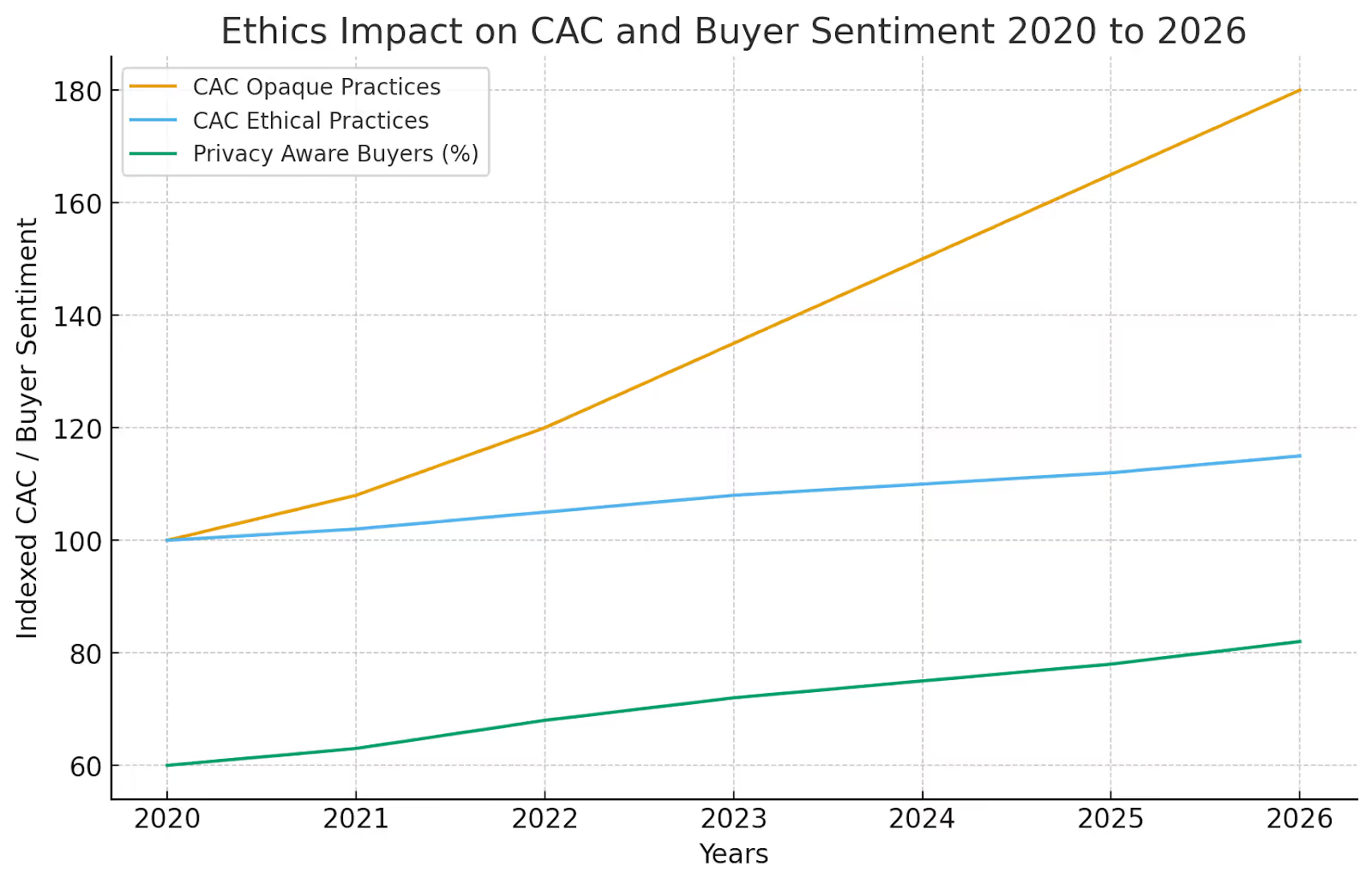
The graph reveals the widening gap between brands that continue with opaque, aggressive tracking and those that adopt transparent, ethical data practices.
The picture you want the board to see is that CAC for the ethical path flattens and then improves, while CAC for the opaque path keeps drifting up as opt-out rates and regulatory friction increase.
What has really changed for performance marketers in 2026
You do not need to be a privacy lawyer, but you do need a clear view of how the main regimes affect your marketing stack. Frameworks inspired by GDPR, CCPA and newer regulations set stricter rules on consent, purpose limitation and data sharing. The pattern across markets is the same.
- You must be able to prove how and why you collected a specific data point.
- You must respect preferences and withdrawals consistently across systems.
- You must know which partners and platforms you share data with and under what terms.
These requirements influence how you design lead forms, which enrichment vendors you use, and how you run lookalike or custom audience campaigns.
Platform and browser-level changes
Browsers and mobile operating systems have steadily reduced the signal available to marketers. Third-party cookies, device identifiers and cross-app tracking are now constrained in many contexts. At the same time, platforms like Meta and Google now lean heavily on their own modelling and automation, inferring more from less explicit data.
This has two consequences for performance marketers -
- Opaque optimisation models can sometimes push into manipulative patterns if not watched closely
- Owning high-quality first-party data, with clear consent, becomes even more critical.
Buyer and governance expectations
Enterprise buyers now regularly send detailed security and privacy questionnaires. Some organisations have created senior roles specifically focused on trust, such as Chief Trust Officers, whose remit spans cybersecurity, AI governance and data ethics.
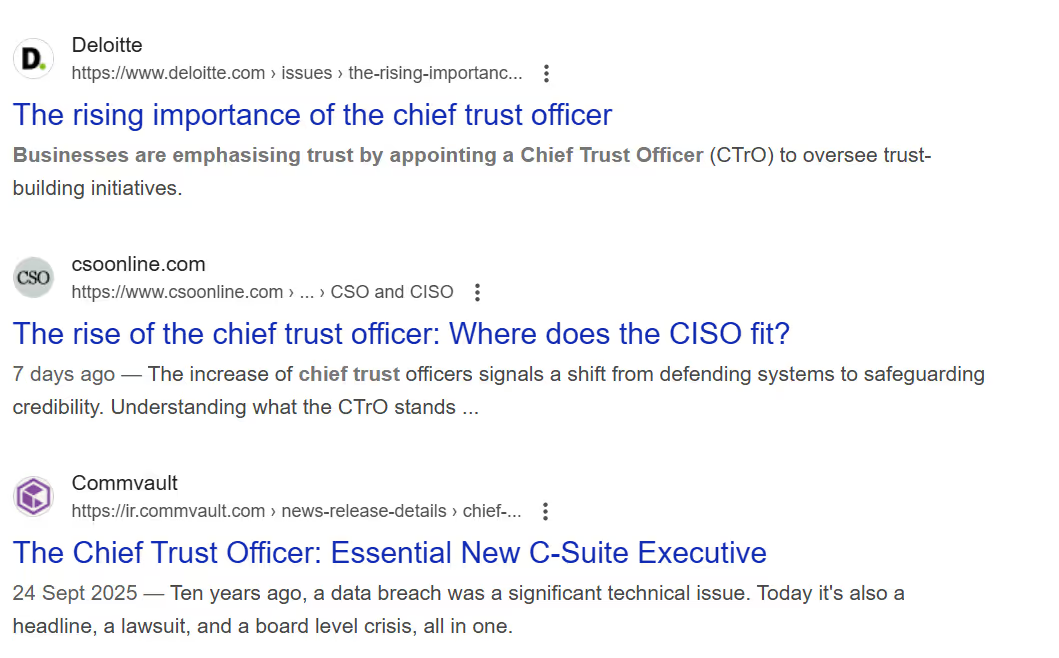
There are multiple headlines about big MNCs and large enterprises hiring Chief Trust Officer to oversee the complaints and ethical guidelines, with the rise in AI.
For performance marketing, this means that tactics which might have been ignored in the past can now become deal blockers. A privacy-conscious stakeholder who sees overly aggressive retargeting or unclear unsubscribe flows will question your broader operational discipline.
The net effect specifies that performance marketing has moved from the margins of compliance to the centre of enterprise risk and trust discussions.
Key ethical fault lines in B2B performance marketing
Ethics can feel vague until you zoom into specific points in the funnel. Five areas tend to create the most risk.
This is where many teams cut corners. Common issues include defaulting people into broad tracking without a clear explanation, burying critical details in long privacy texts, and collecting more data than is needed at early stages.
Targeting and personalisation
The power of platform-level data and AI-driven audiences makes it easy to cross lines without realising it. For example, building audiences that indirectly proxy for sensitive traits, or retargeting individuals based on browsing that they reasonably believed to be private.
Ethical targeting in B2B should follow a few simple rules -
- Anchor segments on declared interests, roles and firmographic data rather than inferred personal traits.
- Avoid creative or journeys that play on fear or urgency in ways that could be seen as manipulative for career or financial outcomes.
- Regularly review audience logic with legal and data teams, especially when using lookalike or predictive models.
Automation and AI optimisation
Modern bid strategies and creative tools can generate and test variations at a speed no human team can match. Big tech giants have already made trust, transparency and equality central to how their products use AI in enterprise settings.
For marketers, the ask is to extend that thinking into media execution -
- Set clear regulations on what AI systems are allowed to optimise for
- Monitor not just click-through and conversion, but also patterns of complaints or unsubscribes tied to specific variants.
- Ensure that any use of customer data in third-party AI tools complies with privacy laws and your own commitments to customers.
Attribution and incrementality
Ethical performance is also about how you represent impact. If your dashboards consistently overcredit retargeting or brand terms and underplay organic reputation or partner influence, you will skew investment toward tactics that may depend on intrusive tracking.
A more tactical approach would follow the these factors -
- Differentiate between influenced and sourced contributions, especially for late-stage touchpoints.
- Include negative signals, such as spam complaints, low-quality leads, and unsubscribes, in the evaluation.
- Embrace incremental testing wherever possible, even if it means spending that does not yield immediate returns.
Partner and channel selection
Affiliate networks, programmatic resellers, and lead brokers can pose significant ethical risks. Integrate.io data on B2B security shows that third-party risk now touches virtually all large enterprises, with most connected to at least one breached vendor.
Minimum expectations for performance partners should include -
- Ability to document consent provenance for any data they use on your behalf
- Clear policies on traffic sources, ad placements and content quality
- Contractual rights for you to audit or terminate if they breach these standards
What does an ethical performance media brief look like in practice
A clear brief sets the standard. Have a look at this proprietary FTA performance brief to improve the trust and efficiency in your work.
1. Business and trust objectives
- Pair revenue targets with one or two trust metrics.
- Examples: cap complaint rates, improve consent quality, and avoid any marketing-related complaints.
2. Data and audience guardrails
- Define which data sources are allowed and which are excluded.
- Clarify which audiences cannot be targeted.
- Set a clear line between acceptable personalisation and sensitive traits.
3. Transparency requirements across the journey
- First touchpoint: explain why the buyer sees the ad.
- Landing page: state what happens after data submission.
- Nurture: define frequency and easy preference control.
- Retargeting: show how users can adjust what they see.
- [Screenshot placeholder consent or preference centre]
4. Measurement and reporting
- Track trust indicators alongside commercial performance.
- Key metrics: consent conversion, data completion quality, unsubscribe-to-open ratio, and related complaints.
5. Escalation rules
- Define when campaigns must pause.
- Triggers: rising complaints, questionable sources of audience, and repeated sales feedback.
This format makes ethical performance non-negotiable and turns trust into part of the scoring system.
Performance marketing that embraces ethics can win on both efficiency and trust.
If you strip away the whole conversation, the message is direct. Performance marketing that ignores ethics and transparency is now a liability for B2B brands.
In the next ninety days, a CMO should ideally do -
- Ask for a clear view of where your current performance growth may be depleting trust capital, using the diagnostic questions from earlier sections.
- Redesign your core media brief to include explicit guardrails and metrics for ethical performance, and insist partners use it.
- Launch one focused pilot where you improve transparency, consent and targeting discipline in a key journey, and track the impact on both CAC and buyer sentiment.
Done well, ethics becomes less of a compliance burden and more of a way to reset how your brand shows up in a world of crowded feeds, privacy-aware buyers and powerful automation.
Ready to see where your performance engine is quietly eroding trust.
Audit one core journey, surface the real risks and identify quick moves that align transparent data use with commercial results.
Ready to see where your performance engine is quietly eroding trust.
Audit one core journey, surface the real risks and identify quick moves that align transparent data use with commercial results.
Table of contents
Case Studies
About FTA
Keep Reading


Author Bio

Group Head - Performance Marketing at FTA Global | Ex-NPDI
Group Head - Performance Marketing