
AI search has changed the unit of authority. A company page can explain a product, but an employee, customer, or specialist with direct experience gives an answer engine something more valuable: attributable expertise.
FTA Global explored this shift in their recent webinar between Akash Patil, VP, Products and Systems, and Kaleigh Moore, AEO Strategist and B2B Creator, also known as the AI Search Lady. They broke down how employees, customers, leaders, and independent creators are now the primary drivers of AI visibility.
You can watch the full podcast between Akash Patil, VP, Products and Systems, and Kaleigh Moore, AEO Strategist and B2B Creator here
TL;DR
- AI search is more likely to trust focused expertise than broad promotional messaging.
- Employees, customers and community contributors can be stronger sources than a company page.
- Niche authority, evidence and consistency matter more than follower count.
- LinkedIn, YouTube and Reddit should be treated as AI discovery surfaces.
- Creator programs should be measured through citations, assisted demand, inbound conversations and pipeline influence.
What is creator-led content in AI search?
Creator-led content is original, attributable material published by a person with direct knowledge of a problem, product or market. The creator may be an employee, customer, executive, practitioner, community contributor or independent specialist.
A useful creator explains a workflow, documents a result or challenges a common assumption. Kaleigh separated creators from paid influencers by identifying employees, communities and leadership voices as distinct sources of expertise.
In short: a creator is a citable expert. While reach expands your audience, real experience builds your authority.
Why do AI search engines cite people instead of brand pages?
Independent voices provide distance from brand control. Greater distance can make a claim feel less promotional and easier to validate.
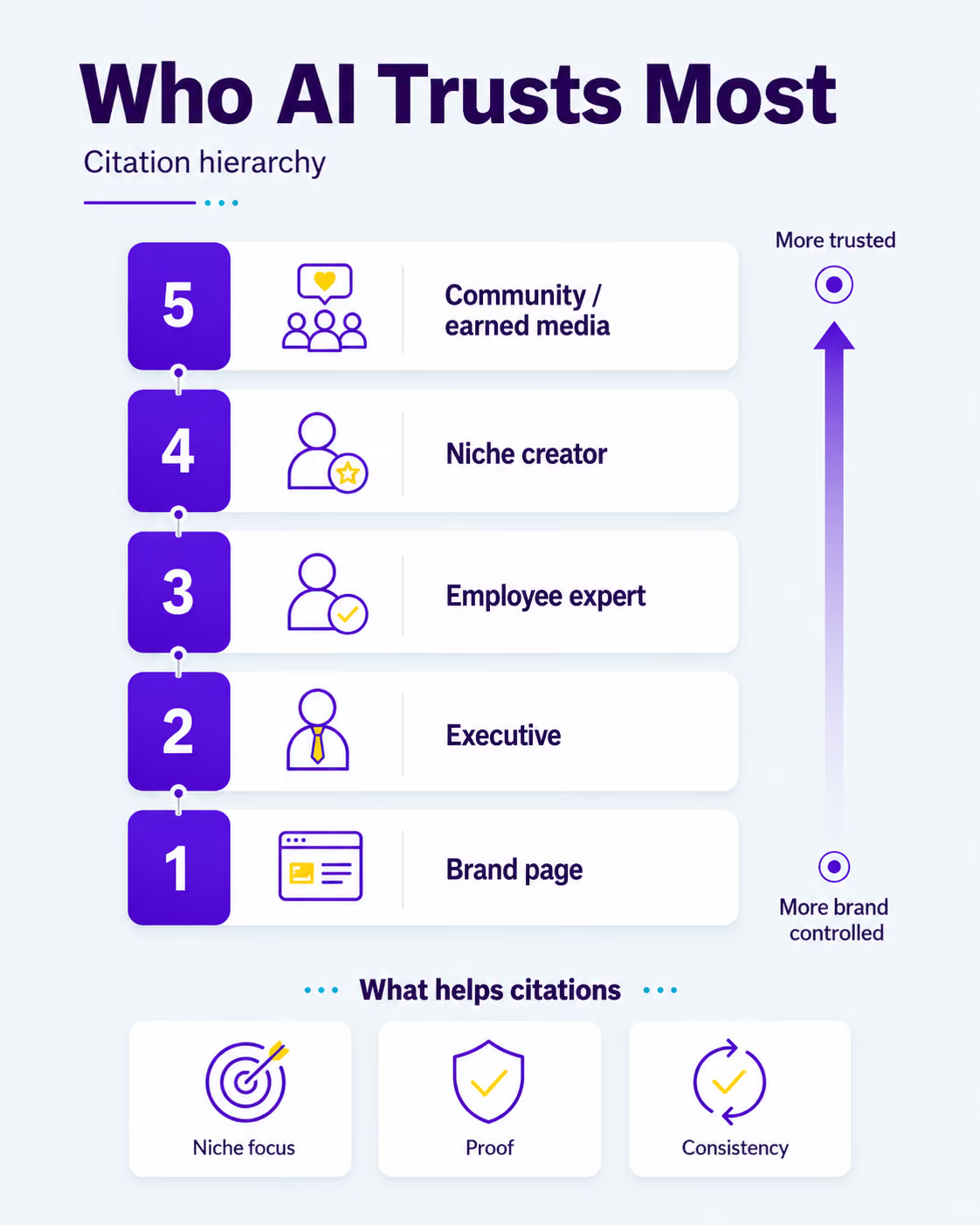
Kaleigh described a trust spectrum. Company websites and press releases sit closest to brand control. Executives remain closely associated with the company. Employees, customers, communities, earned media, and independent experts provide progressively stronger external validation.
Akash called the pattern distributed authority. One brand claiming expertise resembles advertising. Several unrelated experts describing the same capability across different surfaces begins to resemble consensus.
What makes content more likely to be cited by AI?
Citation-worthy content is focused, evidenced, attributable and published consistently.
Kaleigh identified three core signals: a narrow subject area, a relevant audience and regular publishing over time. Authority compounds across years, not weeks.
To get AI search engines to cite your content, you need to make your expertise verifiable. This means adding 'evidence density' like real test data, clear methodologies, and hard numbers while ensuring your content is easy to retrieve with descriptive headings, direct answers, and clear authorship. When you make it simple for machines to prove your claims, they’re much more likely to trust and cite you.
Google’s guidance asks whether content contains original reporting, complete analysis, first-hand expertise and clear authorship. Those checks help people and machines understand who knows what and how they know it.
Does follower count matter for AI search visibility?
Follower count is a weak proxy for expertise. Topic relevance and repeated accuracy matter more.
Kaleigh noted that creators with roughly 2,000 followers can be cited at a similar rate to creators with 50,000 followers. Her point was not that reach has no value. Follower count simply cannot prove subject authority.
A smaller practitioner publishing detailed product teardowns may offer more retrievable value than a large generalist. Review subject depth, audience fit, evidence quality and publishing history before reach.
Which platforms are most important for AI search citations?
LinkedIn, YouTube and Reddit deserve priority when B2B brands build off-site authority.
Kaleigh highlighted all three because they contain named people and natural discussion. Meltwater’s 2026 analysis of 9.5 million AI citations across B2B categories found YouTube was the most cited source, followed by LinkedIn.
Platform presence alone does not create citations. LinkedIn posts need clear claims. YouTube videos need specific questions, transcripts and chapters. Reddit contributions need to solve the user’s problem without disguising promotion as advice.
Strong expertise can still disappear when it remains trapped in meetings or long documents. At FTA Creative Labs, we take that same internal expertise and translate it into narrative-led films, scripts, and campaign assets that are designed for how people actually discover information today through video-first, AI-influenced search and social platforms. Creative Labs turns expert knowledge into films, scripts and campaign assets that carry a human point of view across video-led discovery channels.
Why is LinkedIn important for B2B AI visibility?
LinkedIn combines professional identity, subject expertise and buyer context on one platform.
59% of B2B buyers consume creator content there, 82% say creator content influences decisions, and 79% engage with it at least monthly.
LinkedIn introduced Creator Marketplace and BrandWorks in June 2026. Its research found that 82% of B2B marketers believe creators increase credibility, while 56% of buyers who use creator input rely on it during the final decision stage.
Personal profiles should carry original expertise, not merely redistribute company announcements.
What is the difference between employee advocacy and employee thought leadership?
Employee advocacy amplifies the company. Employee thought leadership builds an employee’s authority while creating value for the company.
Traditional advocacy asks employees to like, comment on or repost branded content. Creator-led programs ask experts to publish lessons, evidence and opinions from their own work. Kaleigh described the second model as a two-sided exchange: the company gains credibility while the employee builds portable professional authority.
A weak brief sounds like: promote our launch.
However, a strong brief begins with: explain the customer problem, the approach that failed and the evidence behind the final decision.
Which employees should become content creators?
The best employee creators combine willingness, proximity to the work and a defensible point of view.
Kaleigh recommended people who want to publish, can take a position and can support it with data, cases or tests. Product managers, consultants, sales engineers, customer success leaders and operators often have strong material because they solve recurring customer problems.
Forced participation produces cautious content. Start with volunteers who already explain ideas well in meetings, calls or workshops. Give them editorial support without replacing their voice.
How can customer creators influence B2B buying decisions?
Customer creators convert product claims into observable use cases.
A customer can show the starting problem, decision criteria, implementation, tradeoffs and result. Kaleigh positioned customer content as the next level of a case study because the buyer sees the product in action through the person who used it.
Useful formats include recorded workflows, co-hosted webinars, product tutorials, before-and-after dashboards, and implementation notes.
The incentive should create mutual value through industry visibility, a credible speaking platform or a useful research asset. Payment may be appropriate, but disclosure and editorial independence must remain clear.
Why does Reddit matter for AI search visibility?
Reddit captures questions, objections and peer language that rarely appear in polished brand content.
Kaleigh argued that buyers add Reddit to searches when they want an unfiltered experience. She recommended a practical brand role: employees can answer questions, correct misinformation and generate goodwill without turning every thread into a sales pitch.
A credible contribution names limitations and avoids manufactured praise. Marketing teams should use recurring concerns to improve documentation, comparison pages and creator briefs.
AI source selection remains opaque. Treat Reddit visibility as an observed opportunity, not a guaranteed formula.
How should B2B brands choose the right creators?
Creator selection should begin with subject fit, audience relevance and evidence quality.
Review who already uses the product, mentions the category or teaches the workflow. Kaleigh advised brands to identify existing advocates, monitor emerging niche voices and study competitor partnerships without copying them blindly.
You can use a five-part scorecard:
- Topic ownership
- ICP overlap
- Practical evidence
- Publishing consistency
- Commercial credibility
A smaller, concentrated audience can outperform broad reach when the buying problem is specialised. High decision density matters in enterprise marketing.
What are the biggest mistakes in B2B creator marketing?
One-off posts, generic creator searches and broad audience targeting weaken trust.
Kaleigh recommended partnerships lasting three, six or twelve months because repeated exposure builds familiarity and gives the creator time to understand the product. She also warned against mass application calls and broad creators when a narrow expert would be more relevant.
Brand teams create another problem when every sentence is polished into corporate language. Clear guardrails are useful. Scripts are not. Credible creators need room to discuss limitations, failed tests and conditions where the product is not the right fit.
How do you measure the ROI of creator-led content?
Measure creator programs through visibility, influence and commercial response, not likes alone.
Kaleigh proposed AI citations as an emerging metric and separated creator objectives into demand generation and demand capture. Track:
- Share of relevant AI answers
- Citation frequency and retention
- Branded search and profile visits
- Demo requests mentioning a creator, webinar or AI answer
- Influenced opportunities and sales conversations
Add one field to lead forms and sales discovery: where did you first hear about us? Attribution will remain imperfect, but repeated named responses reveal influence that click reporting misses.
Citation measurement should show more than whether a brand appeared once. Our AI search visibility intelligence platform, FTA.visibility, maps the prompts, sources, and competitors shaping AI answers, helping teams see where visibility is growing, weakening, or being lost across the exact moments buyers are searching.
How do you build a B2B creator program in 90 days?
A 90-day program should establish a baseline, test a small group and measure citation movement from the first week.
Days 1 to 30: Define the commercial objective, map buyer questions, record current AI citations and select one to three creators.
Days 31 to 60: Publish focused content across personal profiles, webinars, videos and community answers.
Days 61 to 90: Compare citation gains, inbound conversations, audience feedback and sales mentions. Expand only the topics and creators producing evidence of influence.
Kaleigh recommended the same small start, three-month test and continuous citation tracking. She also urged teams to listen for mentions of ChatGPT, LinkedIn or a named creator.
How can brands make creator content easier for AI to cite?
Make every useful idea easy to identify, extract and verify.
Publish a direct answer beneath each question-based heading. Name the expert and explain their relevant experience. Add the webinar video, an edited transcript, timestamps, original examples and a clear publication date. Keep essential insights in indexable page text rather than hiding them inside an image or video.
OpenAI states that sites need to allow OAI SearchBot to crawl their pages to be available in ChatGPT search, although inclusion and ranking are never guaranteed.
Connect each creator insight to a specific buyer question. Topic ownership comes from depth, not repetition.
What screenshots make a B2B blog more credible?
Use screenshots that prove the work behind the argument.
- Add a webinar frame from 04:46 where Kaleigh explains distance from brand control. Keep both speakers, timestamp and subtitle visible.
- Run one identical buyer prompt across ChatGPT, Perplexity and Gemini. Capture each citation panel, date and source domains.
- Show an FTA.visibility report with the prompt, cited source, competing brand and weekly citation trend.
- Add an employee post containing a real workflow, author identity, date, evidence and expert comments.
- Capture a YouTube chapter beside its matching transcript passage.
- Add a 90-day scorecard with baseline citations, citations earned, retained citations and inbound mentions.
Avoid stock robots or search bars. Original interface evidence, dated tests and visible methodology create stronger first-party signals.
How can B2B brands improve visibility in AI search?
Build authority as a system of people, evidence and surfaces.
A website remains important, but the brand’s knowledge cannot remain trapped inside it. Employees should explain the work. Customers should demonstrate outcomes. Independent experts should test claims. Communities should expose objections. Videos and transcripts should preserve detail.
Creator content works best as one layer of a wider visibility system. FTA’s Search Engineering™ connects owned content, AI citations, social discovery and buyer intent around the questions that shape a shortlist, rather than around a publishing calendar.
AI visibility grows when credible humans say useful, verifiable things consistently. The creator advantage is distributed expertise that buyers and machines can recognise.

Do you want more traffic?

The same question, a different answer in every city