


Traditionally, search engines focused on sourcing entire pages. However, modern AI systems focus on retrieving specific chunks or pieces of content. Once these chunks are gathered, the system doesn't simply present them in a list. Instead, it performs fusion, which is just comparing multiple chunks from various sources and building a cohesive answer by combining them. This process begins with a fan-out. Query fan-out is the process by which an AI system decomposes a single query into multiple sub-queries that explore different aspects of the user's intent.
Blog
How On-Demand Gig Teams Help Brands Execute Faster Without Hiring?
Brands today need speed, flexibility, and results without expanding payroll.
Marketing today operates in a sense of urgency. Campaigns turn over faster. Content production ramps up quickly as brands scale their visibility. Digital channels need continuous tuning to stay competitive.
Yet most leadership teams hesitate to expand headcount. They want the output of a larger team without the weight of permanent hires. They want specialists who can plug in quickly and deliver from day one. They want execution that keeps pace with their ambition.
The traditional hiring model cannot keep up with this pace. Recruiting takes a minimum of 2-3 months, including onboarding, training or KT, and handover, and finally, the hired employee starts performing. Finding cross-functional specialists who can produce outcomes from day one is becoming harder.
Brands are shifting toward a new working model to solve this problem quickly. They need a fast, yet reliable, on-demand gigs team. These teams offer the agility of freelancers with the discipline of a structured system. They give brands the power to scale execution without incurring long-term headcount costs.
This shift is not a trend. It is a natural response to the increasing complexity of modern marketing. Brands need flexible teams that move as fast as the market moves.
What Are On-Demand Gig Teams?
On-demand gig teams are curated pods of specialists that can be quickly activated for a specific purpose. Unlike individual freelancers, these teams come pre-aligned, pre-trained, and ready to execute as one unit. They work within a managed system that ensures quality, coordination, and accountability.
An on-demand gig team typically includes -
- A strategic lead to translate objectives into actionable tasks
- Functional specialists such as content creators, designers, performance experts, or SEO analysts
- A project manager to maintain timelines and clarity
- Quality checks that ensure output meets brand standards
Brands use these teams when they have a lot of tasks on their plate and need to speed up execution. When the campaign needs to launch next week. When content needs scale. When a website update needs to go out now. The value lies in the ability to switch them on, use them for the right scope, and switch them off without friction.
This model fits the real rhythm of marketing. It gives the brand exactly what it needs without unnecessary commitments.
What Makes On-Demand Gig Teams More Effective Than Traditional Hiring
1. The Speed Advantage
Faster project kickoff and quicker turnaround through pre-vetted teams
Speed is the most visible advantage of on-demand gig teams. CMOs feel pressure to ship work consistently. Yet at times, internal bandwidth is limited. Freelancers require sourcing, vetting, briefing, and coordination. Agencies often get bogged down in layers of bureaucracy.
On-demand gig teams solve this because they are already formed, aligned, and trained. Here are some benefits of on-demand gig teams -
- Kickoff happens immediately
There is no recruitment cycle. No long sourcing effort. No time lost in matching skill sets. The team starts within days, sometimes hours. - Turnaround is faster
Since the team uses predefined playbooks and shared workflow systems, everyone can plug into the task instantly. They already know how to work together. The output moves faster. - Brand onboarding happens once
The team learns your guidelines, tone, and goals. That knowledge stays in the system even if certain members rotate. - Momentum stays high
These teams operate in a sprint format. There is continuous forward motion. For brands that run on tight timelines, this speed advantage becomes a strategic differentiator. - Brands that embrace on-demand gig teams do not miss opportunities simply because their internal teams are stretched thin.
2. Cost Efficiency
Pay only for what you need with no long-term hiring or training costs
Every CMO and CFO today is focused on lean spending to keep the business running. On-demand gig teams offer financial efficiency in ways traditional models cannot. Here’s how -
- No long-term salaries
Teams are activated only when needed. The brand pays for output and expertise, not idle time. - No hidden recruitment cost
Sourcing, hiring, and onboarding talent consume internal time. Gig teams eliminate this completely. - Lower training and upskilling costs
Specialists come trained on industry tools, trends, and execution methods. Brands do not invest in training cycles. - Spend is tied to outcomes
Because gig teams operate on structured deliverables or sprints, budgets are transparent. Teams deliver a clear set of outcomes for a clear cost. - Less rework and fewer inefficiencies
Quality assurance systems reduce expensive revisions. Work gets delivered right the first time. - This makes on-demand gig teams one of the most financially predictable and efficient models for scaling marketing output.
3. Scalability and Flexibility
Expand or reduce resources instantly depending on workload
The true power of on-demand gig teams lies in their flexibility. Marketing does not move in straight lines. Workloads spike during product launches, festive seasons, or quarterly campaigns. They drop during planning phases.
Here’s how on-demand gig teams match this rhythm -
- Scale up fast
Increase speed and efficiency by adding designers, writers, or specialists within days whenever a campaign, launch, or website overhaul demands extra hands. - Scale down just as quickly
Once the heavy lifting is done, the team reduces to essential contributors. No cost burden. No churn. No internal reshuffling. - Fit any channel and any objective
Whether the need is ads, SEO, marketing ops, automation flows, or social content, pods can reconfigure. - Adapt to sudden market opportunity
If a new trend emerges or a competitor launches something unexpected, brands can respond instantly with an activated gig team.
This is flexible staffing at its most efficient. It gives CMOs the ability to respond to real-time opportunities without compromising quality.
Use Cases for B2B Brands
On-demand gig teams fit naturally into the operational needs of modern marketing. Some of the strongest use cases include:
- Campaign launches
Launching a new quarter campaign or integrated initiative requires writers, designers, ad specialists, and content ops. Gig teams handle these multi-skilled demands seamlessly. - Content creation at scale
Blogs, landing pages, scripts, social content, newsletters, and reports. High-volume, high-quality output is easier with a unified pod. - Paid ad setup and optimisation
Performance specialists can activate quickly, set up campaigns, refine audiences, update creatives, and maintain measurable improvements. - SEO sprints
Technical audits, content refreshes, backlink strategy, keyword mapping, and on-page upgrades. These are intensive but time-bound exercises, perfect for gig teams. - Website and product design
UI UX improvements, design revamps, and product creative tasks become manageable without bloating internal design teams. - Marketing operations
CRM workflows, automation, dashboards, lead scoring updates, and analytics setup are ideal for on-demand execution.
Brands get targeted support exactly where and when they need it.
The Real Cost and Efficiency Gap Between Today’s Talent Models
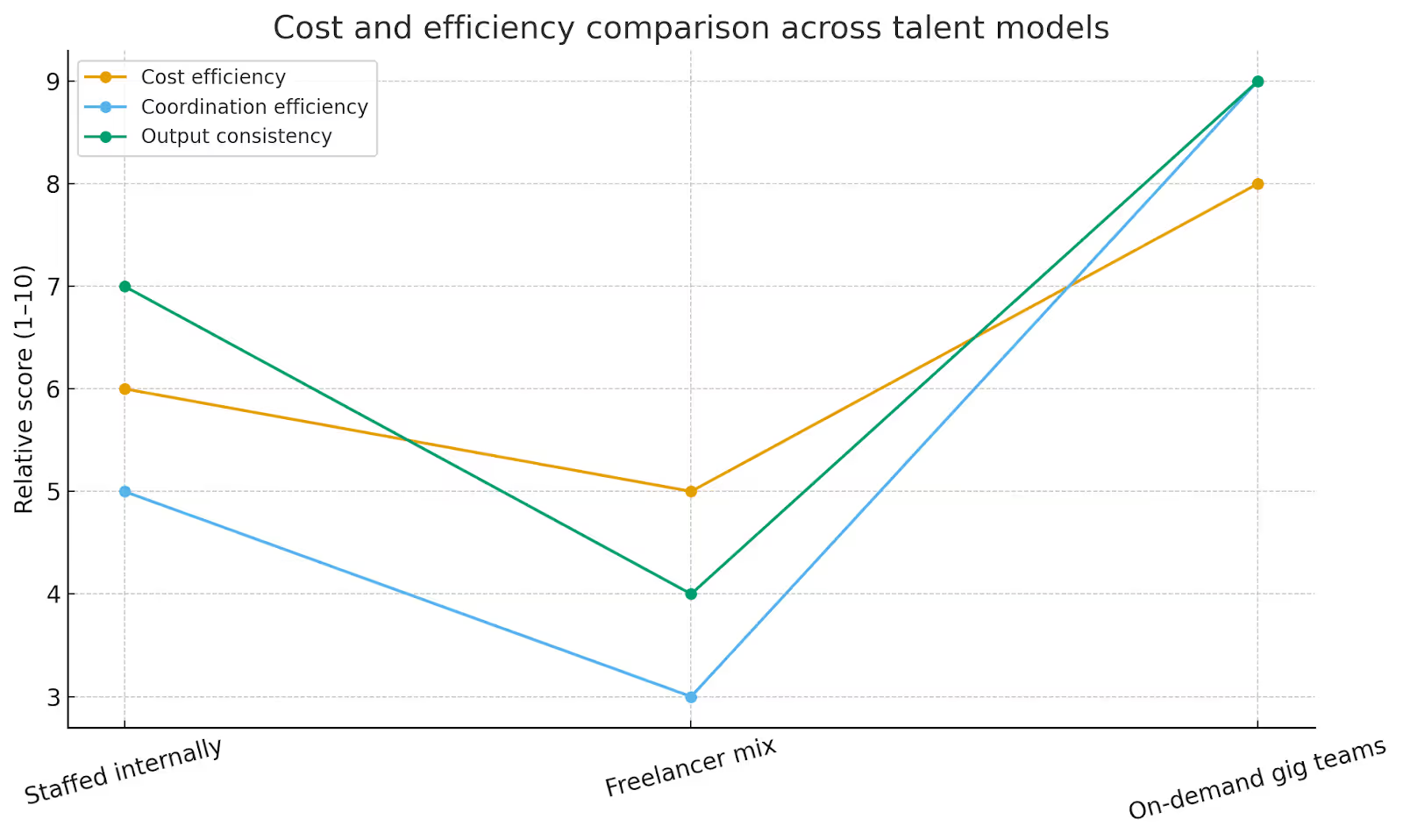
The graph visualises how on-demand gig teams outperform internal staffing and freelancer mixes by delivering higher consistency and lower coordination effort at a more efficient cost.
How FTA Gigs Enable This?
FTA Gigs provides brands with on-demand gig teams designed specifically for B2B execution. It blends speed, structure, and expertise into one operational engine.
- Pre-vetted and specialised pods
Each pod is built with the exact blend of skills needed for marketing execution at scale. - One unified lead
The brand interacts with one senior owner who drives clarity, strategic direction, and alignment. - Sprint-based delivery
Work is executed in rapid cycles with clear outcomes and timelines. - Full workflow visibility
Brands see tasks, owners, status, and deliverables in real time. - End-to-end management
FTA handles strategy, execution, review, quality checks, and reporting.
On-demand gig teams - Helping brands grow without hiring
The new marketing landscape rewards brands that move quickly, experiment often, and execute consistently. Traditional hiring is too slow. Freelancers are too fragmented. Agencies are too heavy.
On-demand gig teams offer a balanced solution which is fast, reliable and cost-efficient. They give brands the freedom to grow without increasing headcount and the clarity to execute without operational chaos.
For brands aiming to stay competitive, this model is becoming increasingly essential amid growing demand for gig teams.
Get matched with an on-demand gig team that delivers from week one
Share your goals and workload. We will map the exact gig pod that can execute faster than your current setup.
Get matched with an on-demand gig team that delivers from week one
Share your goals and workload. We will map the exact gig pod that can execute faster than your current setup.
Table of contents
Case Studies
About FTA
Keep Reading


Author Bio

Empowering Businesses for the Digital Era | Founder & Visionary at Digitopedia Solutions | Driving Growth & Innovation through Strategic Digital Solutions | With a relentless passion for Digital Marketing, I lead a team of experts dedicated to delivering unparalleled results. Let's collaborate to unlock your business's full potential in the digital landscape. Connect with me to explore new avenues of success.
Head of SMB