



Traditionally, search engines focused on sourcing entire pages. However, modern AI systems focus on retrieving specific chunks or pieces of content. Once these chunks are gathered, the system doesn't simply present them in a list. Instead, it performs fusion, which is just comparing multiple chunks from various sources and building a cohesive answer by combining them. This process begins with a fan-out. Query fan-out is the process by which an AI system decomposes a single query into multiple sub-queries that explore different aspects of the user's intent.
Blog
Fta.visibility: The Enterprise Intelligence Platform Redefining Brand Visibility in AI Search
AI answers are now the first gate in enterprise discovery. A buyer asks an AI engine who to trust, and the response shapes their choice long before they even visit your website. This is a fundamental shift in power. Visibility is no longer about ten blue links; it is about whether AI platforms cite you, recommend you, and position you as the definitive choice. Brands missing from this layer aren't just losing search rank; they are invisible at the moment decisions are formed.
Own your AI search: why visibility is now a leadership metric
AI search is a new layer on top of search, social, and content. It compresses research into a single, high-trust response. Fta.visibility translates the messy, opaque world of AI answers into consistent metrics that leadership can act on. It consolidates Google Search Console (GSC) and GA4 into a single, AI-powered system, providing a visibility score grounded in real business outcomes, like traffic displacement and conversion lift.
For enterprise leaders, this changes the meaning of search visibility. Search visibility is no longer a question of position alone. It is a mix of inclusion, framing, citations, and sentiment. This is where search visibility becomes a competitive advantage rather than a vanity metric.
Who is it built for?
Fta.visibility is an enterprise-grade search visibility tool that measures how your brand appears across leading AI platforms and answer engines for your priority prompts. It maps the priority and strategic queries your audience uses, the answers AI provides, the sources it cites, and the gaps that stop your brand from being selected.
Fta.visibility is an enterprise-grade tool designed for:
• Marketing & Brand Leaders: Who need a defensible view of brand positionality.
• SEO & Content Teams: Who need to move from "keywords" to "entities and citations."
• Digital Analytics Teams: Who want attribution for AI referral traffic and ROI.
• Competitive Intel: Who needs to benchmark "Share of Voice" against rivals in real-time.
In short, fta.visibility is for organisations that want to know how to check search visibility of a website and then actually improve it, at scale.
Under the Hood: Precision Governance
Under the hood, fta.visibility works in a governed crawl cycle. You define the topics and prompts that matter, add the brands and competitors you want to track, and connect the data sources that prove impact. Then the platform runs those prompts across selected AI engines on a recurring cycle and captures every response. Each response is parsed for mentions, citations, and the exact pages being referenced. We normalize this into a single schema, so you can compare platforms without guesswork and make decisions with confidence.
This matters because enterprise teams need a system they can audit, export, and use within their weekly operating rhythms. Not another slide deck that ages the moment it is shared.
Comparative analysis: fta.visibility vs market tools
This table compares fta.visibility with other tools and shows what each one can and cannot do across key areas like AI answer monitoring, citation tracking, competitive benchmarking, and whether GA4 and Google Search Console data are available in the same platform.
Unified Intelligence Dashboard: your live view of AI and search performance
Enterprise teams don't need more dashboards; they need one view that connects the dots.
•The Performance Funnel: Connects GSC impressions to AI visibility, and GA4 sessions to conversions.
•Brand Performance: Tracks your unique visibility score, computed from observed mentions and coverage, against your defined competitive set.
•Market Landscape Matrix: A macro view placing brands on two axes: AI Visibility and AI Sentiment.
•Search Volatility & Impact: Detects when an AI algorithm update or a competitor surge displaces your organic traffic.
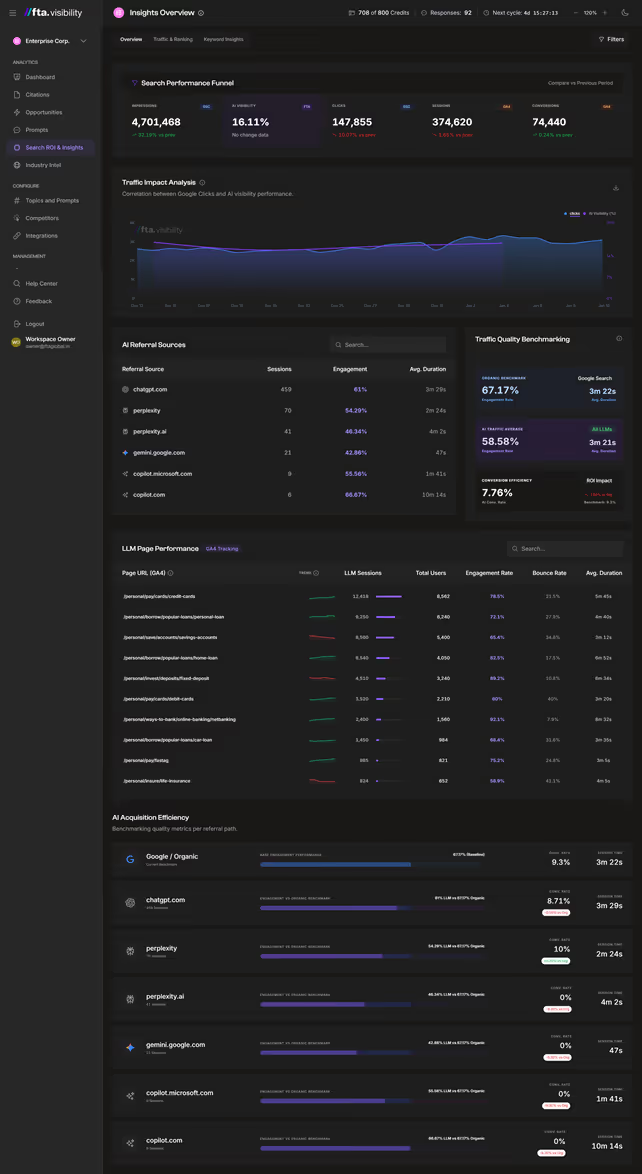
What this view gives you, in practical terms:
•A performance funnel that connects impressions, AI visibility, clicks, sessions, and conversions
•AI referral sources so you can see which platforms drive qualified traffic and where engagement differs
•LLM page performance that shows which URLs are being visited from AI platforms, and how users behave after landing
•Traffic quality benchmarking so you can compare AI-driven sessions against organic baselines
This is also where you start to understand platform bias. Different AI engines cite different sources and frame answers differently. When teams say they want to check website visibility, they really mean checking it by platform, not just in aggregate. The platform bias breakdown makes that visible.
Brand Performance: visibility score, mentions, citations, and opportunity gap
If you cannot measure it, you cannot manage it. The Brand Performance layer in fta.visibility turns AI presence into crisp metrics.
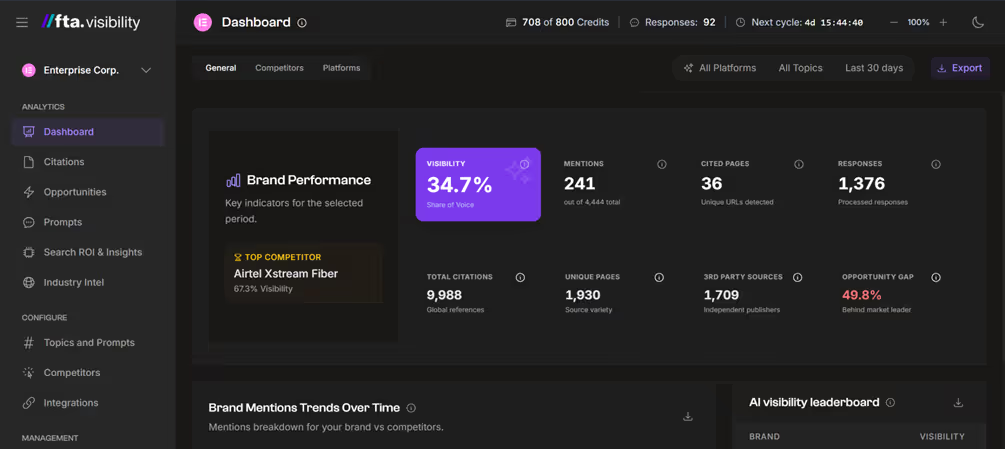
At the center is your visibility score. Think of it as your share of voice in AI answers for the prompts you track. It is not a guess. It is computed from observed mentions, response coverage, and the competitive set you define.
Alongside the visibility score, you can see:
•Mentions: how often your brand is referenced across responses
•Cited pages: which unique URLs are being used to support claims in AI answers
•Total citations and third-party sources: the broader citation ecosystem shaping how AI talks about your category
•Opportunity gap: how far you are behind the current leader, by topic and by platform
This matters because search visibility is often lost in the long tail. You might perform well in a handful of head queries, yet miss high-intent prompts that actually drive conversions. fta.visibility makes that visible quickly and gives teams a shared language for decisions.
Use this view when leadership asks for one answer: what is our visibility score, and what is the fastest path to close the gap.
Traffic & Ranking Trends: SEO visibility search metrics without blind spots
Classic SEO tools help you understand rankings and clicks. They do not explain how AI is reshaping those outcomes. fta.visibility bridges that gap by connecting traffic and ranking trends to AI visibility signals.
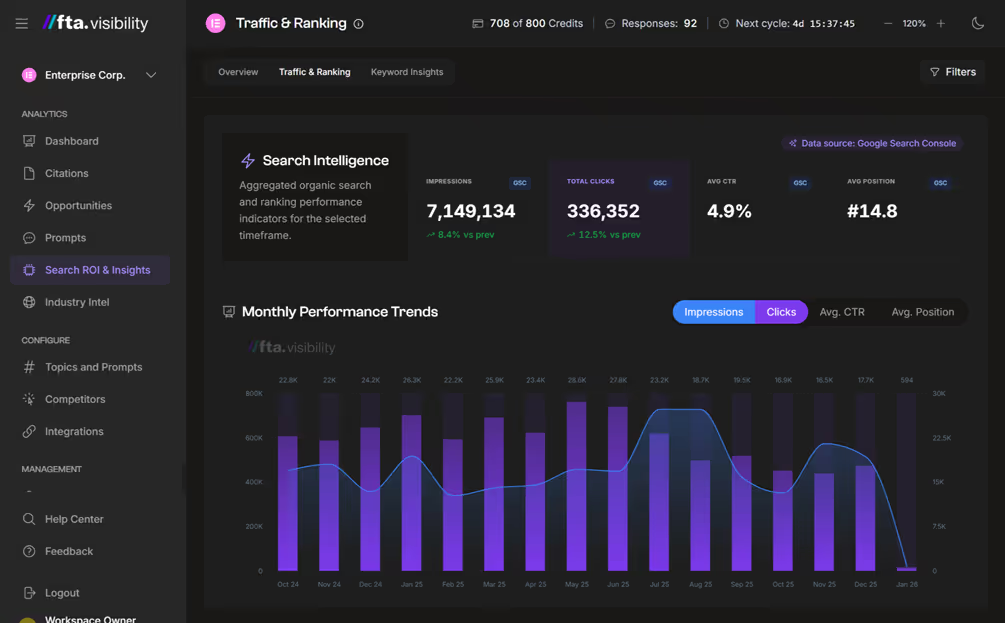
This view consolidates the core SEO visibility search metrics that enterprise teams already trust:
- Impressions, clicks, average CTR, and average position from Search Console data
- Monthly performance trends that show how demand and ranking shift over time
- A clear comparison against the previous period so you can spot momentum, not just totals
Now add the missing layer: AI visibility and AI referrals. When an AI engine directly answers a question, it can reduce clicks even as impressions rise. It can also shift traffic toward a smaller set of cited pages. With fta.visibility, you can see those patterns side by side and plan accordingly.
This is also where search volatility and impact become operational. If volatility spikes in a category, leadership needs to know whether it is a market shift, a competitor move, or an AI answer trend. fta.visibility provides the context to diagnose that fast.
Competitive Citation Analysis: heatmaps, sources, and enterprise action loops
AI answers do not appear from thin air. They are shaped by sources, citations, and the way each model prioritises information. This is where competitive advantage is built or lost.
fta.visibility makes this transparent through a set of competitive and citation views that are designed for action, not curiosity.
Competitive Citation Analysis: heatmaps, sources, and enterprise action loops
AI answers do not appear from thin air. They are shaped by sources, citations, and the way each model prioritises information. This is where competitive advantage is built or lost.
fta.visibility makes this transparent through a set of competitive and citation views that are designed for action, not curiosity.
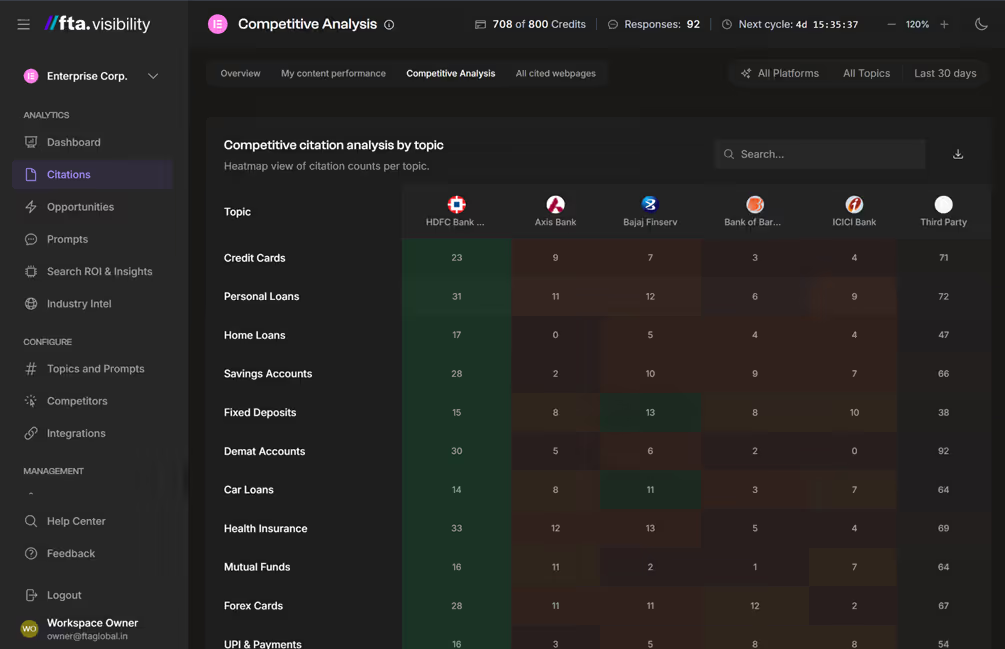
The heatmap shows how citations and mentions distribute across topics and brands. In one glance, you can see where you lead, where rivals dominate, and which topics are being shaped primarily by third-party sources. This becomes a practical keyword gap analysis for AI answers. It is not just about keywords; it is about which prompts and topics AI associates with each brand.
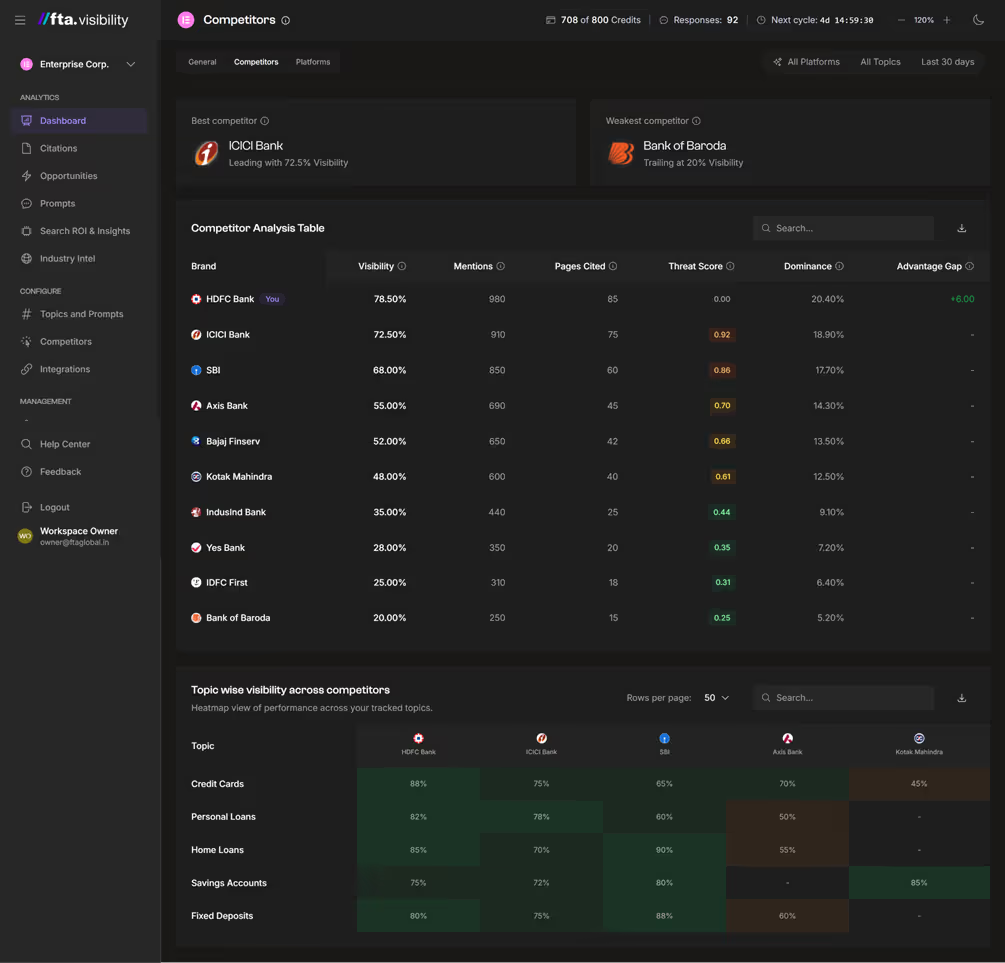
The competitor benchmarking table goes deeper. It brings together visibility, mentions, pages cited, threat scoring, and dominance. For enterprise teams, this is how you move from observation to prioritisation. If a rival has high dominance in a topic that maps to your revenue line, that is not a content gap but a positioning gap.
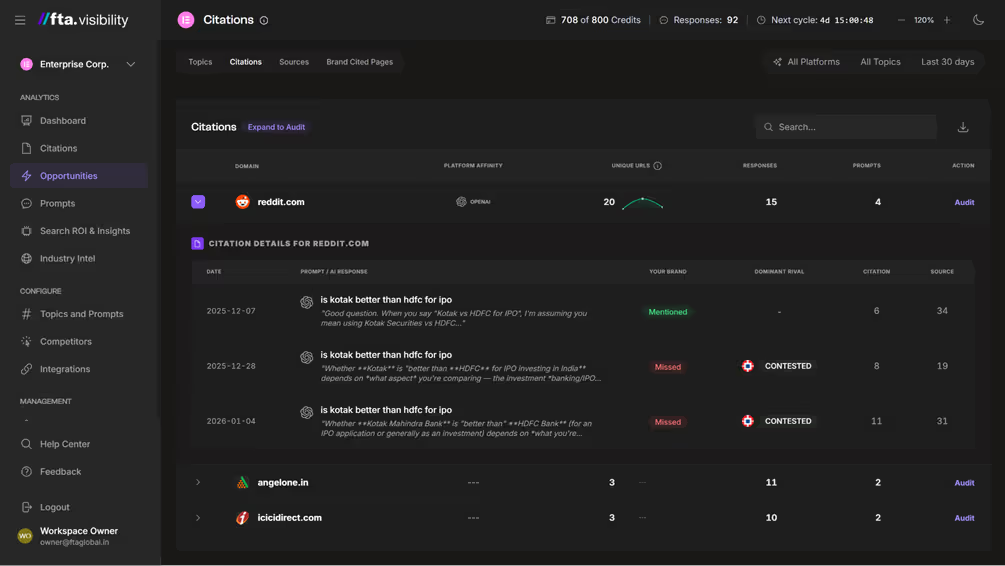
The citations and source intelligence view adds the forensic layer. You can see which domains are being cited, what prompts triggered the citation, whether your brand was mentioned or missed, and where the dominant rival is being reinforced. This is where you can quickly decide whether to improve an existing page, create a missing asset, or earn coverage from a source AI already trusts.
Together, these views answer the most practical enterprise question: how do we check website visibility and fix what is broken? They also help teams build a repeatable system for search visibility improvements across platforms.
Market Landscape Intelligence: quadrant matrix, keyword velocity, and historical visibility
Market Landscape Intelligence: quadrant matrix, keyword velocity, and historical visibility
Brand leaders need context. Being up or down in isolation does not help. You need to know how the market is moving and where your brand sits in the narrative.
Fta.visibility provides that macro view through Industry Intelligence and Market Landscape modules.
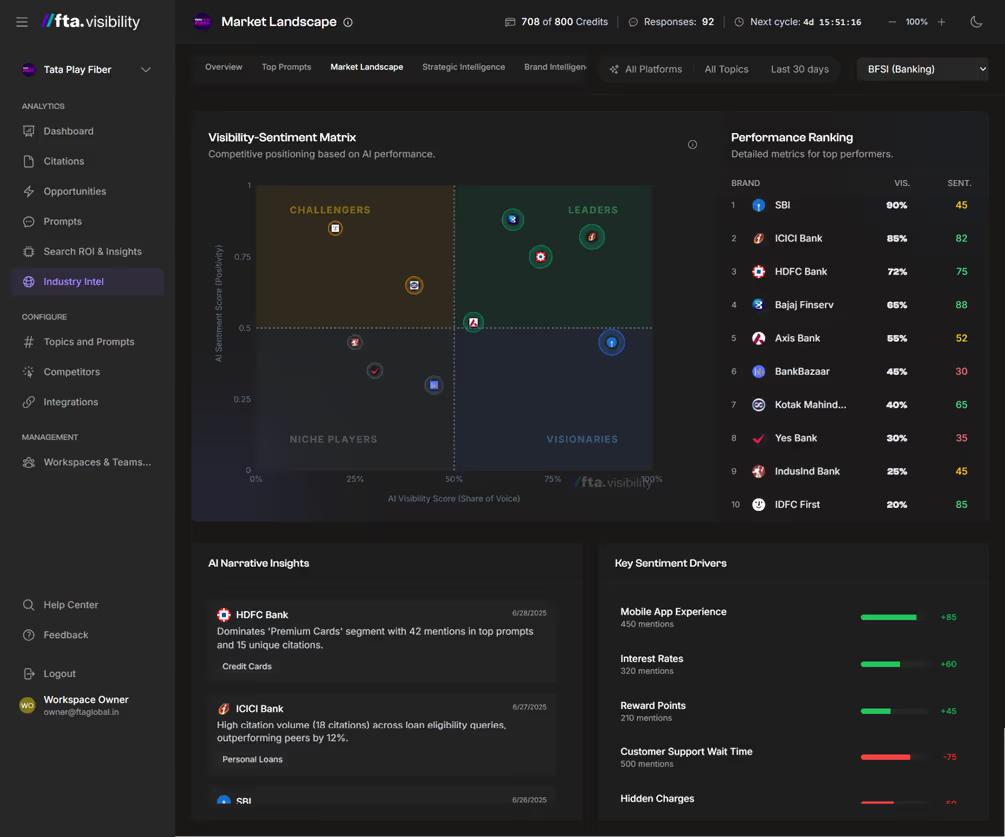
The quadrant matrix places brands on two axes: AI visibility and AI sentiment. This is the clearest way to understand positionality. Some brands are highly visible but polarising. Others are loved but invisible. Your strategy depends on which quadrant you occupy.
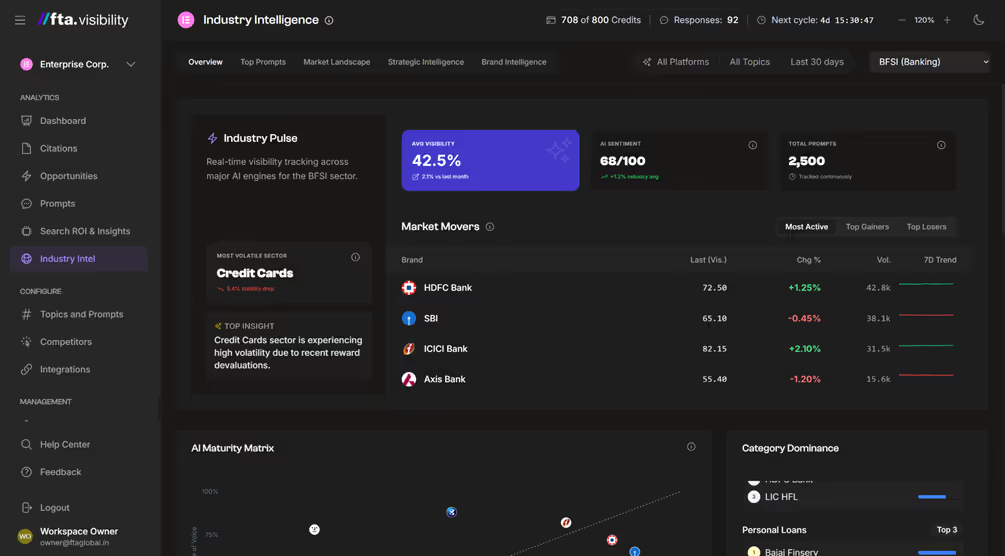
Industry and category intelligence bring in category-level signals: average visibility, AI sentiment, total prompts tracked, and market movers. It also surfaces volatility signals and narrative drivers, so you can see what topics are shaping perception.
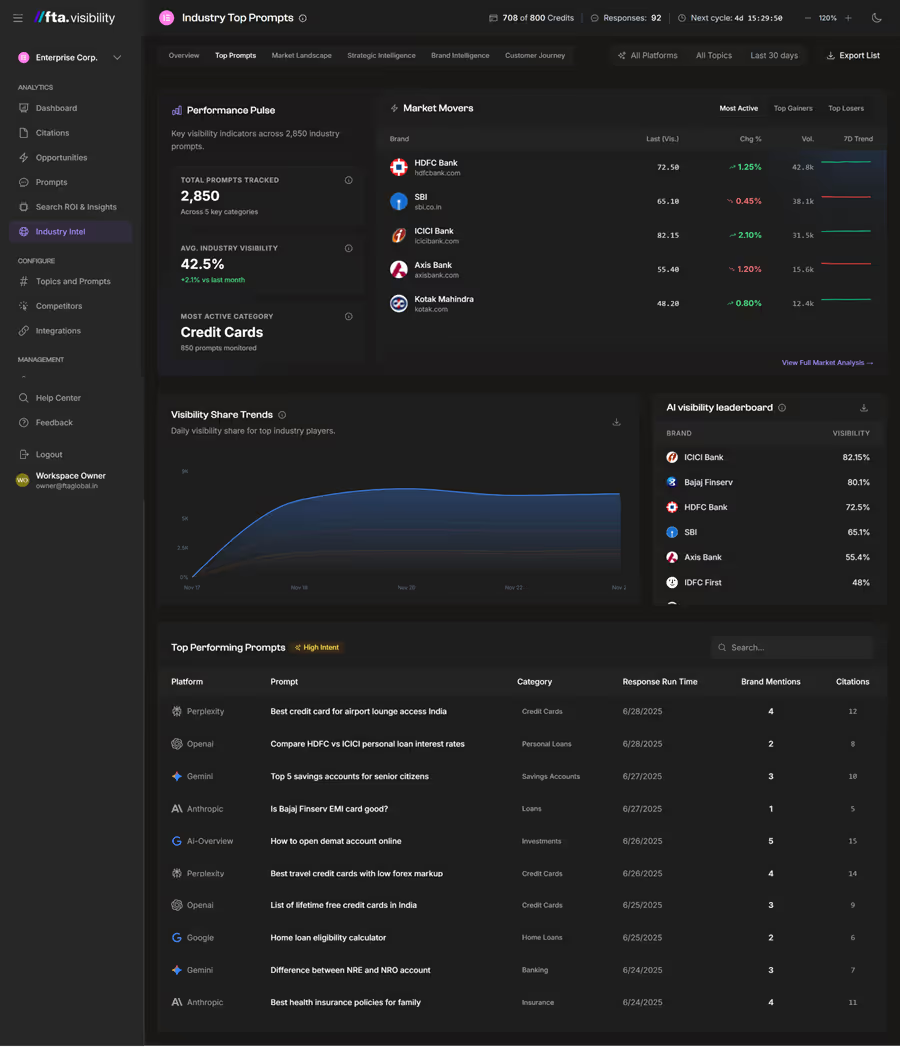
The Top Prompts view is where keyword velocity and insights become practical. You can see which prompts are most active, which are high-intent, and which platforms are surfacing them. This is how teams prioritise content and product narratives that buyers are actually asking AI about.
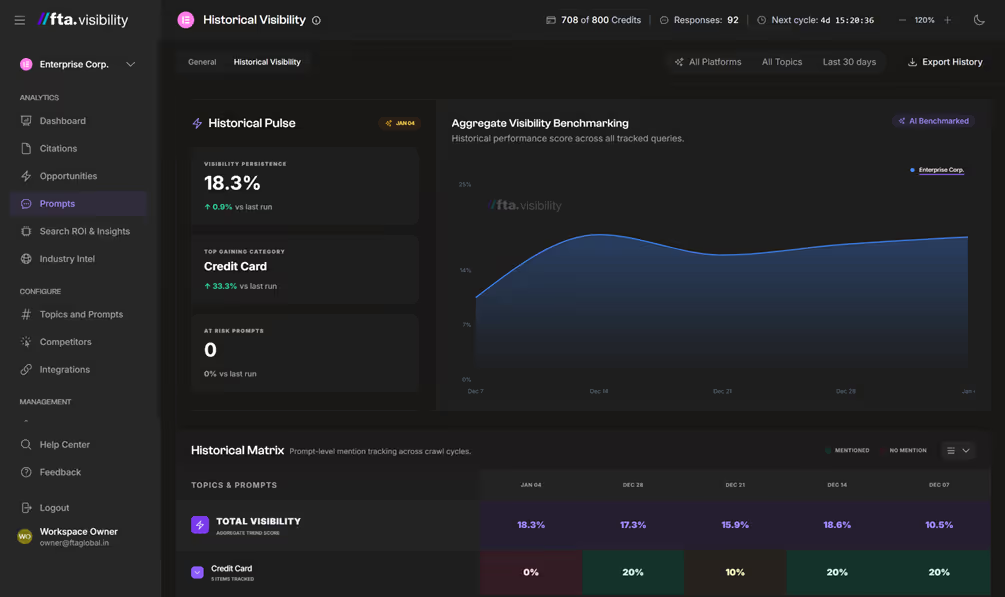
Historical Visibility shows whether gains are durable. It tracks visibility persistence, top-gaining categories, and at-risk prompts across crawl cycles. For enterprise teams, this is the difference between a temporary spike and a strategic shift. If your visibility score rises but persistence is weak, you have a short-term win, not a defensible position.
If AI cannot find you, buyers will not either
The brands that win in the AI era are those with clearer positioning and stronger citations. Fta.visibility provides the dashboard to measure it, the insights to defend it, and the playbook to grow it. We built this because enterprises need control, not experiments.
Request early access to fta.visibility
Measure, defend, and grow your AI footprint.
Request early access to fta.visibility
Measure, defend, and grow your AI footprint.
Table of contents
Case Studies
About FTA
Keep Reading


Author Bio
.avif)
For over 15+ years, Arunkumar's passion has been helping businesses to succeed and take it to another level with digital technologies. He is a creative and passionate leader who is an expert in every discipline he undertakes. The main qualities that set him apart are his analytical mind, his ability to solve complex problems, as well as his eye to find talent and empower people in order to create a solid backbone for any organization.
Arunkumar has been privileged to acquire new knowledge and model leadership strategies as he has done business with a variety of industry leaders through his work on more than 40 websites and projects. He has accomplished various web-based projects for many industries. He uses award-winning formulas for team management and project management.He always updated with the latest algorithms of Google. His aim is to provide best SEO results to my clients with white hat SEO techniques, these techniques ensure you that your website will never be banned by Google.
VP - Product Engineering