
TL;DR
- A citation means an AI answer used your page as a source. A mention means the answer named your brand as an option.
- The two are different signals, and a brand can rack up citations while barely getting mentioned.
- Citations drive referral traffic and reinforce authority. Mentions decide who makes the shortlist.
- The mention is closer to pipeline, because it happens at the moment a buyer decides who to consider.
- Our own AI intelligence and brand visibility platform, fta.visibility, shows how FTA Global is leading strongly on LLM SEO citations, and can convert this authority into even greater brand mention share across AI answers.
What is the difference between brand mentions vs citations in AI search?
A citation is attribution. When ChatGPT, Perplexity, Gemini, or Google's AI answers pull a fact from your page and link or reference it as the source, you have earned a citation. It is the AI-era equivalent of being the footnote.
A mention is recognition. When the answer names your brand as a recommendation, an option, or a player in the category, you have earned a mention. No link is needed, and often none appears.
The distinction matters because the two do not always travel together. You can be the source an engine quotes and still not be the brand it recommends.
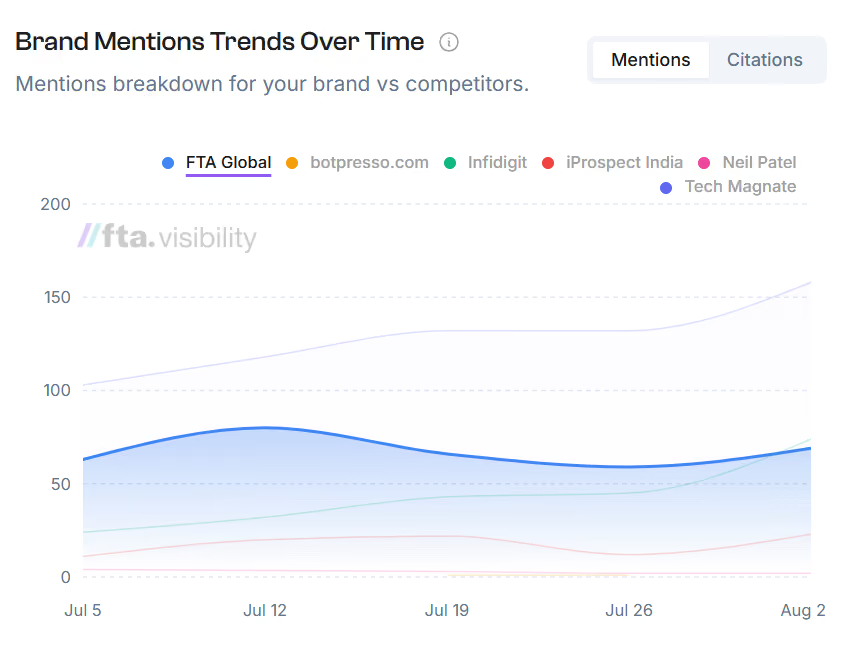
Here is a snapshot of brand mentions from our fta.visibility tool. This shows brand mentions tracked across ChatGPT, Gemini, Perplexity, and AI Overviews, week over week. FTA Global leads its category here amongst some of the key AI SEO agencies, and seeing the movement early is what lets a brand act before a lead slips.
Here is a comparison of how each signal behaves:
Is an AI citation the same as a backlink?
Not really, though the instinct to treat it like one is understandable. A backlink passes ranking signals between web pages. A citation is a reference an AI system uses to support the answer it generates, and its main job is trust and attribution, not ranking authority.
Two practical differences follow. A citation can appear without a clickable link, since many engines compress or strip sources. A citation is also tied to a specific claim inside an answer, not to your domain as a whole. Treating citations as backlinks leads teams to chase links when they should be structuring content for extraction.
Which actually moves the pipeline: citations or brand mentions?
The mention moves the pipeline, and the reason is timing. A buyer asks an AI which agencies or vendors to consider, and the shortlist is built from the brands the answer names. A citation that sits three sources deep with no mention leaves you out of that shortlist entirely.
Citations still matter, and they are not a consolation prize. They drive the referral traffic that AI search actually sends, and repeated citations across trusted contexts teach the model that your brand is credible, which makes a future mention more likely.
Think of citations as the upstream investment and mentions as the payoff at the point of decision. Converting that decision into booked revenue is where demand generation takes over from visibility.
The trap is measuring only the signal that is easiest to see. Most teams track citations because they show up in referral data, and never notice they are being read constantly while a competitor gets named. A brand can be the most-cited source in its category and lose every deal.
Suppose a buyer asks Perplexity for the best LLM SEO agency in India. The engine pulls a definition and a statistic from your blog, cites it, and then recommends three other firms it has seen named across roundups and comparison pages.
Your content shaped the answer. Your competitor got the introduction. The buyer never registered that the useful part came from you.
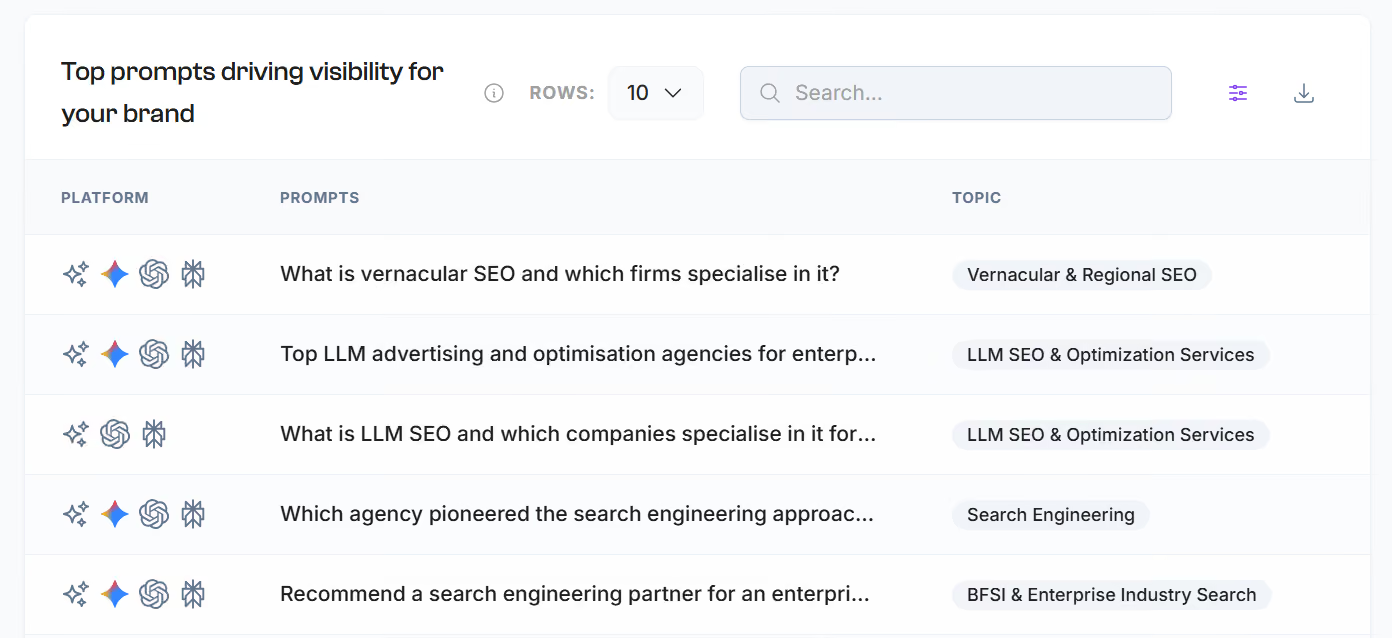
The pattern below is what our own tracking shows, and we are publishing it because the gap it reveals is the one most enterprise brands share.
Here is fta.visibility data for the top five LLM SEO queries that mention FTA Global, measured across LLM platforms viz., ChatGPT, Perplexity, Gemini, and Google AI Mode.
Where do brand mentions and citations come from?
Citations come mostly from your own content. A well-structured page with a clear answer, clean data, and proper schema is what an engine extracts and attributes. You control this directly.
Mentions come mostly from elsewhere. Industry roundups, comparison articles, directories, forums, and third-party coverage are where engines learn which brands to name, and studies suggest the large majority of AI brand mentions originate from pages the brand does not own.
You influence this, but you do not own the page it lives on. The split explains why a content-heavy brand can lead on citations and trail on mentions: it has published the sources but has not yet earned the third-party recognition.
The balance also shifts by category. In trust-sensitive industries like BFSI and healthcare, engines lean harder on cited, authoritative sources before naming a brand, while in SaaS, comparison and roundup mentions carry more weight in the shortlist. Knowing which signal your category rewards tells you where to spend first.
How do citations become brand mentions in AI search?
A citation tells us that an AI engine trusts the information. A brand mention tells us that the engine trusts the company enough to place it inside the answer.
Mentions carry greater commercial value because buyers rarely inspect every cited source. They remember the brands that ChatGPT, Perplexity, Gemini, or Google names when recommending a solution, comparing providers, or building a shortlist.
At FTA Global, we start by closing the entity gap. The brand name, services, leadership, expertise, and locations must appear consistently across the website, business profiles, directories, media coverage, and other credible sources.
Conflicting information creates uncertainty. When an AI system cannot confidently connect those signals to one clear entity, it may use the information without naming the company behind it.
Consistency becomes even more important for businesses operating across multiple locations. AI systems often depend on the same profiles, directories, and location signals used by local search engines. Incorrect addresses, inconsistent service descriptions, or different brand names can weaken both local SEO visibility and AI visibility.
The next step is earning presence on the pages AI engines already use to discover and compare companies. Relevant category roundups, credible comparison pages, expert commentary, original research, and industry publications help connect the brand to the category it wants to own.
Owned content also needs to be structured so an engine can extract a clear answer and understand who provided it. Our work with Caba Design generated 304 AI citations within two months, starting from no existing blog presence. Results at that scale create repeated associations between the brand, its expertise, and the questions buyers are asking.
Repeated citations build familiarity. Consistent entity signals build confidence. Together, they increase the likelihood that an AI system moves from citing the information to naming the brand.
FTA Global brings these elements together through Search Engineering™, the discipline we coined to engineer brand visibility across search and AI systems. It connects AI SEO, LLM SEO, answer engine optimisation, entity building, content engineering, and citation intelligence.
The objective is clear: move the brand from being an unnamed source in the background to becoming a recognised option in the buyer’s shortlist.
How do you track mentions and citations?
Track brand mentions and citations as two separate metrics, never as one visibility score. A single blended number hides the exact gap that costs you deals.
Our brand visibility tool, fta.visibility, reports mentions and citations independently across every major engine, scores how much your presence flickers between queries, and shows where a competitor holds a mention advantage you do not.
The point of measuring both is simple: citations tell you the engine trusts your content, and mentions tell you it trusts your brand enough to recommend it. You need to know which one you are missing.
For a deeper view of how answer engines choose what to name, read this blog on answer engine optimisation.
The most-cited brand can still lose the deal
Citations prove your content is trusted. Mentions prove your brand is chosen. The brands winning AI search are the ones that stopped treating those as the same achievement.
If you are being cited but not mentioned, you are doing the hard work of educating the market while someone else enters the AI shortlist. The fix is not publishing more content for its own sake. It is building entity clarity, earning presence across credible third party sources, and measuring both signals separately so you can act on the one you are losing.

Do you want more traffic?

The same question, a different answer in every city