
TL;DR
- Search engineering is the evolution of SEO that helps brands earn visibility across AI answers, Google search, and modern discovery platforms.
- AI-powered search is reducing direct clicks, so the new goal is to be cited, surfaced, and trusted, not just to rank first.
- Modern search relies on context, entities, and retrieval, which is why brands need structured, AI-readable content rather than keyword-only pages.
- Strong AI SEO services now require topical hubs, internal linking, and semantic clarity so engines understand what your brand owns.
- Zero-click readiness matters because visibility today comes through snippets, AI Overviews, knowledge panels, and extracted answers.
- Success is measured through AI citations, entity authority, cross-platform presence, and business outcomes, not traffic alone.
Who is this blog for?
- Marketing leaders who want durable visibility when AI systems answer before clicks and reduce direct site visits.
- B2B teams that need a practical roadmap to build topical authority, entity trust, and measurable AI citation outcomes.
Search isn’t what it used to be. Ten years ago, a marketer could achieve growth by tuning their website around a handful of keywords and winning a few backlinks.
Today, that world is gone. AI‑powered engines now answer questions before a user ever visits a site, social networks double as discovery platforms, and long‑form queries are turning search into a conversation.
Instead of chasing rankings, fast-paced & new-age brands engineer their visibility across every channel today.
This blog article explores the discipline of search engineering, explains why it matters now, and lays out a roadmap for building a modern search strategy.
What is Search Engineering?
Search engineering is the evolution of SEO. Instead of treating organic visibility as a series of hacks, it approaches discovery as an engineering problem. Classic SEO optimises pages to rank higher in search engine results.
Search engineering goes much further by aligning a brand’s entire digital footprint with how modern algorithms read, retrieve and trust information.
It treats your site, your brand, and your online network as inputs to a multidimensional model rather than as a list of blue links.
At its core, search engineering builds visibility across three dimensions: generative engines (such as ChatGPT, Gemini, and Perplexity), traditional search engines (Google, Bing, and YouTube), and discovery platforms (LinkedIn, Reddit, podcasts, etc.).
It does this by designing content and structured data that answer specific questions, by embedding the brand in knowledge graphs so AI systems recognise it and by creating connected topic hubs that send clear semantic signals.
The goal is not to chase vanity rankings; it’s to be cited, surfaced, and trusted wherever and however people search.
How Has Search Changed from Keywords to Context and Citations
Most organizations still rely on an SEO playbook written for an earlier era. This playbook focused on targeting high‑volume keywords, optimizing on‑page elements and building backlinks.
It worked when "search" meant typing a few words into Google and clicking through 10 blue links. But the landscape has shifted dramatically.
- AI answers before clicks. Google’s AI Overviews summarize results at the top of the page, often eliminating the need to click.
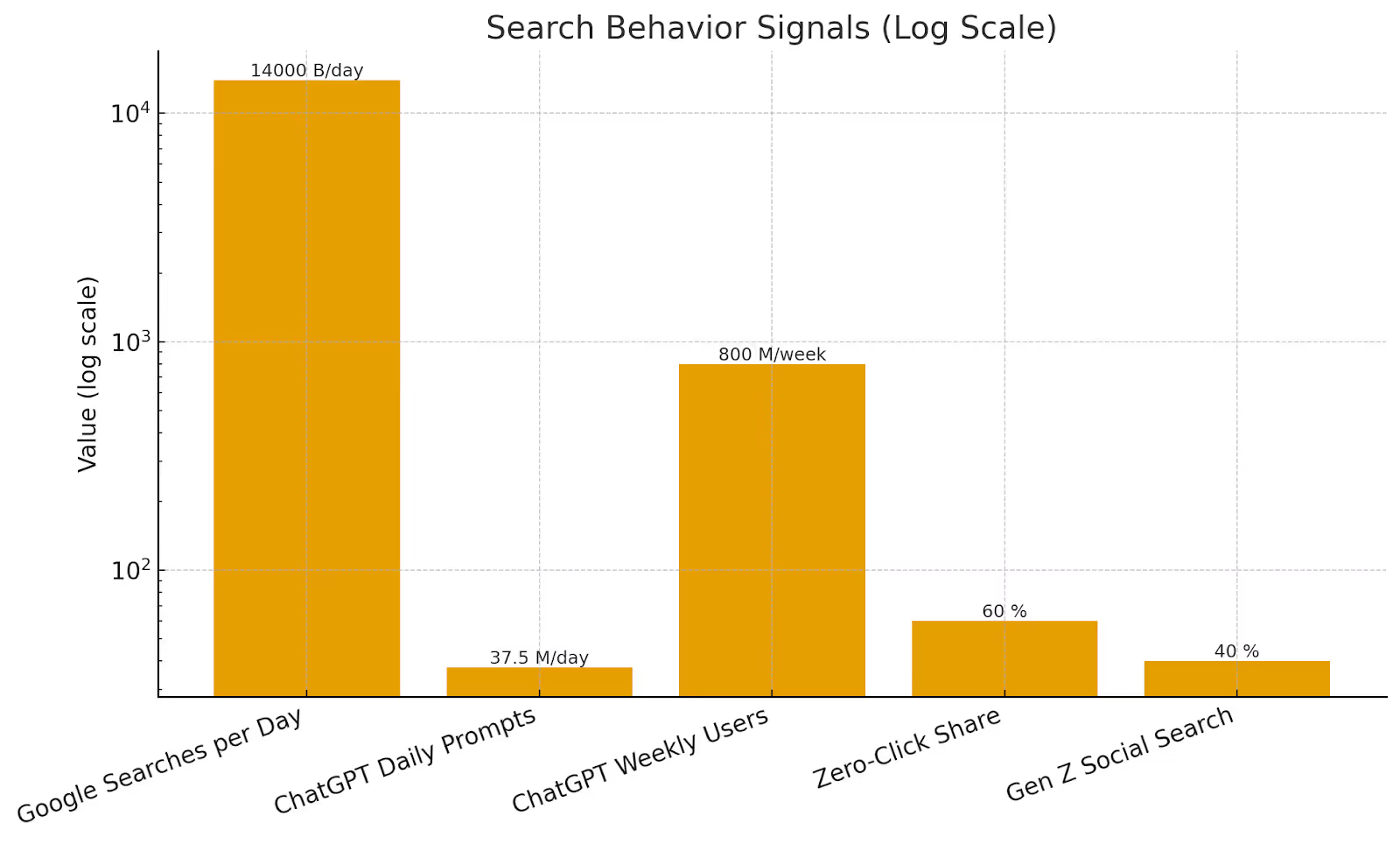
- Research shows that nearly 60% of Google searches now end without a click because answers are delivered directly on the results page.
- Research shows that nearly 60% of Google searches now end without a click because answers are delivered directly on the results page.
- Generative engines decide which brands to cite. ChatGPT, Perplexity, Gemini and other language models draw from trusted sources across the web. According to usage analysis, Google processes roughly 14 billion searches per day, while ChatGPT handles around 37.5 million user prompts.
- This gap is closing fast, as weekly active users of ChatGPT have exploded eightfold, surpassing 800 million by April 2025.
- This gap is closing fast, as weekly active users of ChatGPT have exploded eightfold, surpassing 800 million by April 2025.
- People search everywhere. Social platforms such as YouTube, Reddit, LinkedIn and TikTok have become discovery engines in their own right.
- For Gen Z users, 40% prefer searching on TikTok or Instagram over Google.
- Meanwhile, AI assistants are now a major gateway for product research, and the lines between conversational search and traditional search are blurring.
- Search is context‑first. Older algorithms matched exact keywords. Modern engines use semantic embeddings and knowledge graphs to understand topics, entities and relationships.
- They break queries into sub‑questions, generate a custom corpus and extract specific passages rather than returning full pages.
- Content needs to speak to those deeper intents, not just repeat a keyword phrase.
These shifts mean that the classic SEO tactics of stuffing keywords and building generic backlinks are no longer enough.
Brands must engineer their presence to be the authoritative answer across many surfaces. This is where search engineering comes in.
How Is Search Engineering Different From Traditional SEO & LLM Optimization?
Search engineering, traditional SEO and LLM optimization share similarities but diverge in their goals, inputs and metrics. The following table summarizes the key differences:
This table illustrates that search engineering is not a replacement for SEO but an expansion of it.
It shows how traditional SEO focuses on rankings and traffic, whereas search engineering integrates AI readiness, entity authority and cross‑platform presence.
How Do You Engineer a Search Strategy?
Search engineering combines strategic planning, content architecture and technical rigour. A successful program begins with research and ends with continuous measurement. Here is a framework to follow:
1. Understand Your Audience and Intent Landscape
Start by mapping the questions your target audience asks across their journey. Buyers today use longer, more specific queries.
For example, rather than searching “best CRM,” they might ask, “What is the best CRM for a B2B scale‑up with a small marketing team that just raised a Series A?”
Such conversational queries require equally specific content. Tools like People Also Ask, Reddit threads, internal search logs, and AI prompt analysis reveal real questions.
Segment these by intent informational, commercial, navigational and transactional) and by stage of the funnel.
2. Define Your Brand Entity and Knowledge Graph Footprint
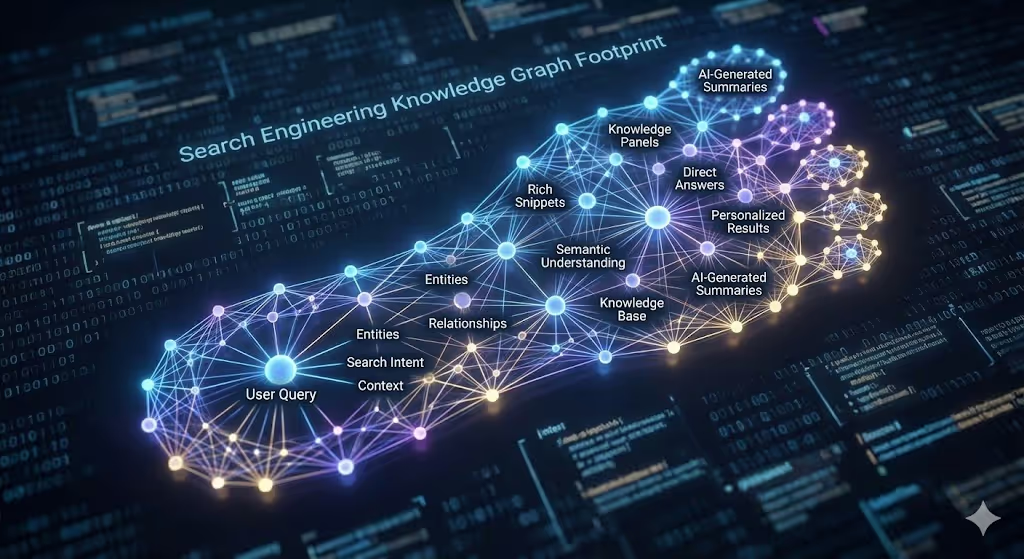
AI systems rely on knowledge graphs to understand entities, unique, well‑defined things and concepts. Your brand must be consistently defined across your site and external profiles.
This means aligning names, descriptions, services and credentials everywhere.
Inconsistent naming can cause a model to misclassify your brand, just as misaligned NAP details hurt local SEO.
Create rich entity pages, link them to authoritative profiles and ensure third‑party mentions use consistent language.
3. Engineer Topical Hubs and Context Graphs
Modern engines break a broad query into multiple semantic sub-queries. To show up in this environment, build comprehensive topic clusters.
Start with a core pillar page that answers “What is [topic]?” and create supporting articles that address benefits, challenges, tools, case studies, and how‑tos.
Link these articles using descriptive anchor text so algorithms can traverse the context graph.
Search engineering’s context graph optimization connects every content asset to its semantic neighbourhood, improving the odds that any passage can be extracted and cited.
4. Structure Content for AI and Human Readability
- Large language models prefer structured, factual, and semantic content. Use hierarchical headings (H1, H2, H3) to organize information logically.
- Answer the primary question immediately, then expand. Employ Q&A style subheadings (“How does [topic] work?”) and lists or tables for clarity.
- Break long articles into digestible chunks, each addressing a single question or subtopic. Add FAQs and summaries to increase the chance of being pulled into AI answers.
- Avoid keyword stuffing; instead, embed synonyms, related entities and clear definitions.
5. Optimize Technical Foundations and Accessibility
Even the best content fails without technical support. Here’s how you optimize your content in technical foundations -
- Ensure your robots.txt allows AI crawlers like ChatGPT and Perplexity. Maintain clean, semantic HTML.
- Improve page speed, mobile responsiveness and security.
- Use structured data (FAQ schema, HowTo schema, Article schema, Organization schema, Speakable schema) so models and search engines understand your content.
- Create comprehensive XML sitemaps and implement internal linking to help crawlers map your site.
6. Build Authority Through Original Research and Public Relations
Modern engines prioritise authoritative, trustworthy sources. Develop proprietary research, surveys, case studies and expert commentary.
Unique data points and frameworks become linkable assets. Publish on your own site and pitch the findings to industry publications. Garner mentions and backlinks from reputable domains.
This not only drives classic SEO signals but also increases the likelihood that AI models will see and cite your brand.
In parallel, invest in thoughtful digital PR -podcasts, webinars and guest articles to build entity recognition across the web.
7. Optimise for Zero‑Click Features and Snippets
Google’s results are crowded with featured snippets, knowledge panels, videos, shopping results and AI summaries. Aim to own those spaces.
Present definitions, step‑by‑step instructions, comparison tables and pros‑and‑cons lists. These formats are more likely to be pulled into featured snippets or AI Overviews.
For product or service pages, include structured data for pricing, reviews and business details to earn rich results.
On social and video platforms, optimize metadata (titles, descriptions, captions) to align with conversational queries.
8. Measure AI Citations, Visibility and Impact
Traditional SEO reports emphasise ranking position and organic traffic.
- Search engineering adds new metrics: AI citation count (how often your pages are cited by ChatGPT, Perplexity, Gemini or AI Overviews)
- Zero‑click readiness (how many of your assets appear in snippets or summaries)
- Entity graph presence (how well search engines and models understand your brand) and cross‑platform visibility.
How Does LLM Optimization Fit into Search Engineering?
LLM search optimization, sometimes called generative engine optimization or answer engine optimization, is a key component of search engineering.
It focuses on making your content easily retrievable, understandable and citeable by large language models. Here are the essential practices:
- Target questions, not just keywords. LLMs answer natural‑language questions. Research the specific questions your audience asks and structure content to provide direct, concise answers followed by elaboration.
- Tools like People Also Ask, Perplexity’s related questions, and community forums reveal common queries.
- Tools like People Also Ask, Perplexity’s related questions, and community forums reveal common queries.
- Use conversational, semantic language. Write as if you’re speaking to a person. Cover multiple facets of a topic, using synonyms and related concepts naturally. LLMs prioritize context and meaning over keyword density.
- Create AI‑friendly structures. Start with a brief definition, then break into clearly labelled sections. Include lists, tables, bullet points and comparison charts. Label segments such as “Pros and Cons,” “Key Features”, or “Use Cases” to help models parse the content.
- Demonstrate expertise, authority and trust. Include author bios, cite reputable sources and showcase credentials. Incorporate proprietary data, original research and expert quotes. Regularly update content and add timestamps so AI models know the information is current.
- Implement structured data and schema markup. Use FAQ, HowTo, Article, Organization and Speakable schemas to label your content. This clarifies context and helps AI and search engines understand relationships.
- Optimize technical accessibility. Allow AI crawlers in robots.txt, ensure fast load times, and use clean HTML.
- Test your visibility. Run prompts on ChatGPT, Perplexity, Google SGE, or Bing Copilot to check whether your pages are cited. Keep a spreadsheet to track visibility across key queries and compare against competitors.
LLM optimization doesn’t replace traditional SEO but complements it: many fundamentals, clear structure, user intent focus, technical soundness - overlap. The difference lies in tailoring content for AI retrieval and citation, rather than solely for ranking.
Building Topical Authority and Entity Presence: Frequency and Relevance
Being cited by an AI model is a game of probability. The more frequently and consistently your brand is mentioned across the web, the more likely it is to become the “next word” in the model’s output. Frequency without relevance, however, is ineffective; spammy mentions can dilute your signal or misclassify your entity.
To build frequency, earn mentions on high‑authority, topic‑relevant sites. Guest posts, industry interviews, partnerships and data‑driven reports all increase your footprint.
Support customers and partners in ways that lead them to cite you naturally. To build relevance, align your on‑site content with the topics you want to own.
Create clear, authoritative pages that define your expertise and connect to supporting articles. Ensure your brand name, description, and offering are consistent across all channels and platforms.
How to Measure Success from Rankings to AI Citations to Revenue?
Search engineering drives both visibility and business outcomes. While organic traffic still matters, traditional SEO remains the breadwinner for most brands. New measures tell you whether you’re winning in the AI era through these factors:
- AI citation volume. Count how often AI Overviews, ChatGPT or Perplexity cite your pages. A rise in citations signals growing authority.
- Zero‑click visibility. Track how many of your assets appear in featured snippets, knowledge panels, People Also Ask boxes or AI summaries. Tools like FTA’s Zero‑Click Audit help identify gaps.
- Entity authority. Use knowledge graph analysis tools to see how engines classify your brand and whether you appear alongside desired topics.
- Cross‑platform engagement. Measure engagement and conversions from social discovery platforms and AI‑generated referrals.
- According to Semrush data, traffic referred by AI search converts at a 4.4× rate compared to traffic from traditional search.
- According to Semrush data, traffic referred by AI search converts at a 4.4× rate compared to traffic from traditional search.
- Business metrics. Ultimately, measure revenue, lead quality and customer lifetime value. FTA case studies show that when brands engineer visibility rather than chase clicks, outcomes follow.
The Future of Search Engineering: Evolving Role of GEO & AEO
The shift from keyword‑driven SEO to AI‑powered search is accelerating. Several trends point to why brands must act now:
- The rise of zero‑click search. With AI Overviews and conversational answers at the top of the results, most queries will be satisfied without a click.
- Brands must learn to derive value from visibility alone by tracking citations and mentions in addition to traffic.
- Brands must learn to derive value from visibility alone by tracking citations and mentions in addition to traffic.
- Rapid growth of AI assistants. ChatGPT’s user base ballooned eightfold between late 2023 and April 2025.
- Generative engines are becoming a primary gateway for information. Even if your website isn’t receiving the traffic, your content may still influence decisions if it powers an AI response.
- Generative engines are becoming a primary gateway for information. Even if your website isn’t receiving the traffic, your content may still influence decisions if it powers an AI response.
- Longer, more conversational queries. Searches averaging six words now often exceed twenty words as people ask more precise questions and expect more detailed answers. Content must be built around these specific intents.
- Social search and multi‑platform discovery. 40% of Gen Z use TikTok or Instagram for search.
- Reddit, YouTube and LinkedIn each have their own discovery algorithms. Search engineering ensures your brand appears where your audience looks, not just on Google.
- Reddit, YouTube and LinkedIn each have their own discovery algorithms. Search engineering ensures your brand appears where your audience looks, not just on Google.
- Greater emphasis on authority and trust. Models and engines are getting better at detecting spam. Brands that invest in original research, consistent entities and quality content will stand out. Those who rely on shortcuts will be filtered out.
- Integration of paid and organic. As AI systems deliver more answers in‑line, paid placements and organic snippets will coexist in new ways.
- Performance marketing teams must work with search engineers to align creative assets and messaging across channels.
Looking ahead, the boundary between SEO, content marketing, PR and data science will fade. Search engineering teams will include strategists, content architects, data engineers and PR specialists.
They will use machine‑readable frameworks, knowledge-graph tools, and AI-based citation dashboards.
Success will be measured in citations, entity authority, and revenue, not just ranking position.
FTA’s Approach: Engineering Visibility for the AI Era
FTA Global pioneered search engineering to meet the challenges of the AI era. The company’s methodology revolves around five pillars:
- Generative and Answer Engine Optimization (GEO/AEO). FTA optimizes content to be the source that AI engines cite. This involves structuring passages, creating Q&A sections and using schema markup so models can easily extract and attribute answers.
- Entity Authority. FTA engineers brands into knowledge graphs by creating consistent entity definitions, leveraging structured data and pursuing relevant mentions. This builds trust in how machines perceive the brand.
- AI Citation Score (AICS). A proprietary metric that tracks how often a brand is cited across generative engines. It provides a precise measure of AI visibility and informs content prioritization.
- Zero‑Click Readiness. FTA helps brands own snippets, videos and assets that capture value directly on the results page. This includes optimizing for featured snippets, People Also Ask, video carousels and knowledge panels.
- Context Graph Optimization. Every content asset is connected to its semantic neighbourhood through internal links and structured data. This ensures that search engines and AI models understand the relationships among topics and can retrieve the right passage.
How AI Search Compares to Traditional Search?
The following graph visualizes several trends shaping search today. It highlights the scale of Google searches versus ChatGPT prompts, the growth of ChatGPT’s weekly active users, and shifts in user behaviour such as zero‑click searches and social discovery.
Notice how traditional search still dwarfs AI prompts, but how AI adoption and zero‑click behaviour are rising sharply.
Why Every Modern Brand Needs Search Engineering Now
Search is not dying; it is evolving. People still seek answers, but they now ask AI assistants, rely on social platforms, and expect context‑rich responses.
Traditional SEO remains essential, yet the playbook is incomplete.
Brands that ignore the shift risk losing visibility to competitors who engineer their presence for the AI age.
Search engineering provides the framework to thrive in this environment. It blends SEO, content architecture, entity management, technical excellence and digital PR into a cohesive system.
It prioritizes relevance over keywords, citations over clicks and context over volume. It measures what really matters: being the authority that AI engines and users trust.
For marketing leaders, the choice is clear.
Either cling to old tactics and watch your traffic erode, or embrace search engineering and build durable visibility across every discovery channel.
FTA’s approach demonstrates that engineered visibility delivers results in higher citations, better engagement, and significant revenue growth.
The brands that invest in search engineering now will define how their markets see them tomorrow.


Do you want more traffic?