


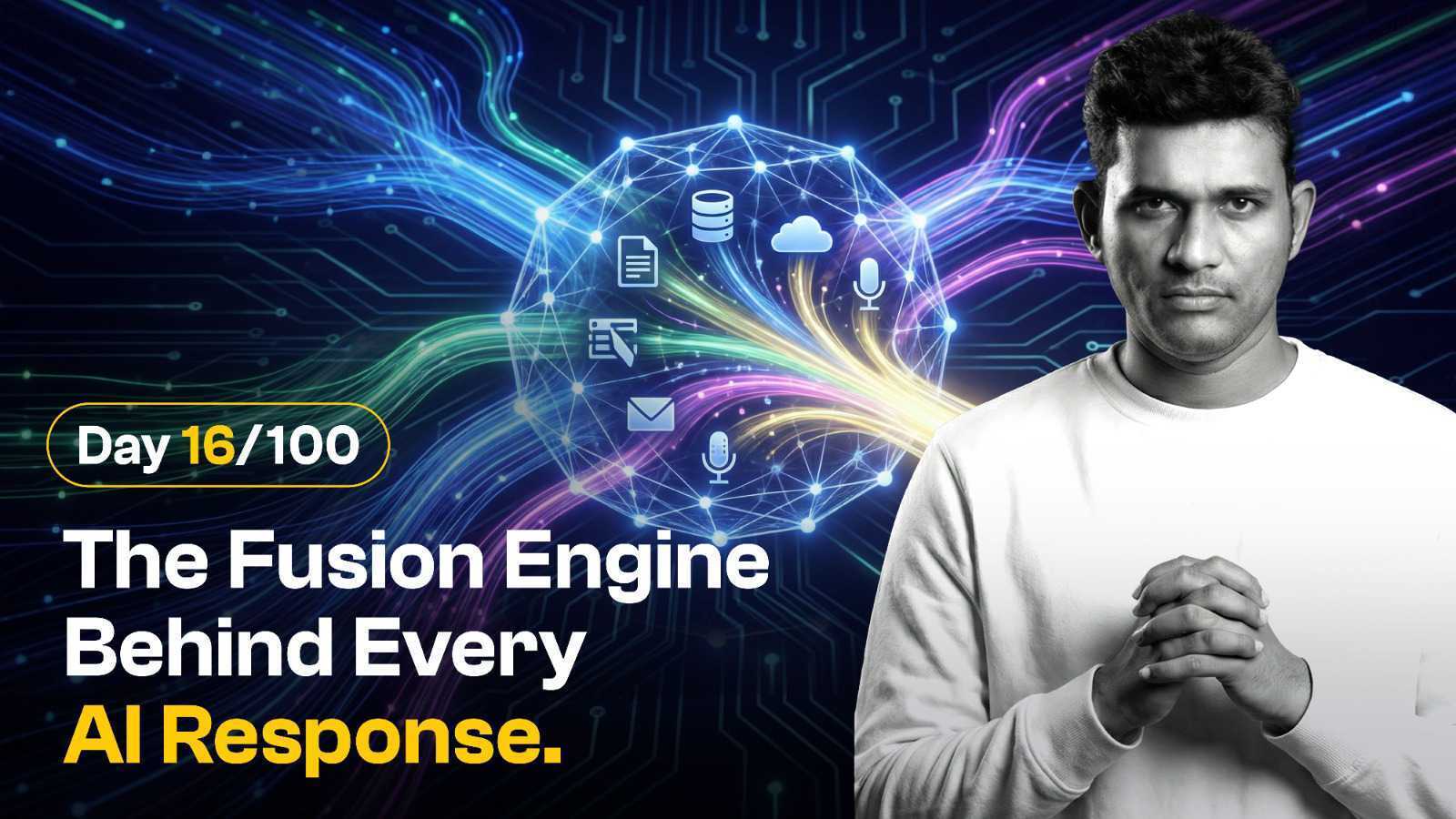
Traditionally, search engines focused on sourcing entire pages. However, modern AI systems focus on retrieving specific chunks or pieces of content. Once these chunks are gathered, the system doesn't simply present them in a list. Instead, it performs fusion, which is just comparing multiple chunks from various sources and building a cohesive answer by combining them. This process begins with a fan-out. Query fan-out is the process by which an AI system decomposes a single query into multiple sub-queries that explore different aspects of the user's intent.
Blog
LLM ranking factors for ChatGPT, Claude & Perplexity that decide brand visibility in AI answers
TL;DR
- ChatGPT does not rely on Google’s local pack in the same way and often references third-party platforms for recommendations
- Share of voice inside AI-generated responses is now the primary visibility metric
- Claude includes brands that it can clearly verify through consistent positioning and credible third-party mentions
- Traditional SEO fundamentals still drive the majority of eligibility across LLM platforms
- Tracking requires combining revenue outcomes with leading campaign actions you can control each month
Over the last year, LLMs have changed how discovery works. Google is predicting answers before users finish typing. ChatGPT, Claude & Perplexity, and AI Overviews are generating recommendations without sending users to ten different links.
Visibility is no longer equal to clicks, and attribution is no longer straightforward.
Nathan Gotch, Founder of Gotch SEO Academy and CEO of Rankability, in a conversation with Senthil Kumar Hariram, our Founder & MD, spoke about “how the structure of SEO remains intact, but the mechanics of implementation have shifted.
Agencies can no longer optimise for a single search engine. They need an operating system that works across Google products, ChatGPT, and emerging AI platforms. The real question is not how to rank. The real question is how to be selected.”
This Blog Is For
- CMOs and growth leaders who need their brand mentioned in ChatGPT, Claude, Perplexity, and AI answers
- Agency owners who must explain ROI when AI answers do not always produce trackable clicks
- B2B teams competing in high-value, high-trust categories
What Are the LLM Ranking Factors That Influence AI Visibility?
LLM ranking factors are not identical to traditional ranking signals, yet most of the foundation remains the same.
We discussed and concluded that roughly 80% of performance across Google and LLM platforms is still driven by classic SEO best practices:
- Technical performance and crawl health
- Strong user experience
- Deep topical authority that goes a mile deep on one subject
- Link acquisition that grows site authority
These fundamentals make your brand eligible.
The remaining 20% determines whether your brand is selected in an AI-generated answer.
AI systems act like black boxes. They synthesise information from trusted sources and return a condensed response.
Your brand must exist as a clearly defined entity across the web. This means consistent brand naming, accurate descriptions, and validation from recognised platforms.
Entity authority is not built only on your website. It is built through association with other trusted entities.
What Are The ChatGPT Ranking Factors For Brand Recommendations?
ChatGPT ranking factors revolve around entity clarity and third-party confirmation.
Unlike Google’s traditional results, ChatGPT does not rely heavily on the local pack for recommendations. Instead, it frequently references trusted third-party platforms such as review sites, directories, and industry listings.
If your brand appears consistently on:
- Recognised review platforms
- Established industry directories
- Best of lists alongside credible competitors
- High-trust community platforms like Reddit, YouTube, or LinkedIn
Hence, your probability of being mentioned increases.
Mentions matter even without links. LLMs can extract entities from trusted sources, whether or not a clickable backlink is present. The objective is not just to link equity but to reference density across credible surfaces.
How To Rank In Claude AI for Brand Mentions?
Claude does not rank websites in the traditional sense. It selects and cites brands it can confidently validate through credible, traceable sources.
Visibility improves when your brand is a clearly defined entity across the web, supported by consistent positioning, authoritative third-party mentions, and structured content that directly answers decision-stage questions.
Pages that are factual, well organised, and evidence-led are more likely to be referenced than promotional or vague content.
Build credibility that Claude can verify online. Here are some of the factors to consider -
- Earn mentions on trusted industry platforms where buyers compare vendors
- Keep your brand name, category, and positioning consistent everywhere
- Publish deep service pages that explain your methodology and real outcomes
- Replace generic claims with specific proof and verifiable evidence
- Track share of voice using a fixed prompt set to measure inclusion against competitors
Why Do Some Brands Rank Well on Google but Disappear on ChatGPT?
Here is the simplest explanation. LLMs do not always trust the same signals that Google trusts.
For local businesses, Google’s AI mode often mirrors the local pack. If you win the map pack, you often win the AI overview. But ChatGPT does not use Google’s map data.
It looks at platforms like Yelp, the Better Business Bureau, and Angie's List. It checks for consistent reviews and listings. It compares mentions across Reddit, YouTube, and LinkedIn. If those signals are missing, even a number-one-ranked website becomes invisible.
This is why brands with strong traditional SEO can vanish inside LLM responses. The model has no reason to believe you are the best option in the real world.
What Common SEO Errors Cause Invisibility in ChatGPT and Perplexity?
Several common mistakes create AI invisibility -
- Over-reliance on exact match domains
An exact-match domain may rank in classic search results yet fail to appear in AI responses. - Weak third-party footprint
A strong website alone is insufficient if the broader web does not validate the brand. - Inconsistent business information
Conflicting descriptions, categories, or positioning reduce trust signals. - Lack of bottom of funnel and branded query control
If you do not own the narrative around your brand, AI systems may fill the gap inaccurately. - No transparency in reporting
Agencies hiding behind proprietary methods often struggle to demonstrate value. Gotch emphasises that transparency and communication are often more important than results alone for retention.
Are We Moving Beyond SEO Into Multi-Platform Search?
Marketers are already shifting their behaviour. Users search differently now. They discover through conversations, not keywords. They ask for recommendations, not lists. They compare brands within the same prompt and trust platforms where real people share real experiences.
Today, your SEO footprint is shaped by how visible you are across key surfaces such as
- LinkedIn posts and creator content in your category
- YouTube videos that explain, compare, or review your solution
- Reddit threads and niche communities where users validate options
- Directories, community lists, and independent category roundups
SEO is no longer limited to your site. Your visibility depends on the strength and consistency of your presence across every platform that can influence an AI-generated answer.
If you ignore these surfaces, you shrink your footprint. And when the model looks for signals, your brand effectively does not exist.
Build AI-Ready Visibility, Not Just SEO
Winning in LLM-driven search is not about clever tricks. It is about shaping clear signals across the places AI systems trust most.
Here is the simplest way to frame the solution -
- Strengthen brand entities across every trusted platform.
- Reinforce consistent association with other leading brands in your category.
- Build depth and clarity across your core topics. Not volume.
- Track share of voice inside AI responses, not just clicks.
- Optimise for retrieval by being visible across top authority domains.
The brands that win in AI search will be the ones that treat visibility as a multi-platform system, not a Google-only challenge.
The companies that adapt early will own the next wave of discovery.
Assess Your Brand’s LLM Visibility
See how your competitors appear in ChatGPT, Perplexity, and Google AI Overviews.
Assess Your Brand’s LLM Visibility
See how your competitors appear in ChatGPT, Perplexity, and Google AI Overviews.
Table of contents
Case Studies
About FTA
Keep Reading