



Measure brand visibility in AI search with fta.visibility. Track citations, sentiment, and performance by unifying GA4 and GSC in one enterprise platform.
Blog
The Real Reason Answers Change in LLM-Based Search and What Marketers Should Do About It?
Marketing teams keep running into the same problem across ChatGPT, Gemini, and Perplexity. Identical prompts produce different answers, and stakeholders start questioning reliability. Marketing teams feel the heat when pipelines depend on predictable discovery paths. LLM SEO has become less about writing a single perfect page and more about building content that remains useful as the path shifts.
Google search behaviour already shows how fast user journeys are changing. One research found that 58% of tracked users saw at least one AI summary in 2025, and click behaviour dropped sharply when summaries appeared. High-intent queries are being resolved earlier, often before a website visit even occurs. AI search visibility now depends on whether your content is included in those answers.
FTA started seeing a pattern across audits and content reviews. Traditional SEO dashboards looked fine, yet brand presence in AI responses remained inconsistent. LLM search optimization needed a different lens, focused on how a system reasons through a topic. SEO for AI search engines cannot be treated like a slightly updated keyword playbook.
Why do answers change even when the prompt stays the same?
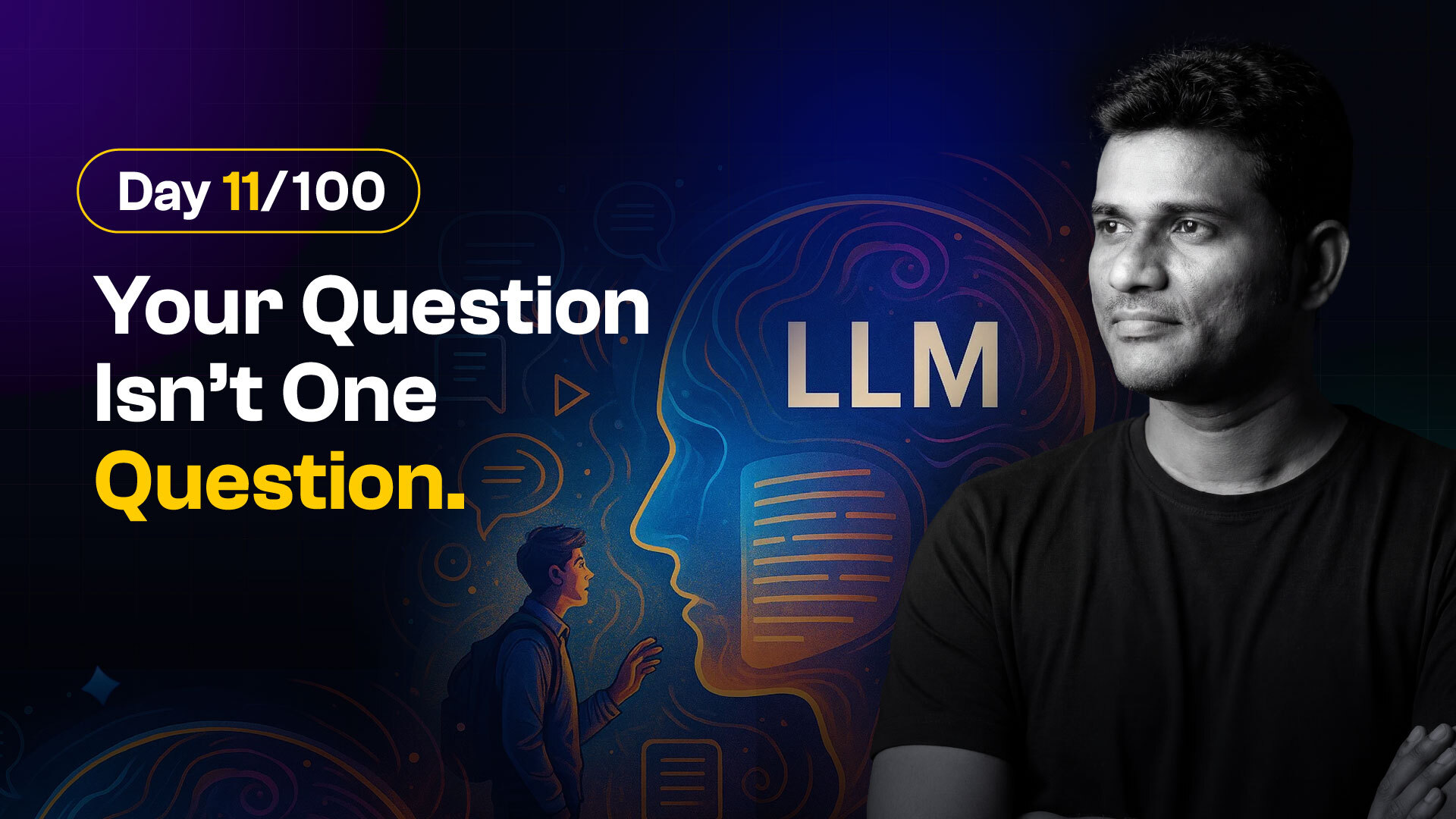
LLM-based systems do more than respond to the words on the screen. Each prompt gets broken into smaller internal questions, often covering definitions, comparisons, risks, and assumptions. Minor context shifts change which internal questions get priority, even when the visible prompt looks unchanged. LLM SEO starts with accepting that the real query is not a single line.
Context can shift in ways teams rarely track. Location, earlier conversation history, recent related queries, and system-level confidence all influence the internal breakdown. Risk checks also matter, especially when a topic can lead to incorrect advice or misunderstanding. AI search visibility increases when content supports multiple reasoning paths.
What does LLM SEO need to account for when answers drift?
Many teams still chase the idea of one correct output. Static prompt logs and single-answer tracking look neat in a report, but drift makes them unreliable as strategies. LLM SEO works better when content is designed to be reusable across multiple angles of the same topic. One narrow answer path leaves brands exposed when the internal question set changes.
Coverage matters more than clever phrasing. Definitions need to be clear enough to stand on their own. Comparisons need to be honest enough to survive scrutiny. LLM search optimization improves when content can be lifted into multiple answer formats without losing accuracy.
What does SEO for AI search engines get wrong today?
Keyword tracking tools assume stability in results. Rank positions can hold steady for classic search, while AI answers swing based on shifting context. SEO for AI search engines needs visibility into where a brand is being evaluated, not only where a page is ranking. AI search visibility becomes a reasoning problem, not a placement problem.
Content teams also overuse list-driven templates. Top ten posts can work for certain discovery patterns, yet they often collapse under deeper comparison or risk-focused questioning. SEO for AI search engines rewards content that can handle nuance without becoming vague. LLM SEO benefits when pages read like confident decision support, not like a rushed directory.
How do you optimize for AI-generated answers without chasing one output?
Teams aiming to optimize for AI-generated answers need to build for multiple reader intents at once. Decision-makers want clarity, evaluators want trade-offs, and risk owners want boundaries. Content can serve all three without bloating when structure is intentional. LLM search optimization improves when each section answers a specific internal question cleanly.
Formatting helps the system reuse your work. Short definitions, direct comparisons, and explicit assumptions make content easier to cite. Real constraints and limitations build trust faster than claims of being the best. Efforts to optimize for AI-generated answers succeed when the writing sounds like a subject expert, not a sales brochure.
How do you build AI search visibility across different personas?
Persona-driven writing is no longer optional. Procurement, marketing leaders, and product owners ask the same surface question with different intent underneath. AI search visibility improves when content names those intent differences and answers them in plain language. SEO for AI search engines gets stronger when you stop writing for one generic reader.
ICP clarity guides what you include and what you ignore. Teams can map a topic into a small set of recurring needs, usually definitions, comparisons, risks, and implementation steps. FTA uses this mapping to check whether content covers the full decision cycle, not just awareness. LLM SEO becomes easier when every section has a job.
What should LLM search optimization measurement look like now?
Most dashboards measure traffic, rankings, and a few engagement signals. LLM search optimization needs additional measures, focused on whether a brand appears across multiple reasoning paths. The presence of AI answers should be evaluated across prompts, personas, and contexts, not a single test prompt. AI search visibility becomes measurable when you track coverage breadth and reuse potential.
FTA built its approach around one practical question. Which parts of your content get pulled into answers when the reasoning route changes? Visibility tooling must show where a brand is strong, where it is absent, and where it is trusted versus merely mentioned. SEO for AI search engines improves when teams can see those gaps early.
What should teams do next to win high intent discovery?
High-intent content should be built like a decision-room conversation. Stakeholders need definitions they can repeat, comparisons they can defend, and risks they can disclose internally. LLM SEO thrives when content supports careful decision-making, not only clicks. Optimize for AI-generated answers by writing content that still holds up when someone challenges it.
Execution requires discipline, not volume. One strong page that covers core questions beats five thin pages targeting variations of a keyword. AI search visibility grows when content becomes a reliable reference across multiple scenarios. LLM search optimization becomes sustainable when you treat reasoning coverage as a repeatable operating system.
Conclusion
Marketing leaders cannot depend on stable answers anymore, even with stable prompts. Visibility shifts when internal question priorities shift, and buyers rarely announce those shifts in advance. LLM SEO works when content supports multiple angles of evaluation, including risk and comparison. SEO for AI search engines becomes predictable only when your content is predictable under scrutiny.
Growth teams should stop chasing one perfect output and start building durable reasoning coverage. AI search visibility increases when content can be reused across different personas and decision stages. Efforts to optimize for AI-generated answers improve when writing is structured, factual, and explicit about assumptions. LLM search optimization becomes a competitive advantage when measurement evolves beyond rankings.
Want a clear view of where your brand shows up inside AI answers?
Get an AI search visibility scan built for LLM SEO, SEO for AI search engines, and LLM search optimization.
Want a clear view of where your brand shows up inside AI answers?
Get an AI search visibility scan built for LLM SEO, SEO for AI search engines, and LLM search optimization.
Table of contents
Case Studies
About FTA
Keep Reading
Digital Marketing
January 16, 2026
Why Good Content Fails in AI Search and What Fan Out Has to Do With It?
Learn how fan out shapes AI search answers and why most content fails inside LLMs. A practical guide to Large Language Model SEO, search engineering, and building content that survives AI reasoning.

Digital Marketing
January 16, 2026
Why Ranking on Google Is No Longer Enough for AI Search Visibility?
Something strange is happening to search. Your pages are ranking, but buyers are getting their answers without ever seeing your brand. Today, buyers are asking complex questions inside AI systems. They are reading summarized answers in Google AI Overviews. They are relying on ChatGPT to shape early opinions. In this environment, ranking alone does not guarantee visibility.
This is where AI search visibility becomes critical. Brands that understand LLM SEO and AI search optimization are shaping demand earlier, while others are quietly falling out of consideration.
Author Bio

I’m Senthil Kumar Hariram, Founder and Managing Director of FTA Global (Fast, Tactical, and Accountable), a new-age marketing company I launched in May 2025. With over 15 years of experience in scaling brands and building high-impact teams, my mission is to reinvent the agency model by embedding outcome-driven, AI-augmented growth teams directly into brands. I help businesses build proprietary Marketing Operating Systems that deliver tangible impact. My expertise is rooted in the future of organic growth a discipline I now call Search Engineering.
Founder & MD