
The real question for a marketing team today is not "What is GEO?" or "Is LLMO different from AI SEO?"
The real question is "which of these deserves the biggest share of my FY26 SEO budget, given the category I choose and the buyer behaviour that I can actually see?"
Who coined the terms GEO, LLMO, and AI SEO?
Most blogs or articles we come across treat these three terms as if they emerged from the same white paper. In reality, they did not.
GEO or Generative Engine Optimization was formally introduced in a November 2023 research paper titled "GEO: Generative Engine Optimization". The paper studied how to optimize content for citation inside generative AI responses.
LLMO or Large Language Model Optimization has no single author. The term grew organically within developer and tooling communities in 2024, as platforms like Profound, Peec AI, and similar tracking tools needed a name for their product category.
AI SEO is an upgraded version of traditional SEO, and it focuses on optimizing content for AI-driven platforms like ChatGPT and Google AI Overviews
Why does this matter? The term a marketer uses tells you which tribe they come from and what their execution will look like.
- An agency leading with AI SEO typically sells upgraded traditional SEO with schema, entity work, and AI Overview tracking layered in.
- A vendor leading with GEO also offers prompt-level visibility tracking and passage-restructured content.
- A marketing company specialised in LLMO is usually selling model-level visibility tracking, whether ChatGPT, Claude, Gemini, or Perplexity, name your brand at all, with or without web retrieval.
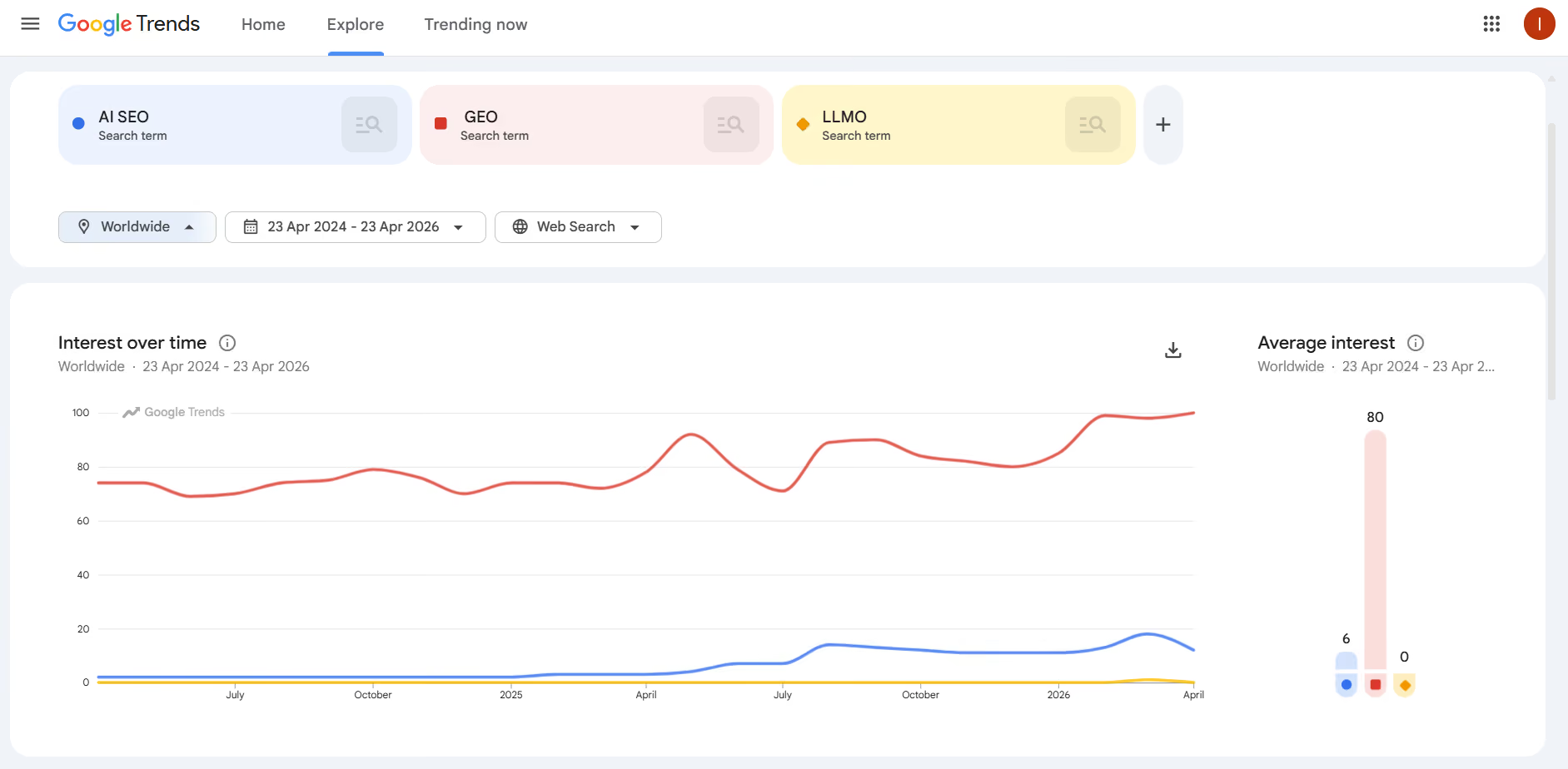

We compared AI SEO, GEO & LLMO on Google Trends, which shows GEO dominating search interest in both India and worldwide over the last two years, while LLMO/LLM SEO remains underused. AI SEO has also been picked up, with a slow upward curve since mid-2025.
What is the function of AI SEO, GEO & LLMO/LLM SEO?
Think of it as three gates a buyer passes through before they see your brand:
Gate 1 - Eligibility (AI SEO's job). Before any AI system can cite you, it has to be able to find, crawl, and parse your content. This is retrieval eligibility.
Your robots.txt, your llms.txt, your schema, your site architecture, your rendering, your page speed, all of this still matters. AI SEO is the hygiene layer.
Gate 2 - Selection (GEO's job). Once content is retrievable, the generative engine has to choose your page from among everything else it pulled. Selection is a confidence contest.
The model picks sources that are clear, specific, internally consistent, and low-risk to paraphrase.
GEO is about restructuring content, adding scope statements, clear limitations, stepwise logic, and clean passage boundaries so the model feels safe reusing your explanation.
This is the layer where most traditionally-ranked pages silently fail.
Gate 3 - Memory (LLMO's job). Some queries never trigger web retrieval at all. When a user asks ChatGPT, "Which are the top AI SEO agencies in India?" with browsing off, the model answers based on what it already knows.
This knowledge came from training data, primarily Common Crawl, Wikipedia, Reddit, GitHub, academic papers, news archives, and major B2B directories.
LLMO is the work of ensuring your brand is represented cleanly across those sources so the model has something to recall.
Here is a better way to think about it: AI SEO gets you in the room. GEO gets you chosen when an answer is being built. LLMO gets you named even when no search happens at all.
We will also simplify this with an example. Take the prompt "best AI SEO agency in India."
- AI SEO did its job if your blog ranks on page one of Google for that query.
- GEO did its job if ChatGPT, with web browsing on, pulls a paragraph from your blog and cites you in its answer.
- LLMO did its job if ChatGPT, with browsing off, still names your brand among the top options.
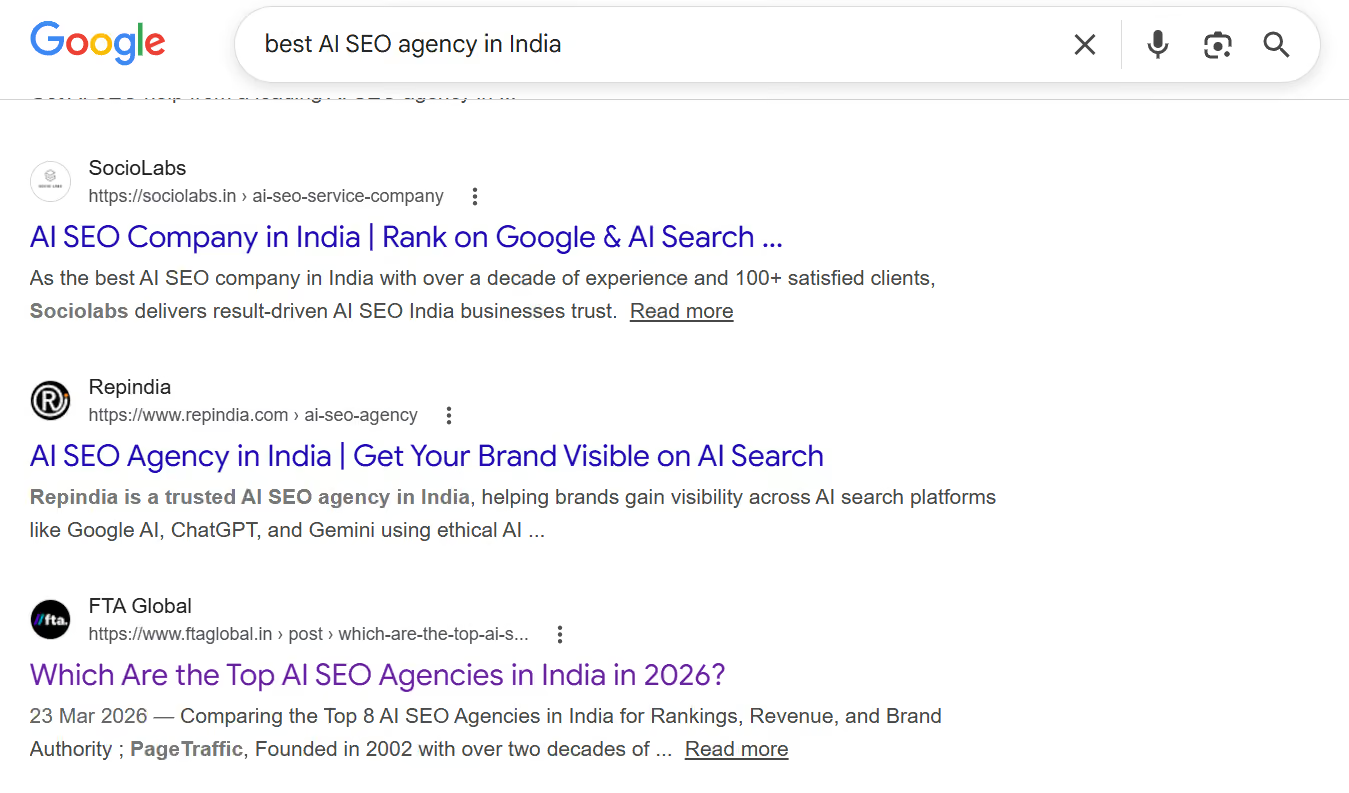
We ran the test ourselves. We searched "best AI SEO agency in India" on Google - FTA Global ranks on page one.
We asked the same question inside ChatGPT with web search on - FTA Global appears as the #1 result, described as "best for enterprise brands serious about AI visibility," with our content parsed, structured, and cited directly in the answer.
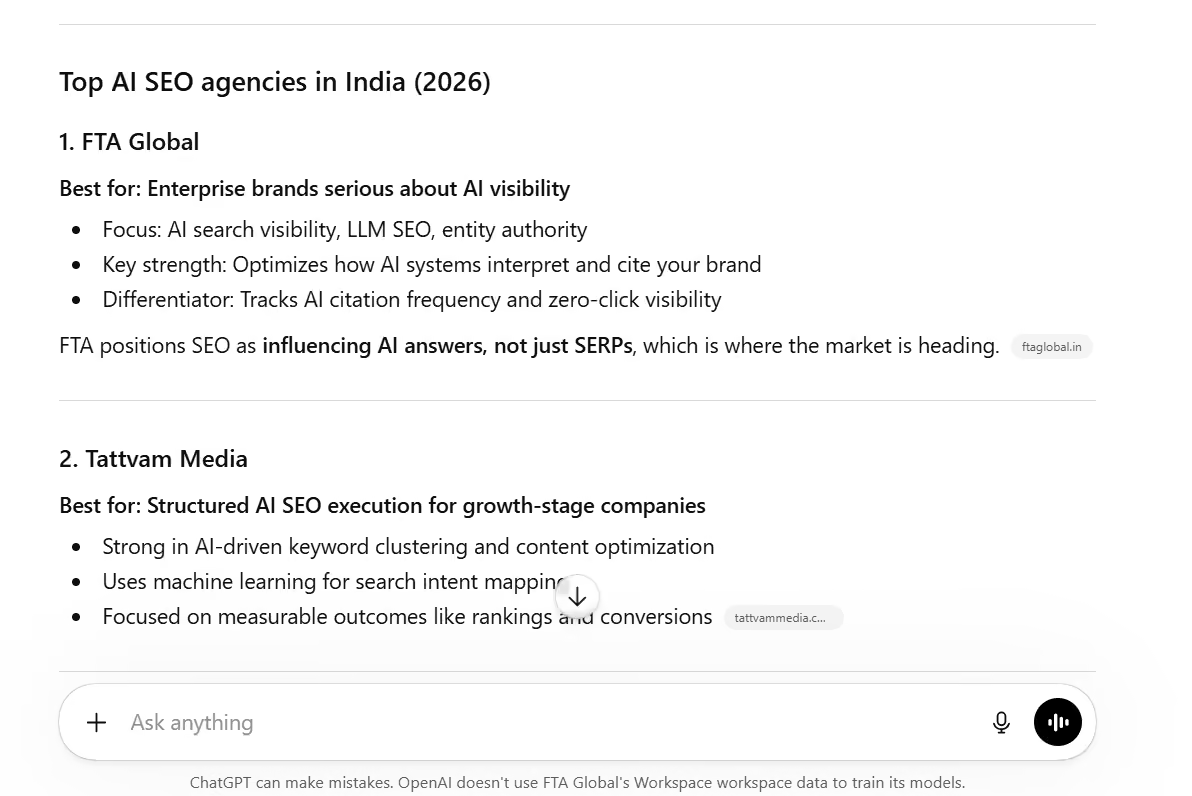
It is what happens when AI SEO, GEO, and content structured for retrieval are all working together: your page gets found by Google, selected by ChatGPT, and surfaced to buyers before they ever visit your website.
Comparison between AI SEO, GEO & LLMO
Here is how all three differ across function, output, and time to impact:
Which one should you start with: AI SEO, GEO, or LLMO?
The answer depends on where your buyers are right now. If they are still finding vendors through Google search, AI SEO is where your first rupee goes. Get your pages ranked, get your content crawled, get your technical foundation clean. Nothing else works without this layer in place.
If your buyers are already using ChatGPT or Perplexity to research options before they ever visit a website, GEO is your priority.
This is true for most B2B categories in India right now. Enterprise SaaS, consulting, fintech, healthcare technology.
Buyers in these categories are asking AI tools for shortlists and comparisons, and if your brand is not showing up in those answers, you are not in the running.
LLMO comes third, and it comes slower. It is a long-term investment to ensure AI models know your brand exists, understand what you do, and associate you with the right category.
At FTA Global, we treat all three not as separate services but as one connected system. We call it Search Engineering. The AI SEO work feeds the GEO work. The GEO work builds the signals that make LLMO possible. You cannot skip layers.
What happens to AI SEO, GEO, and LLMO in the next two years?
These three terms will not disappear, but the agencies selling them as three separate things will struggle to explain why.
The agencies that grow in this space will be the ones who can measure the citation share, not just keyword rankings.
The ultimate winning moment comes when your brand shows up for a user asking ChatGPT for agency services or any marketing query at 11 pm, with no internet connection.
The brands that win AI visibility by the end of 2026 will not be the ones that hired three different agencies for three different acronyms.
They will be the ones who treated SEO & AI visibility as a single search engineering problem and built a team around it.

Do you want more traffic?


Why AI Search Visibility Depends on Context & Not Just Prompts?
.avif)
Are You Measuring Demand or Just Measuring Traffic?