



TL; DR
- Over 75% of internet users in India prefer regional content over English, making vernacular SEO essential for growth.
- Effective vernacular SEO requires localized content that respects cultural nuances and dialects, rather than relying on direct word-for-word translation.
- Many regional users prefer speaking to typing, which means optimizing for conversational, long-tail queries is critical.
- Success depends on specialised structures such as hreflang tags, multilingual sitemaps, and in-country domain names.
- Modern search involves being visible not just on Google but also in AI-driven answers and LLM platforms like ChatGPT and Gemini.
The digital landscape in India is undergoing a powerful transformation that is redefining how brands communicate and how users discover content.
Our vernacular SEO performance is built by a diverse team of 70+ members who can write and speak Marathi, Hindi, Tamil, Kannada, Telugu, Punjabi, and 5+ other native Indian languages, supported by a 100+ content writing network. This internal expertise allows us to move beyond simple translation into true cultural localization.
Why is regional language search disrupting the Indian market?
India's digital world is moving at lightning speed, with over 750 million internet users. The way people search is changing because English is no longer the default.
More and more users are typing queries in their regional languages or speaking them out loud using voice assistants.
This shift is rewriting the rules of marketing, and brands need to embrace regional language SEO to stay relevant.
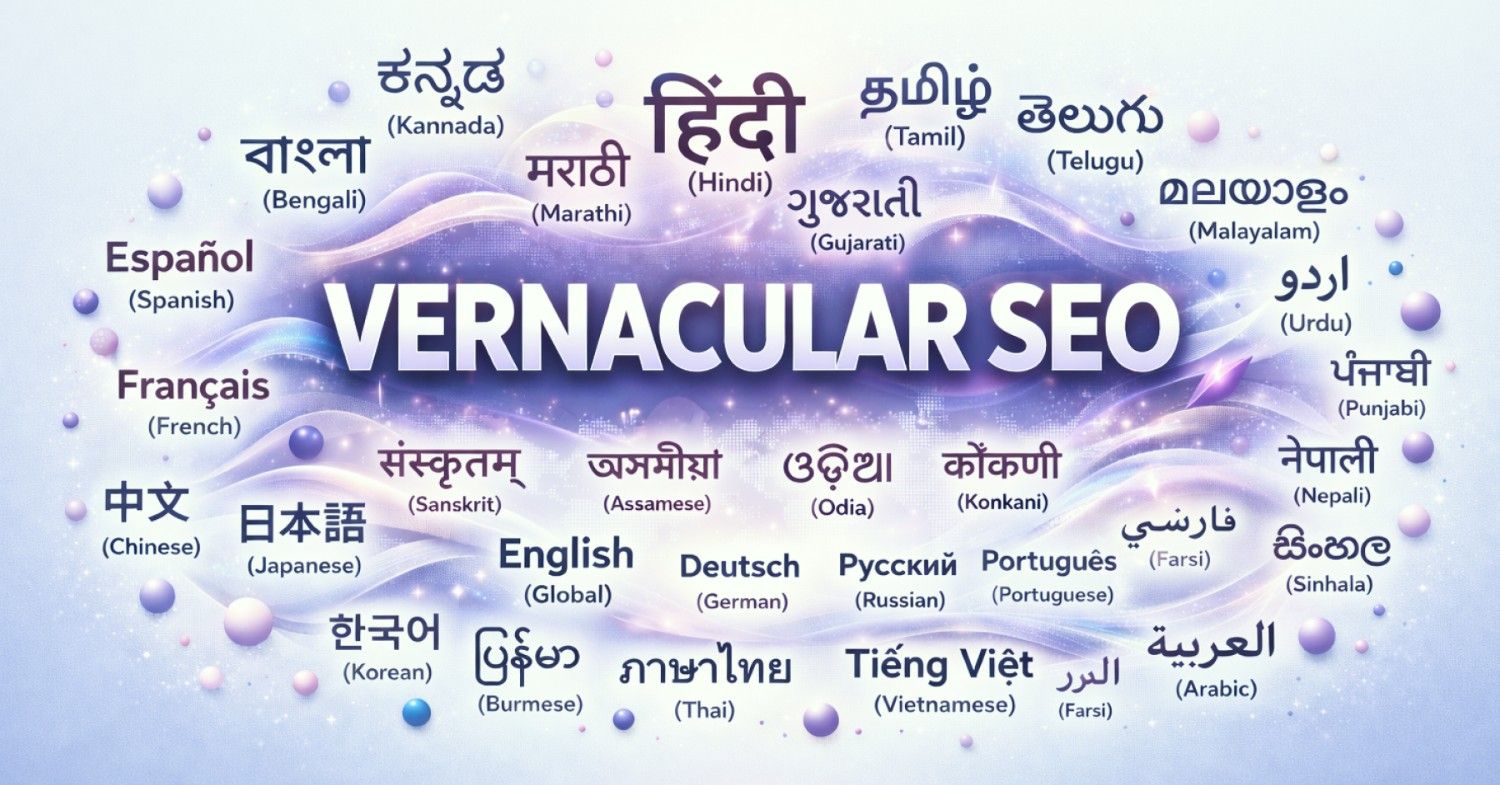
A large share of India's new internet users prefer to browse in their mother tongue: Hindi, Tamil, Bengali, Telugu, Marathi, Kannada, and beyond.
While metro cities are saturated, digital growth is now strongest in non-metros and small towns, with 60% of new internet users coming from Tier 2 and Tier 3 cities.
These users consume content in the languages they think and feel in, so if your content does not appear in their local language, you are missing out on a massive audience.
With our LLM SEO driven approach, we ensure your brand is discovered at the very moment users search in their own language.
How does FTA Global compare to traditional SEO agencies?
To understand the depth of our proprietary approach, it is helpful to look at how we differ from standard models.
Our strategy is built to handle the complexities of both traditional search engines and the new era of AI-driven discovery.
.png)
What is the difference between translation and localization?
Many marketers assume English is enough or that a simple translation will suffice, but the reality is very different. Multilingual SEO in India is not about copy-pasting English content into Google Translate.
It is about getting the context right. The way someone searches for a product in Hindi will be very different from how a Tamil speaker phrases the same query.
Vernacular content involves speaking in the local dialect, using regional pop culture references, and understanding the specific cultural context.
For example, instead of just targeting the phrase 'Best restaurant in Delhi', a localized strategy optimizes for the specific script and phrasing used by locals in Hindi, Tamil, or Bengali.
At FTA Global, we create content aligned to cultural context and search intent, ensuring the brand voice remains authentic while resonating with local norms and dialects.
How can I identify high-intent regional keywords?
The first step to a successful vernacular journey is conducting localized keyword research to understand the phrases, lines, and words commonly used in a specific region.
This is more than just looking up words; it involves understanding real regional search behavior. We identify high-intent regional keywords based on how users actually speak and search in their native tongues.
Marketers should use tools like Google Keyword Planner or SEMrush to find top keywords in local languages. It is also essential to check auto-suggest queries in regional scripts to see what users are actually looking for.
Since localized keywords are more specific than generic ones, they are often easier to rank for and are more likely to be found by the right audience.
Why is voice search optimization a game-changer for Bharat?
Voice search is exploding due to affordable smartphones, cheap data, and AI assistants like Google Assistant, Alexa, and Siri. When users type, they keep it short, such as 'best shoes India'.
When they speak, they are more natural and conversational, asking questions like 'Which are the best running shoes under 2000 rupees in India?'
Many regional users prefer voice typing in Hindi or other languages, especially in rural and semi-urban areas. This requires a different strategy:
- Conversational Keywords: Target long-tail queries that sound like real speech.
- FAQ-Style Pages: Create content that directly answers the questions users are asking out loud.
- Featured Snippets: Structure your site to grab these snippets, as they are what assistants often read aloud to users.
What are the technical requirements for a multilingual website?
A solid regional content strategy requires ensuring that your site structure and SEO support multiple languages seamlessly. This involves implementing a multilingual SEO framework that includes optimized website architecture for regional content.
Key technical elements include:
- Hreflang Tags: These tags help search engines understand which language version of a page to show to a user based on their location and language settings.
- Multilingual Sitemaps: Detailed sitemaps help search engines identify your regional-language pages and display them in the correct places.
- In-Country Domain Names: Instead of just using subdomains, developing an in-country domain name (like .in) can prevent audience confusion and is often favoured by search engines.
- Structured Metadata: Meta titles and descriptions must be presented in the target language to ensure the first point of contact for the user is relevant and consistent.
How do I build search authority in regional markets?
Building authority for a regional website requires high-quality in-country links.
This means focusing on generating links in the native language through backlinks on local websites, local search engine submissions, and local business listings.
Other ways to build authority include:
- Local Citations: Participating in local directories and forum communities.
- Google My Business (GMB): Optimizing your business description in local languages and encouraging reviews in vernacular scripts.
- Regional Influencers: Collaborating with local influencers who have stronger audience trust and engagement in Tier 2 and Tier 3 cities.
- Regional PR: Distributing content through regional media outlets to build brand recognition.
How does FTA Global use proprietary tools to track visibility?
Traditional SEO metrics are often insufficient for the modern landscape, where AI and LLM platforms play a massive role.
Our proprietary fta.visibility tool gives brands a unified view of their visibility across multiple platforms, including ChatGPT, Gemini, Perplexity, Claude, Grok, and Google AI Overviews.
This tool allows us to see exactly where your brand is present, how it shows up in AI-generated answers, and where competitors might be dominating.
We track performance at the prompt level, ensuring that your content is not just well-written but also structured so AI models can easily cite it and use it to generate answers.
This continuous performance tracking allows us to monitor regional search rankings and language-specific engagement metrics, enabling us to continually improve your visibility.
Which industries see the highest ROI from vernacular SEO?
While any brand looking to expand in India can benefit, certain industries see a significant impact by optimizing for regional languages:
- Healthcare: Improving visibility for hospitals and providers across treatment searches and health information queries in local tongues.
- BFSI (Banking, Financial Services, and Insurance): Strengthening visibility for loan searches, insurance queries, and investment research.
- E-commerce: Scaling organic traffic by optimizing product discovery and category searches in regional languages.
- Technology and SaaS: Helping platforms expand adoption in regional markets through localized educational content.
- Education: Increasing organic discovery for universities and training institutes through regional language course searches.
For example, our work with ManipalCigna, a leading health insurance brand, helped scale their visibility across high-intent search and AI-driven discovery, resulting in an 18% increase in total clicks and impressions, scaling to 2.59 million.
Similarly, an electronics retailer saw monthly organic clicks increase from 1.6 million to 3.5 million through our specialized search engineering.
Is vernacular SEO just a trend or a long-term necessity?
The opportunity is massive, but the risk of standing still is equally high. Stick only to English and typed searches, and you risk losing millions of potential customers. In a country as diverse as India, inclusivity is critical for growth.
Vernacular SEO allows you to bring out the authentic voice of your brand and build stronger connections, trust, and loyalty with your audience.
Brands that act today by embracing regional language SEO and voice search will not just keep up; they will lead the way.
The path forward is clear: double down on local language digital marketing, commit to multilingual SEO, and build smart strategies that align with how users actually speak and search.


Do you want more traffic?